
How Are Cigarette Prices Connected to Gasoline Prices in Canada?
Comparing Excise Taxes, Inflation, and the Economics of “Sin” vs. Fuel
⛽🚬 At first glance, gasoline and cigarettes seem like completely different markets. One powers your car; the other fuels a habit. But economically, they share surprising similarities: both are heavily taxed by federal and provincial governments, both are subject to inflation-driven price increases, and both are considered relatively inelastic — meaning people keep buying even when prices rise. This article explores the connection between gas and cigarette prices in Canada, comparing excise tax structures, the role of the Consumer Price Index (CPI), and what happens to both during recessions and inflation.
📊 The Federal Excise Tax: Gasoline vs. Cigarettes
According to the Parliamentary Budget Officer’s 2025 report on excise taxes and duties, both products are significant revenue sources for the federal government [citation:2].
⛽ Gasoline Excise Tax:
- Rate: 10 cents per litre for unleaded gasoline [citation:2].
- Indexation: NOT indexed to inflation — the rate remains constant over time [citation:2].
- Why it matters: Because the tax rate doesn’t rise with inflation, the real value of gas tax revenue has actually declined over time as the dollar’s purchasing power decreased.
- Consumption trend: Total gasoline consumption increased from 39.5 billion litres to 40.9 billion litres between 2007-08 and 2022-23, but per-capita consumption declined from 1,200 litres to 1,046 litres per person [citation:2].
🚬 Tobacco Excise Duty:
- Rate: 16 cents per cigarette (basic rate) in 2023-24 [citation:2].
- Indexation: Fully indexed to CPI inflation — rates automatically increase every April 1 based on the Consumer Price Index, plus a one-time 17% increase in 2024-25 [citation:2].
- Why it matters: Unlike gas taxes, tobacco duties rise with inflation, making cigarettes increasingly expensive even without new legislation.
- Consumption trend: Cigarette sales declined from 17.8 billion to 14.0 billion between 2007-08 and 2022-23, while prices increased from 39 cents to 76 cents per cigarette [citation:2].
🏛️ Provincial Taxes: Adding to the Burden
Both gasoline and cigarettes face additional provincial taxes, but the structures differ significantly:
⛽ Provincial Fuel Taxes (per litre):
- British Columbia: ~14.5 cents
- Alberta: ~13 cents
- Saskatchewan: 15 cents
- Manitoba: 14 cents
- Ontario: 9 cents
- Quebec: 19.2 cents (includes carbon tax component)
- New Brunswick: ~15.5 cents
- Nova Scotia: ~15.5 cents
- PEI: ~14.5 cents
- Newfoundland: 16.5 cents
Like federal gas taxes, most provincial fuel taxes are fixed per litre rates that are not automatically indexed to inflation.
🚬 Provincial Tobacco Taxes (per carton of 200):
- Alberta: $40.00
- British Columbia: $38.60 (indexed to inflation)
- Manitoba: ~$37.00
- New Brunswick: ~$37.00
- Nova Scotia: ~$37.00
- Ontario: $37.00
- Quebec: $37.80
- Saskatchewan: ~$37.00
Unlike fuel taxes, many provincial tobacco taxes are also indexed to inflation or increased periodically through budgets — further widening the price gap over time.
📈 The CPI Connection: Both Products Live in the Same Inflation Basket
The Consumer Price Index (CPI) measures the average price change of a fixed basket of goods and services. Both gasoline and tobacco products are tracked within the CPI — but they’re treated differently [citation:1][citation:3].
🛒 CPI Basket Categories:
- Gasoline: Falls under “Transportation” — one of the eight major CPI categories [citation:3].
- Tobacco products: Fall under “Alcoholic beverages, tobacco products and recreational cannabis” [citation:3].
📊 Volatility Classification (Bank of Canada):
The Bank of Canada tracks “core inflation” by excluding eight volatile components from its calculations. Remarkably, both gasoline and tobacco products are on this list [citation:5].
This means that when the Bank of Canada calculates “core” inflation for monetary policy decisions, they ignore both gas price spikes AND cigarette tax increases — because both are considered too erratic for long-term planning.
📈 Recent Inflation Data (January 2026):
- Headline CPI: +2.3% year-over-year [citation:6]
- Gasoline price index: The largest contributor to deceleration in headline inflation [citation:6]
- CPI excluding gasoline: +3.0% — showing gas prices actually suppressed the overall inflation rate in January 2026 [citation:6]
📉 Economic Behavior: Both Are “Inelastic” — But Cigarettes More So
Both gasoline and cigarettes have inelastic demand — meaning price increases don’t cause proportional decreases in consumption. But the degree of inelasticity differs significantly.
⛽ Gasoline Price Elasticity:
- Elasticity: -0.37 — a 1% increase in gas prices leads to a 0.37% decrease in consumption [citation:2].
- Meaning: Gas demand is relatively inelastic but not extremely so. People do reduce driving when prices spike.
- Practical example: When gas hit $2.00+/litre in 2022, Couche-Tard reported customers put less fuel in their tanks on average — dropping from 10-12 gallons per fill-up to 8 gallons [citation:9].
🚬 Cigarette Price Elasticity (for tax revenue):
- Elasticity: -0.71 — a 1% increase in cigarette prices leads to a 0.71% decrease in legal sales [citation:2].
- Note: This higher elasticity reflects consumers switching to untaxed native or contraband cigarettes, not necessarily quitting.
- Public health elasticity (quitting): Much lower — most smokers who don’t quit simply switch to cheaper sources.
🔗 Do Cigarette and Gasoline Prices Move Together?
A 2023 study published in the NIH journal examined store-level data across Canadian metropolitan areas and found a measurable correlation [citation:4].
📊 The Numbers:
- Average cigarette price in the study period: $116.40 per carton [citation:4]
- Average gasoline price: 121.3 cents per litre [citation:4]
- CPI range: 121.6 to 144.1 (reflecting overall inflation) [citation:4]
- Unemployment rate range: 3% to 10% [citation:4]
🧠 Why They’re Connected (Indirectly):
- Both are affected by general inflation — when the overall price level rises, both gas and cigarettes get more expensive.
- Both face excise taxes — though gas taxes are fixed and cigarette taxes are indexed, both are government revenue tools.
- Both see “trading down” behavior during recessions — consumers switch to cheaper brands (gas: less premium fuel; cigarettes: native brands).
- Both are considered essential by their users — inelastic demand means neither market collapses during price spikes.
The correlation isn’t direct (cigarette prices don’t rise because gas rose), but they are correlated through the broader economy and inflation [citation:4].
📉 Recession-Proof? How Both Products Perform in Economic Downturns
Both gasoline and cigarettes have historically been recession-resistant — people continue buying them even when money is tight. But the pattern of consumption changes [citation:9].
⛽ Gasoline During Recessions:
- People drive less (fewer road trips, less discretionary driving).
- They consolidate trips, carpool, or use public transit.
- They buy less fuel per fill-up (as seen in 2022 — from 10-12 gallons to 8 gallons) [citation:9].
- Total consumption drops, but not proportionally to price increases.
🚬 Cigarettes During Recessions:
- Total consumption may stay stable or even increase (stress smoking).
- Smokers trade down to cheaper brands — exactly what Couche-Tard observed in 2022, with “Indian reservations and the dark market regain[ing] share” [citation:9].
- Native cigarette sales increase during economic downturns as smokers seek value.
- Very few people quit entirely because of price — they find cheaper sources instead.
💰 Government Revenue: Who Pays More?
| Revenue Source | Amount (2023-24) | % of Excise Revenue | Trend |
|---|---|---|---|
| Fuel excise taxes | $5.6 billion | 45% | Relatively stable |
| Tobacco excise duties | $2.6 billion | 21% | Declining consumption, but rates increase |
| Alcohol duties | $2.0 billion | 16% | Steady |
| Other excise | $2.2 billion | 18% | Varies |
Gasoline taxes generate more than double the revenue of tobacco duties — $5.6 billion vs $2.6 billion [citation:2]. But tobacco duties are growing as a percentage of retail price because of indexing, while gas taxes are losing real value over time.
💰 What This Means for Your Wallet: The Native Cigarette Advantage
Unlike gasoline — where you have few alternatives to paying the tax — cigarettes have a major loophole: native cigarettes produced on Indigenous reserves are exempt from federal and provincial excise duties.
- Gas taxes — You pay 10¢/litre federal + ~15¢/litre provincial regardless of where you buy. No legal loophole exists for retail consumers.
- Tobacco taxes — Commercial cigarettes include ~$27 federal + ~$37 provincial per carton. Native cigarettes exclude most or all of these taxes, saving consumers $50-70 per carton.
📌 Honest Summary
How are cigarette prices connected to gasoline prices? Indirectly — through inflation, excise tax structures, and consumer behavior during recessions [citation:4]. Both are inelastic, both are heavily taxed, and both see “trading down” when money gets tight [citation:9].
Which tax is higher? The tobacco excise duty is indexed to inflation (rising every April 1), while the gasoline excise tax is fixed at 10¢/litre [citation:2]. This means cigarette taxes increase automatically while gas taxes lose real value over time.
Do people stop buying when prices rise? Rarely. Gas demand elasticity is -0.37; tobacco revenue elasticity is -0.71 [citation:2]. Both are inelastic — but cigarette consumers are more likely to switch to untaxed native alternatives than to quit.
The bottom line: The connection isn’t direct causation, but both products sit in the same economic category: essential, inelastic, heavily taxed goods. And for cigarettes alone, there’s a legal way to avoid most of those taxes — by switching to native brands from Cigstore.ca.
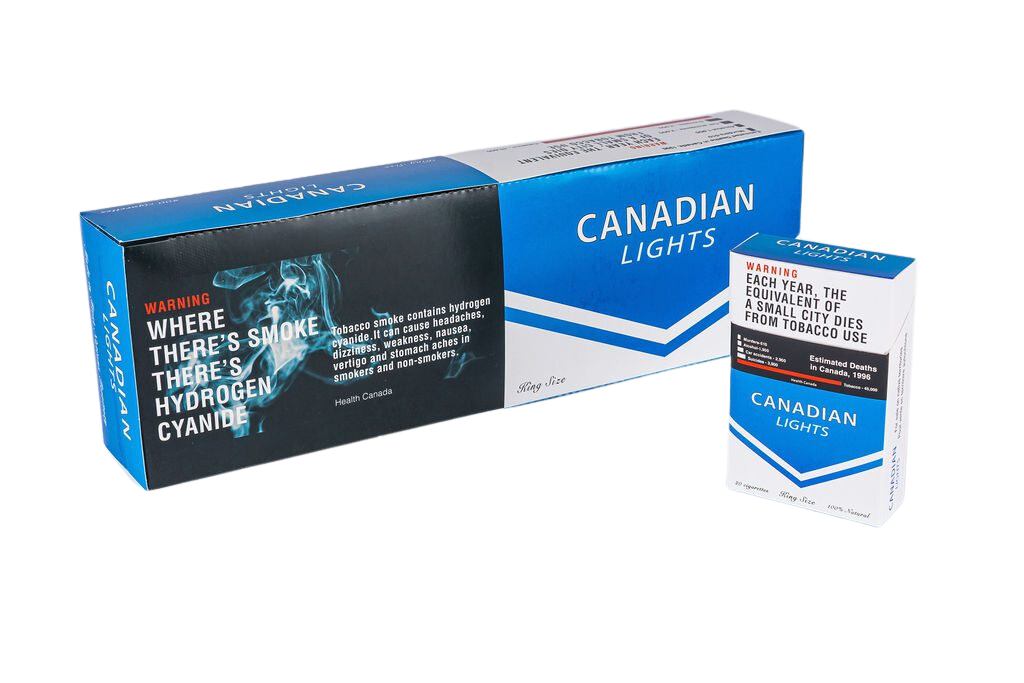
🛒 Popular Native Cigarettes on Cigstore.ca
While you can’t avoid gas taxes, you can avoid tobacco taxes — with native cigarettes starting at just $29/carton.




📚 You Might Also Find These Articles Interesting
Why Cigarette Prices Increase Every April
The CPI indexing mechanism explained.
Why Are Cigarettes So Expensive?
Complete federal and provincial tax breakdown.
Canadian Cigarette Prices vs. Global Markets
Where Canada ranks in tobacco taxes.
The Cigarette Inflation Index
How cigarette prices have outpaced general inflation.
The $7,000 Question
Annual savings from switching to native cigarettes.
🚚 Fast & Reliable Shipping Across Canada
$29 flat shipping on all orders under $290
Free shipping on orders $290 or more – anywhere in Canada
📦 Shipped via Canada Post, Purolator, FedEx, or UPS – carrier selected based on your location for fastest delivery.
Age verification required upon delivery (19+). Indigenous-owned – rooted in tradition, delivered with trust.
⛽ You pay gas taxes. You don’t have to pay tobacco taxes.
Native cigarettes from $29/carton — the tax-free alternative. $29 flat shipping, free over $290.
🛒 Shop Native Cigarettes →Sources: Parliamentary Budget Officer excise tax report (2025) [citation:2]; Statistics Canada CPI data (January 2026) [citation:6]; NIH study on cigarette vs gasoline price correlation (2023) [citation:4]; Couche-Tard CEO inflation comments (2022) [citation:9]; Bank of Canada volatile components list [citation:5].