
Why Chinese Immigrants in Canada Smoke Less Than in Their Homeland
How Strict Bans, Social Norms, and Public Health Campaigns Transform Smoking Habits
🇨🇳✈️🇨🇦 China is home to nearly 300 million smokers — more than any other country. Male smoking prevalence in China is around 67%, while female rates remain low at approximately 4% [citation:3]. Yet when Chinese immigrants arrive in Canada, their smoking habits often change dramatically. Studies show that recent Chinese migrants smoke less frequently and consume fewer cigarettes after relocating [citation:1]. This article explores the powerful environmental and social factors driving this transformation: Canada’s strict indoor smoking bans, the denormalization of tobacco use, shifting social meanings of smoking, and the acculturation of non-smokers to smoke-free air. For those who continue to smoke, affordable native cigarettes become a practical choice — but the overall trend is clear: Canada’s tobacco control policies work, even for newcomers from high-smoking cultures.
China (male): ~67% | Canada (male): ~12% | China (female): ~4% | Canada (female): ~10%
Chinese male immigrants in Canada: observed reduction in frequency and quantity [citation:1]
The contrast is staggering. In China, smoking remains “almost ubiquitous” among men due to ineffective spatial restrictions and the deep social importance of tobacco in business and social contexts [citation:1]. Canadian smoking bans, by contrast, are perceived as strictly enforced and widely complied with. Recent Chinese migrants consistently report that the Canadian environment actively discourages smoking — both through physical restrictions and shifting social norms [citation:4].
🚫 Reason #1: Strict Smoking Bans — “No Smoking Almost Everywhere”
In Canada, smoking is banned in virtually all indoor public spaces: restaurants, bars, offices, shopping malls, airports, and workplaces. This stands in sharp contrast to China, where spatial restrictions are weak and poorly enforced. Recent Chinese migrants participating in focus groups observed that in China, “people smoke everywhere” — restaurants, elevators, even hospital corridors [citation:1].
- 🏢 Comprehensive coverage: Canada’s provincial smoking bans cover all enclosed workplaces and public spaces, with heavy fines for violations.
- 🚬 Effective enforcement: Migrants noted that unlike China, Canadian bans are backed by “widespread compliance and expectations of enforcement.” People simply do not smoke where it’s prohibited [citation:1].
- 🔄 Behavioral change: Because smoking becomes “more difficult to perform,” migrants report smoking less often and consuming fewer cigarettes per day [citation:4].
- 📉 Quitting support: Participants thought the Canadian context actively “supported quitting” because the constant restrictions made smoking feel like a hassle.
👥 Reason #2: Smoking Is Less Socially Valued in Canada
In China, offering a cigarette is a common social ritual — a way to build trust, conduct business, and bond with friends. In Canada, that social value is largely absent. Chinese male migrants quickly become aware that male smoking is “both less prevalent and less socially valued” in their new country [citation:1].
- 🎁 No more “gift packs”: In China, premium cigarettes are given as gifts. In Canada, this practice is nonexistent.
- 🚬 Peer pressure reversal: Instead of social pressure TO smoke, migrants encounter social pressure NOT to smoke — especially around Canadian-born friends and colleagues.
- 👩 Gender dynamics: Interestingly, female smoking is perceived as “more accepted in Canada than in China.” Chinese women who smoke may feel less stigmatized after migrating [citation:7].
- 🏢 Workplace culture: Canadian workplaces rarely have “smoke breaks” as a social ritual. Smokers often hide their habit or quit entirely.
🌬️ Reason #3: Non-Smokers Become Acculturated to Clean Air
Perhaps the most powerful effect is on non-smokers. Chinese migrants who never smoked in China become even more committed to smoke-free living in Canada. Focus group participants were “enthusiastic about smoke-free environments” and had become “acculturated to air that did not smell of smoke” [citation:1].
- 🏠 Smoke-free homes: Many Chinese Canadian families establish smoke-free household rules — even if extended family members smoke.
- 👶 Protecting children: Exposure to Canada’s anti-smoking campaigns increases awareness of secondhand smoke risks to children.
- 📢 Normalization of smoke-free: When the entire environment is smoke-free, smoking becomes visibly “abnormal” rather than routine.
- 🔄 Intergenerational effect: Children of Chinese immigrants grow up in smoke-free schools and public spaces — making them unlikely to start smoking.
📢 Reason #4: Health Canada’s Anti-Smoking Campaigns Work
Chinese immigrants in Canada demonstrate significantly higher awareness of smoking’s health risks than smokers in China. A 2014 study found that while only 36% of smokers in China believed smoking causes lung cancer, the vast majority of Chinese Canadian smokers recognized the health dangers [citation:8]. This knowledge gap is directly attributable to Canada’s public health infrastructure.
- 💰 $480 million investment: Since 2001, Health Canada has spent over $480 million on smoking cessation programs for all Canadians [citation:8].
- 🩺 Healthcare system access: Chinese immigrants have access to family doctors who can provide cessation counseling — a resource largely unavailable in China.
- 📱 Multilingual resources: Quit lines and online resources are available in Mandarin and Cantonese, reducing language barriers [citation:5].
- 📉 Self-efficacy: Education increases smokers’ belief that they can quit — a key predictor of successful cessation.
💰 Reason #5: Cigarettes Are Very Expensive in Canada
A pack of commercial cigarettes in Canada costs $16–22, compared to approximately $3–5 in China (for local brands). This price shock is a powerful disincentive. While some Chinese Canadian smokers switch to cheaper native cigarettes ($35–50 per carton), the overall effect is reduced consumption. Many migrants cut back simply because they cannot afford their previous smoking levels.
- 📊 Tax effect: Canada’s high tobacco taxes (federal + provincial) account for 70-80% of retail price — a proven method for reducing demand.
- 🔄 Behavioral adaptation: Some migrants reduce from a pack a day to a few cigarettes per day to manage costs.
- 📦 Native cigarette option: For those who continue smoking, affordable native brands (Playfare, Canadian, DuMont) provide a budget-friendly alternative.
- 🚭 Quitting motivation: For lower-income immigrants, the financial burden of smoking becomes a primary motivation to quit entirely.
🏞️ Reason #6: Smoking Is Tolerated — But Only in Designated Areas
Chinese migrants appreciate that Canada tolerates smoking — provided it occurs in appropriate places. This nuance is important. Smokers are not criminalized or shamed; they simply must follow rules. Designated outdoor smoking areas, private vehicles, and private homes (with restrictions) remain acceptable [citation:1].
- 🚬 “Smoking shacks”: Many workplaces, universities, and airports provide heated outdoor shelters for smokers.
- 🏠 Home restrictions: While smoking at home is legal, many Chinese Canadians voluntarily restrict smoking to balconies or outdoors to protect children.
- 🚗 Vehicle smoking: Smoking in private cars is legal (unless children are present in some provinces), but many migrants choose not to.
- ⚖️ Fair enforcement: The key difference from China: rules are enforced consistently and without corruption, making compliance feel fair.
📊 China vs. Canada: Smoking Environment Comparison
| Factor | China | Canada |
|---|---|---|
| Indoor public smoking ban | Weakly enforced, widely ignored | Strictly enforced, high compliance |
| Social meaning of smoking | Gift-giving, business ritual, male bonding | Largely absent; socially discouraged |
| Female smoking stigma | High (seen as socially deviant) | Low (more accepted than in China) |
| Cigarette cost (per pack) | ~$3-5 (local brands) | ~$16-22 (commercial) |
| Health awareness (lung cancer link) | ~36% of smokers aware | ~70%+ of Chinese Canadian smokers aware |
| Workplace smoking | Common, often at desks | Prohibited indoors |
| Smoking in cars with children | Common, not restricted | Banned in some provinces (e.g., Ontario, PEI) |
🚬 What About Chinese Canadians Who Continue Smoking?
Despite the environmental pressures, some Chinese immigrants continue smoking. For these individuals, native cigarettes are the product of choice — due to affordability and accessibility. A 2014 study in the Greater Vancouver Area found that Mandarin and Cantonese smokers were generally aware of health risks and wanted to quit, but faced barriers including lack of culturally appropriate cessation programs [citation:5].
- 💸 Price sensitivity: Chinese Canadian smokers are highly price-sensitive. A $35 native carton (Playfare, Canadian, DuMont) is far more accessible than $180 commercial cartons.
- 📦 Online delivery: Services like Cigstore.ca deliver to Chinese Canadian communities across Canada, including Richmond (BC), Markham (ON), and Montreal (QC).
- 🌐 Cultural familiarity: Some Chinese Canadian smokers prefer specific brands or flavours that remind them of cigarettes in China — though native brands are the closest alternative.
- 📉 Willingness to quit: Many express desire to quit but cite stress, social connection, and lack of support as barriers [citation:8].
🔥 Top 5 Popular Products for Chinese Canadian Smokers




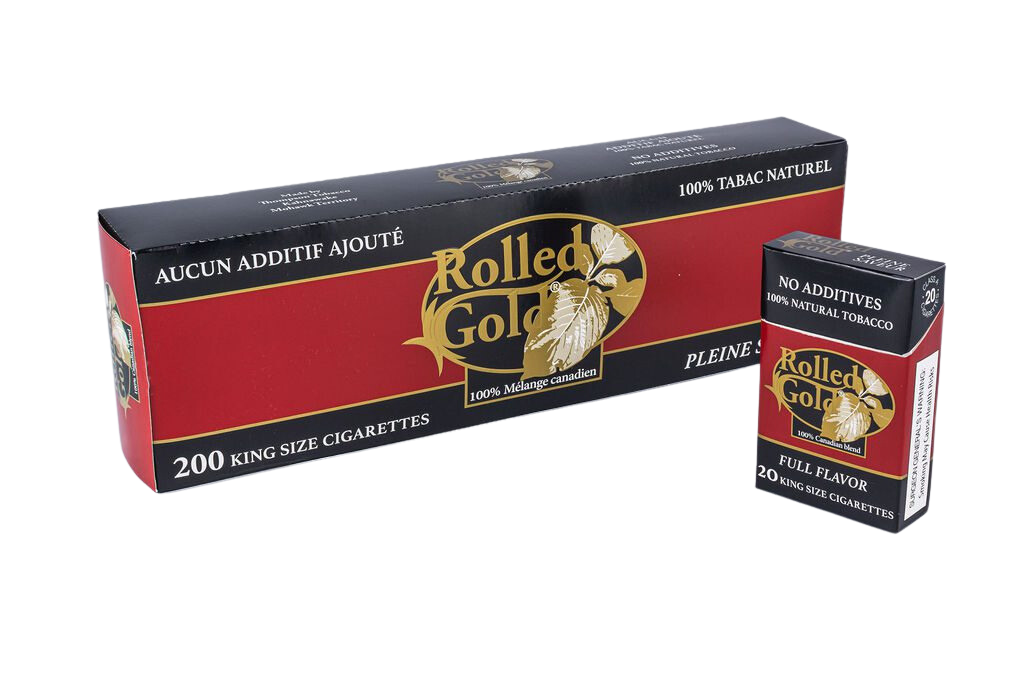
⭐ Excluded: BB light Manitoba, BB full Manitoba, Chanel Blueberry, Chanel ice. See all 29+ native brands at Cigstore.ca.
🚚 Delivery Across Canada – $29 Flat Rate
We ship to every address in Canada, including major Chinese Canadian communities in Richmond (BC), Markham (ON), Scarborough (ON), and Montreal (QC). Orders over $290 qualify for FREE shipping. Age verification (19+) required upon delivery.
📦 Same-day dispatch for orders before 2 PM EST. Tracking provided within 24 hours.
📚 You Might Also Enjoy These Articles
History of Smoking in Canada
From 1950s magazine ads to plain packaging today.
Why Cigarettes Are Expensive
Complete federal & provincial tax breakdown.
Smoking in the Territories
Life in Yukon, NWT, and Nunavut.
Quebec Smoking Culture
Why it’s different from the rest of Canada.
Is It Legal to Buy Native Cigarettes Online?
Lawyer-reviewed legal guide.