
Why Smoking Was Part of Railway Travel
The Golden Age of Trains, Tobacco, and the Social Rituals of the Rails
🚂🚬 Imagine stepping aboard a luxury train in the 1920s. The porter guides you to your seat, and as you settle in, you notice the polished brass ashtray built into the armrest. Later, you wander to the smoking lounge — a leather-upholstered sanctuary where men gather to discuss politics, business, and the weather, all while blue-grey smoke curls toward the ceiling. For decades, smoking was not merely permitted on Canadian trains — it was an integral part of the railway experience. From opulent smoking cars on transcontinental luxury trains to the gritty “smokers” at the back of streetcars, tobacco and rail travel were inseparable. This article explores why: the social norms of the era, the gender dynamics of smoking spaces, the architectural features of railway cars, and the slow, contested decline as health awareness grew.
📜 The Era When Smoking Was Ubiquitous
The simplest reason smoking was part of railway travel is that smoking was part of nearly all public life. Not too long ago, Canadians could smoke virtually anywhere they pleased: at work, in theatres, restaurants, and even hospitals [citation:4]. Smoking rates peaked in the early 1960s, when nearly half of all adults puffed away [citation:4].
- 📊 Peak rates: In the 1960s, nearly 50% of Canadian adults smoked. The idea of a “non-smoking” train car was as foreign as a “non-smoking” living room.
- 🚬 The default assumption: Smoking was the default; non-smokers were the exception. Railway cars were designed with smokers in mind — ashtrays were built into armrests, and smoking lounges were standard features.
- 🏛️ The industry’s embrace: Railways, like most industries, catered to the majority. Providing spaces for smokers was not an accommodation — it was expected.
🚞 The Architecture of a Smoke Break: Smoking Cars and Lounges
Railway companies didn’t just tolerate smoking — they celebrated it. Smoking was a luxury amenity, especially on first-class and transcontinental trains. The Canadian Pacific Railway’s “River” cars, built in 1929, were opulent vehicles designed entirely for passenger comfort. They featured “leather-upholstered smoking rooms” where travelers could relax with a cigarette or cigar [citation:2].
- 🧳 The “smoking room” as a selling point: For luxury trains, a well-appointed smoking lounge was a key differentiator. The presence of a dedicated smoking space signaled sophistication and attention to passenger comfort.
- 📦 Other amenities: The same River cars included “individual ladies’s and gentlemen’s showers, ladies’ lounge and observation parlour” — and yes, a “health-giving VITA GLASS Sun Parlor” [citation:2]. Smoking was part of an integrated luxury experience.
- 🚬 Designated smoking cars: Canadian National Railways (CNR) had specific cars where smoking was permitted, as documented by prohibition cards from the 1940s [citation:1][citation:7]. Passengers were expected to smoke only in designated areas — but those areas were generous.
- 🎨 Vintage posters: Railway advertising often featured passengers smoking, reinforcing the association between train travel and tobacco enjoyment.
👔 Gender and the “Smoker”: A Man’s World
Smoking on trains was not just about the habit — it was about gender and social space. At the turn of the 20th century, smoking was considered “largely the preserve of men” [citation:10]. Women were actively discouraged from smoking, and social conventions forbade men from smoking in the presence of “respectable” women [citation:10]. This created a unique dynamic on public transit.
- 🚬 The “smoking compartment” as a male enclave: On streetcars and trams, the rear section was designated for smokers — and it was “strictly a male preserve” . A 1956 retrospective in the Calgary Herald noted that the smoking compartment “was filthy, most of the time” and “smelled of stale smoke,” but it was also “a social occasion, particularly in the morning” .
- 💼 Politics, weather, and gossip: As men gathered in the smoker, they “gossiped about the weather, politics, exotic travel experiences, and the transit service” . The smoke-filled car was a travelling club.
- 🚫 Women unwelcome: The Calgary Herald noted that “occasionally a woman tried to take a seat in the smoker, when the rest of the car was perhaps overloaded… the atmosphere, both the smoke and the heavy chill that descended when she entered, discouraged the girls” .
- 🏛️ The WCTU’s campaign: The Women’s Christian Temperance Union (WCTU) campaigned against smoking on public transit, arguing that non-smokers — including women and children — had “a right to tobacco-free air” [citation:10]. Their efforts eventually led to bans, but not without resistance.
📖 From the Calgary Herald (1956): “The ride in the smoking compartment was a social occasion, particularly in the morning. Time passed quickly as well as pleasantly” — as men gossiped about politics, weather, and world affairs .
🏛️ The Ottawa “Travelling Club”
The Ottawa Journal observed in October 1945 that the rear of streetcars was “a sort of travelling club for smokers.” The morning smoke was “especially appreciated by those who have a short interval between breakfast and the office.” In this rolling club, men discussed “fishing, of gardening, of politics… and world affairs are given a going-over” .
⏳ The First Cracks: Non-Smoking Sections Arrive (1970s)
By the 1970s, the health evidence against smoking was overwhelming, and public pressure was mounting. The era of unfettered railway smoking began to end.
- 📅 1971: Air Canada introduced non-smoking sections on its airplanes [citation:4].
- 📅 1973: Canadian National Railways followed suit, creating non-smoking sections on trains travelling between Toronto and Montreal [citation:4].
- 📅 1978: GO Transit became the first major Canadian transit agency to ban smoking entirely on its vehicles, effective January 1, 1978. At the time, “people still smoked freely in restaurants, bowling alleys, and shopping malls” [citation:9].
- 📋 The non-smoker’s advocacy: In 1974, the Non-Smokers Rights Association (NSRA) was founded in Toronto. By 1977, Toronto mayor David Crombie called the NSRA “the most impressive and intelligent lobby I have ever known” [citation:4].
📖 From a 1969 parliamentary question: An MP asked CNR: “Has the Canadian National Railways abolished ‘no smoking permitted’ sections in railway coaches and, if so, for what reason?” — evidence that restrictions were already being debated [citation:8].
🚬 Designated Smoking Cars: The CNR Solution
In the 1940s, Canadian National Railways implemented a policy that prohibited smoking anywhere other than designated cars [citation:1][citation:7]. This was an early attempt to contain smoke — to protect non-smokers while still accommodating the majority of passengers who smoked.
- 📦 The card system: The CNR used printed cards to inform passengers of the policy. A card from the 1940s is preserved in the UBC archives, showing the railway’s effort to regulate — not eliminate — smoking [citation:1][citation:7].
- 🚂 The Dominion and the Canadian: Canada’s transcontinental trains — the Dominion (CNR) and the Canadian (CPR) — had designated smoking lounges and cars. Even as late as the 1990s, VIA Rail’s Park car had a “mural lounge” where smoking was permitted [citation:6].
- 😷 The passenger experience: A rail passenger recalling a pre-VIA parlour car trip in 1968 noted that he had “no recollection of any smoke problem” and called it “one of the most pleasant train trips I have ever taken” — suggesting that designated smoking areas worked (or that non-smokers were less sensitive) [citation:6].
📉 The Gradual Extinction: From Sections to Bans
The journey from universal smoking to complete prohibition took decades. Each step was contested, incremental, and hard-won.
- 📅 1970s: Non-smoking sections appear on trains and planes. Smokers complain of “back of the bus” treatment [citation:4].
- 📅 1978: GO Transit bans smoking entirely on its trains and buses — a Canadian first [citation:9].
- 📅 1980s-1990s: Smoking restrictions tighten across all forms of public transit. VIA Rail limits smoking to specific cars, then specific lounges, then eliminates it entirely.
- 📅 1990s-2000s: Provincial laws ban smoking in all enclosed public spaces, including trains, buses, and stations. The last holdouts — the smoking lounges — are eliminated.
- 📅 Today: All Canadian trains, buses, and transit vehicles are 100% smoke-free. The ashtrays are gone.
📖 From a 1977 CBC report: “Not too long ago, Canadians could smoke virtually anywhere they pleased: at work, in theatres, restaurants and even hospitals” [citation:4]. By the mid-1970s, that was changing — but change was slow.
🎞️ The Legacy: What We Lost — and Gained
For those who remember the era of railway smoking, the loss is bittersweet. The smoking car was a social space — a place where strangers became acquaintances, where business was conducted, where stories were shared. As one passenger recalled of a 1968 trip, “the ride in the smoking compartment was a social occasion” .
- 🤝 The social loss: With the elimination of smoking, some of that informal sociability vanished. Passengers now sit in silence, headphones in, avoiding eye contact.
- 🫁 The health gain: But the trade-off is undeniable. Secondhand smoke is a proven carcinogen. Non-smoking passengers — including children, the elderly, and those with respiratory conditions — can now breathe freely.
- 🚭 Cleaner trains: Modern trains do not smell of stale smoke. Upholstery does not absorb tar. The air is clean.
- 📜 The compromise: VIA Rail’s Park car lounge is now smoke-free. A passenger in 2002 recalled that “my wife’s primary recollection is the smoke!” — a memory that no longer has to be made [citation:6].
📦 Native Cigarettes: Affordable Smoking for Today’s Travelers
While you cannot smoke on trains anymore, many Canadians still smoke. Native cigarettes (Playfare, Canadian, DuMont, Nexus, Rolled Gold) have become the affordable choice for price-conscious adult smokers. A carton costs $29-50, compared to $140-180 for commercial brands — a savings of 70-80%.
- 💰 Cost savings: A pack-a-day smoker saves $5,000-7,000 per year by switching to native cigarettes.
- 🚫 Not “healthier”: Native cigarettes contain the same nicotine, tar, and carcinogens as commercial brands. The only difference is price and packaging.
- 📦 Online delivery: Cigstore.ca ships to every province and territory with $29 flat shipping (free over $290).
- 🚂 Travel note: You cannot smoke on trains. But you can stock up on affordable native cigarettes before your trip — just remember to smoke outside, away from railway property.
🔥 Top 5 Native Cigarettes for Canadian Smokers




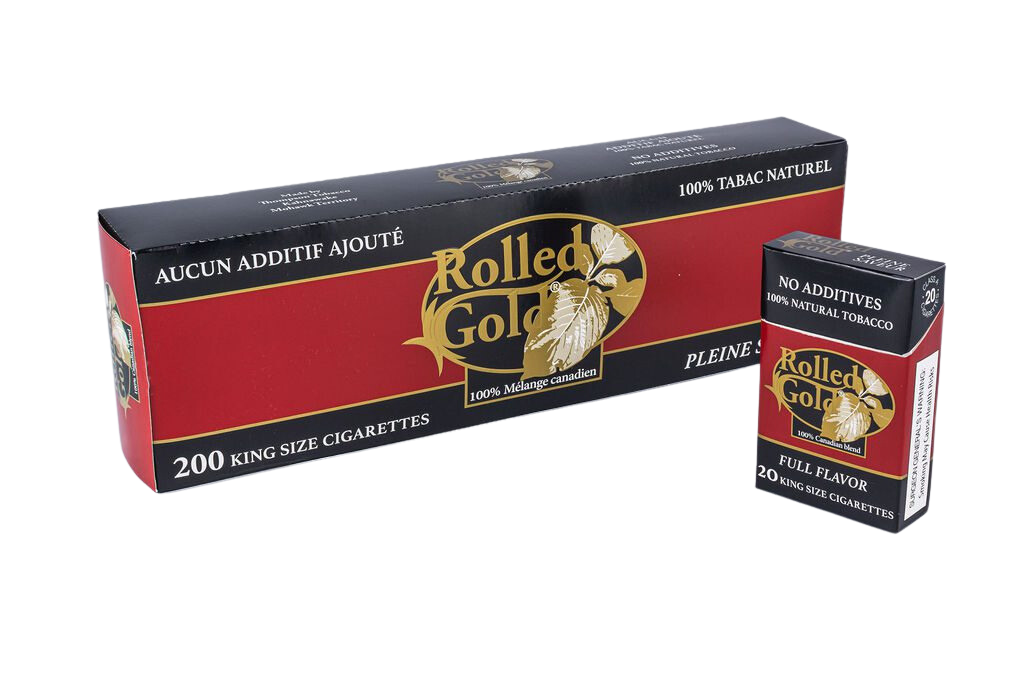
⭐ Excluded: BB light Manitoba, BB full Manitoba, Chanel Blueberry, Chanel ice. See all 29+ native brands at Cigstore.ca.
🚚 Delivery Across Canada – $29 Flat Rate
We ship to every province and territory using Canada Post, Purolator, FedEx, and UPS. Orders over $290 qualify for FREE shipping. Age verification (19+) required upon delivery.
📦 Same-day dispatch for orders before 2 PM EST. Tracking provided within 24 hours.
📚 You Might Also Enjoy These Articles
History of Smoking in Canada
From 1950s magazine ads to plain packaging today.
How Smoking in Canadian TV News Changed Over 50 Years
From anchors smoking on air to today’s smoke-free studios.
History of Smoking in Canadian Bars & Pubs
From smoke-filled taverns to clean air.
What the 1960s Cigarette Break Looked Like
Ashtrays everywhere, no limits.
When Was Smoking Allowed on Airplanes?
The turbulent history of in-flight tobacco.