
Why Cowboys Smoked More Than Anyone Else
The Real History of Tobacco on the Range and the Birth of the Marlboro Myth
🤠🚬 The image is burned into our collective memory: a rugged cowboy on horseback, a cigarette dangling from his lips, riding into the sunset. But why were cowboys so closely associated with smoking? The answer has two parts: the real-life habits of 19th-century working cowboys, and one of the most brilliant — and deceptive — advertising campaigns of the 20th century. This article explores the history of tobacco use on the American frontier, how “quirleys” (roll-your-own cigarettes) became a cowboy staple, the crucial difference between real cowboys and the Marlboro Man, and how a feminine cigarette brand was transformed into the ultimate symbol of American masculinity.
🔥 Part 1: The Real Cowboys — Tobacco as a Necessity
Before we talk about the Marlboro Man, we need to understand the real working cowboys of the late 19th century. These men drove cattle across thousands of miles, enduring harsh weather, isolation, and exhausting physical labor. Tobacco was not a luxury — it was a necessity.
- 🌾 The boredom of the trail: Days on the cattle drive were long and monotonous. A cowboy’s workday started before sunrise and ended long after sundown, seven days a week [citation:7]. Tobacco helped pass the time. As a historical account notes, “the cow-boy almost invariably smokes or chews tobacco—generally both; for the time drags dull at camp or herd ground” .
- 🔄 Stress relief: The work was dangerous — storms, stampedes, river crossings, and confrontations with rustlers or Native Americans. Tobacco provided a small comfort in a hard life.
- 📦 Currency and trade: Tobacco was a valuable commodity on the frontier. It could be used for barter, shared as a gesture of goodwill, or traded for other supplies.
- 🔥 Mosquito repellent: Some cowboys believed (correctly) that smoke helped keep insects away during long nights on the range.
📖 From “The Cowboy Reader” (historical account): “The cow-boy almost invariably smokes or chews tobacco—generally both; for the time drags dull at camp or herd ground. There is nothing new or exciting occurring to break the monotony of daily routine events” .
🖐️ The “Quirley”: How Real Cowboys Smoked
The image of a cowboy opening a pack of factory-made cigarettes is historically inaccurate. Real cowboys rolled their own cigarettes — called “quirleys” — because factory-made cigarettes were seen as effeminate and expensive.
- 📦 Bull Durham tobacco: After the Civil War, ex-Confederate soldier John Green introduced Bull Durham, a brand of loose tobacco that became immensely popular among working men [citation:1].
- 🌽 Corn shuck cigarette papers: Many cowboys, especially in Texas, used dried corn shucks as cigarette paper. This technique originated with Indigenous peoples and was adopted by Mexicans and Southwesterners [citation:1].
- 🚫 “Sissy sticks” and “pimp sticks”: When factory-made cigarettes were first promoted at the 1876 Philadelphia Exposition, cowboys rejected them. They called them “sissy sticks” or “pimp sticks” because only pimps and dandies could afford them [citation:1].
- 🔄 Chewing tobacco: Many cowboys also chewed tobacco, which had the advantage of not requiring a light — useful when your hands were full with a rope or reins.
📖 From True West Magazine: “Roll-your-own cigarettes (called quirlies by the working hands) were in great demand after ex-Confederate soldier John Green introduced Bull Durham. Many cowboys, especially in Texas, used corn shucks for cigarette paper. This originated with the Indians and was adopted by Mexicans and Southwesterners” [citation:1].
💄 Marlboro Before the Cowboy: A Woman’s Cigarette
Marlboro was originally marketed to women with the slogan “Mild as May”.
Men wouldn’t touch it. The brand held less than 1% of the market.
To understand why the Marlboro Man was so revolutionary, you have to understand what came before. Marlboro was originally a woman’s cigarette. Introduced in 1924, it was marketed with the slogan “Mild as May” — a campaign that encouraged women to light up but completely alienated male smokers [citation:2][citation:5].
- 💄 The femininity problem: The “Mild as May” slogan and the brand’s overall presentation made it a “woman’s cigarette.” Men, even those who were curious about filtered cigarettes, refused to be seen smoking a brand they associated with women [citation:5].
- 📉 Tiny market share: By the early 1950s, Marlboro held less than 1% of the US market. It was a dying brand [citation:2][citation:5].
- 🚬 The filter challenge: Filtered cigarettes were gaining popularity because smokers believed (mistakenly) that filters were safer. But filtered cigarettes had a feminine image. Marlboro needed to make filters manly.
- 🎯 The target: Philip Morris wanted to reach “post adolescent kids who were just beginning to smoke as a way of declaring their independence from their parents” — a demographic that would not buy a “woman’s cigarette” [citation:5].
🐴 The Birth of the Marlboro Man (1954)
In 1954, Philip Morris hired Chicago advertiser Leo Burnett to fix the problem. Burnett asked his team: “What is the most masculine figure in America?” After considering soldiers, weightlifters, and construction workers, the team settled on one archetype: the cowboy [citation:5][citation:7].
- 📸 The inspiration: Burnett’s inspiration came from a 1949 issue of Life magazine, which featured a photograph of Texas cowboy Clarence Hailey Long Jr. [citation:5].
- 📈 Immediate results: Within one year of launching the cowboy campaign, Marlboro’s market share rose from less than 1% to the fourth-best-selling brand. By 1957, sales had jumped from $5 billion to $20 billion — a 300% increase in just two years [citation:2][citation:5].
- 🎭 No health claims: Unlike other filtered cigarette ads that made complex technical claims about filters, Burnett’s ads were completely void of health concerns. They focused entirely on image — ruggedness, independence, and masculinity [citation:5].
- 🎬 The jingle: The campaign included memorable jingles: “You get a lot to like with a Marlboro — filter, flavor, flip-top box” [citation:3].
📖 From a 1969 promotional film: Narration describes how a “sort of faceless, sissified little brand became America’s fastest-growing cigarette” [citation:3].
🌟 The Real Cowboys Behind the Myth
Initially, the men photographed for Marlboro ads were male models dressed up as cowboys. But Leo Burnett felt they lacked authenticity. He wanted real cowboys. In 1963, art director Neil McBain found the first real cowboy in Guthrie, Texas.
Carl “Bigun” Bradley — The First Real Marlboro Man (1963-1970)
A rugged cowboy on the 6666 Ranch in Guthrie, Texas. Bradley stood about 5’11 and, ironically, smoked only Kools — not Marlboros [citation:7]. He worked seven days a week, starting before sunrise and ending after sundown. His authentic face launched the “real cowboy” era of the campaign [citation:7]. Tragically, he drowned at age 36 in a 1973 horse accident [citation:7].
Darrell Winfield — The Longest-Running Marlboro Man (1968-1989)
Discovered while working on the Quarter Circle 5 Ranch in Wyoming. His chiseled, rugged good looks made him the face of Marlboro for 21 years. A creative director said of Winfield: “I had seen cowboys, but I had never seen one that just really, like, he sort of scared the hell out of me (as he was so much a real cowboy)” [citation:5].
Robert Norris — The John Wayne Connection
A friend of John Wayne, Norris was recruited as a Marlboro Man. He never smoked, and after a twelve-year run, he quit the role to avoid badly influencing his children. He died at age 90 in 2019 — one of the few Marlboro Men to live a long, healthy life [citation:5].
Brad Johnson — The Actor
After appearing as the Marlboro Man in 1987 advertising, Johnson landed a lead role in Steven Spielberg’s feature film Always (1989), with Holly Hunter and Richard Dreyfuss [citation:5].
The Tragic Irony
Several real-life Marlboro Men died of smoking-related diseases. Wayne McLaren and David McLean both died of lung cancer — a grim testament to the deadly product they were paid to promote [citation:9].
💀 The Tragic Legacy: When Cowboys Died for Their Image
The irony of the Marlboro Man campaign is that the real men who portrayed these rugged icons often paid a terrible price. Smoking killed several of the men who made smoking look cool.
- ⚠️ Wayne McLaren: A rodeo cowboy who appeared as the Marlboro Man, McLaren died of lung cancer at age 51. Before his death, he became an anti-smoking activist, testifying against the tobacco industry.
- ⚠️ David McLean: Another Marlboro Man, McLean also died of lung cancer.
- ⚠️ The hidden truth: While Marlboro sales skyrocketed and the brand became a global icon (today commanding over 43% of the US market — bigger than the next 10 brands combined [citation:2]), the men in the ads were dying. As of 2017, Marlboro’s market share was bigger than the next 10 brands combined [citation:2].
- 📈 The numbers: One year after the cowboy campaign’s 1954 rollout, Marlboro sales jumped 3,241%. Today, it is the best-selling cigarette brand worldwide [citation:2].
📖 According to the CDC: “Cigarette smoking is responsible for over 480,000 deaths per year in the United States… On average, smokers die 10 years earlier than nonsmokers” [citation:3].
🎨 The Enduring Myth: Why We Still Think Cowboys Smoke
The Marlboro Man campaign ran from 1954 to 1999 — nearly 50 years [citation:5]. For half a century, Americans were told that real men smoked Marlboros. The association between cowboys and cigarettes became so deeply embedded in American culture that it persists even today, long after the ads have been banned.
- 📺 The power of repetition: For generations, the Marlboro Man was inescapable — on billboards, in magazines, on television. The image was repeated so often that it became fact.
- 🎬 Hollywood reinforcement: Western films of the 1940s, 50s, and 60s — starring John Wayne, Gary Cooper, and other icons — showed cowboys smoking constantly, reinforcing the association [citation:2].
- 🔄 The feedback loop: The Marlboro Man was inspired by movie cowboys, and then movie cowboys began smoking Marlboros. The two images merged.
- 📉 Today: While real cowboys smoked roll-your-own quirleys, our mental image of a cowboy is more likely to be the Marlboro Man — a cigarette, not a corn-shuck quirley, dangling from his lips.
📖 The irony: “The fact that real cowboys tended not to smoke ready-made cigarettes was irrelevant, the links between cowboys, cigarettes, and being cool had been made, and people — specifically men — bought into it” [citation:2].
📦 Native Cigarettes: Affordable Smoking for Today’s Adults
While the Marlboro Man is a relic of a bygone advertising era, many Canadian smokers have switched to affordable native cigarettes. Native cigarettes (Playfare, Canadian, DuMont, Nexus, Rolled Gold) cost $29-50 per carton — compared to $140-180 for commercial brands — a savings of 70-80%.
- 💰 Cost savings: A pack-a-day smoker saves $5,000-7,000 per year by switching to native cigarettes — real money for working people.
- 🚫 Not “healthier”: Native cigarettes contain the same nicotine, tar, and carcinogens as commercial brands. The only difference is price and packaging.
- 📦 Online delivery: Cigstore.ca ships to every province and territory with $29 flat shipping (free over $290).
- 🤠 No cowboy myth: Unlike the Marlboro Man, native cigarettes are sold with no glamour, no celebrity endorsements — just an affordable product for adult smokers.
🔥 Top 5 Native Cigarettes for Canadian Smokers
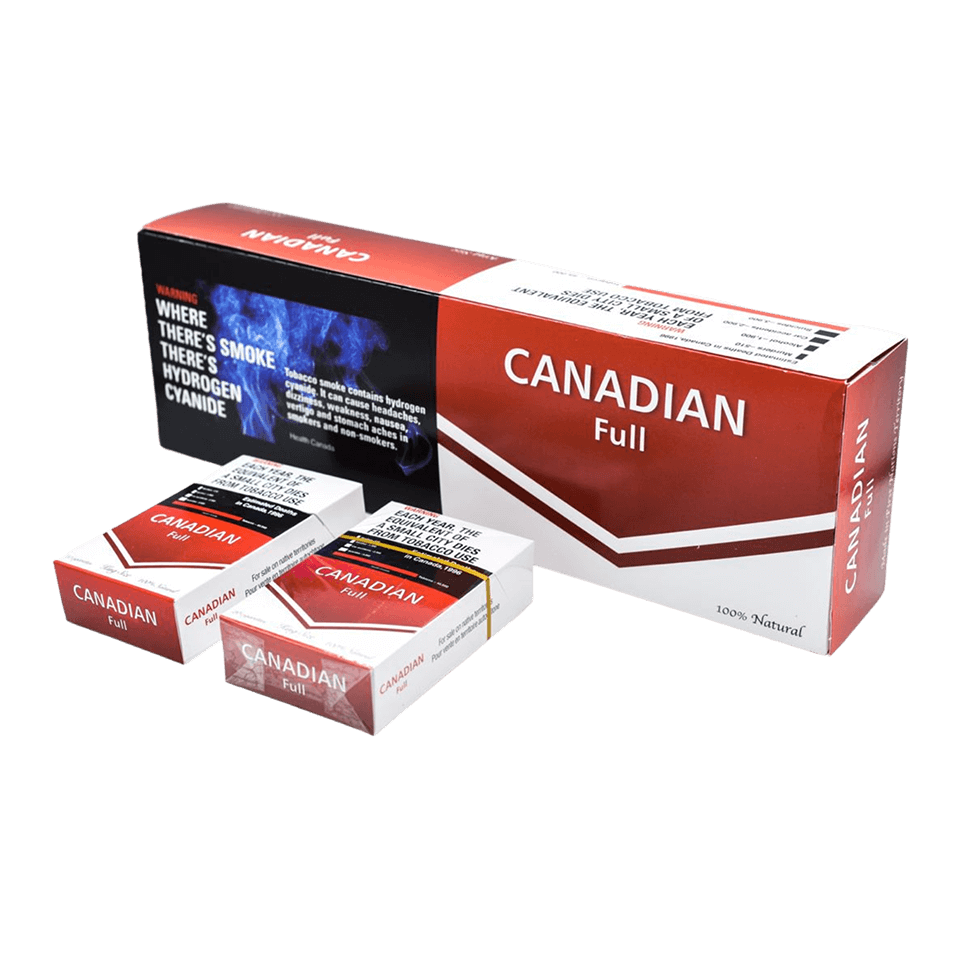
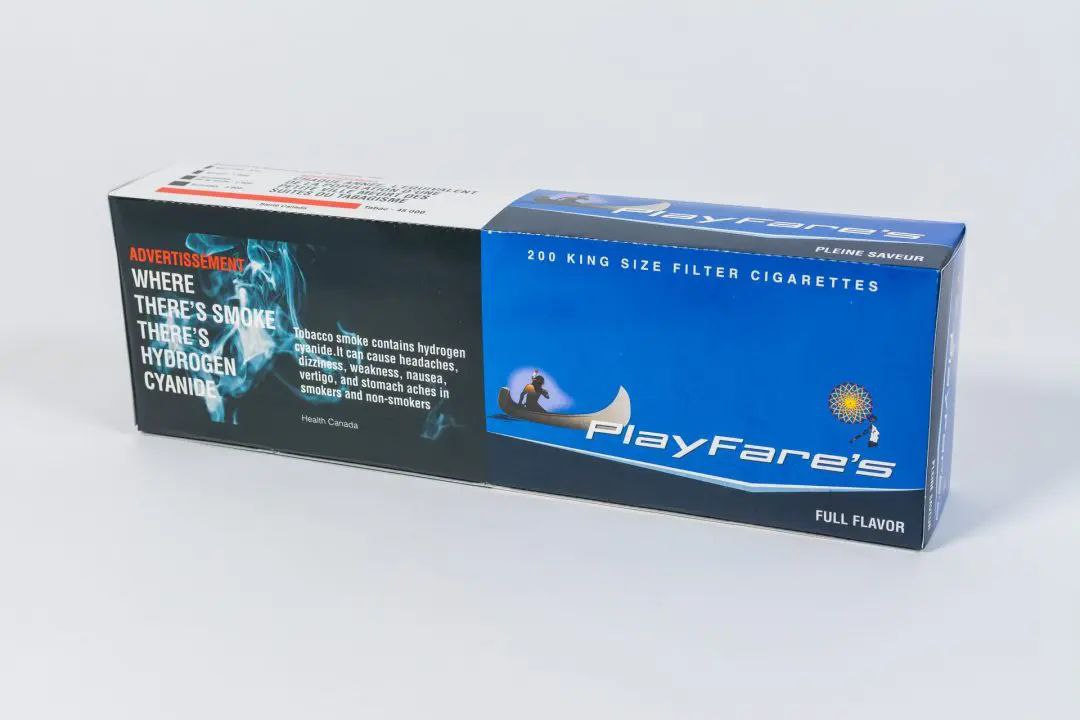

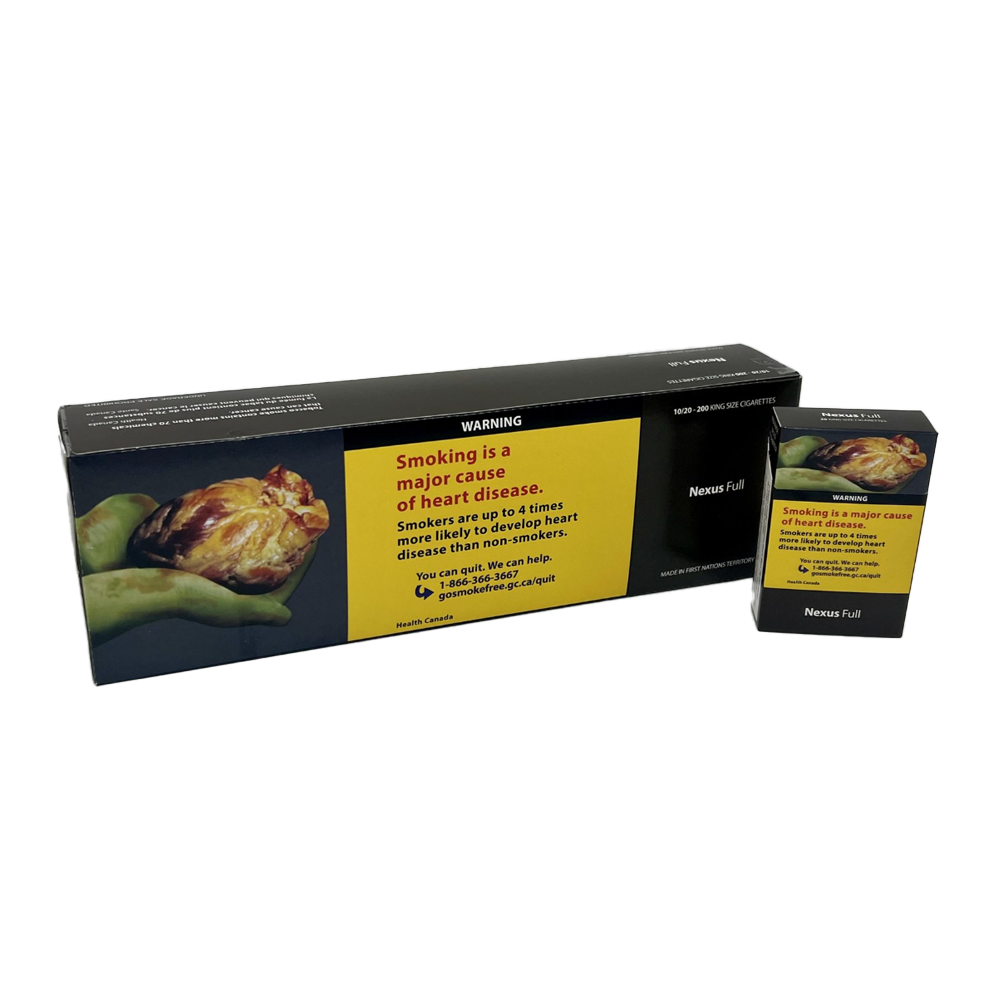
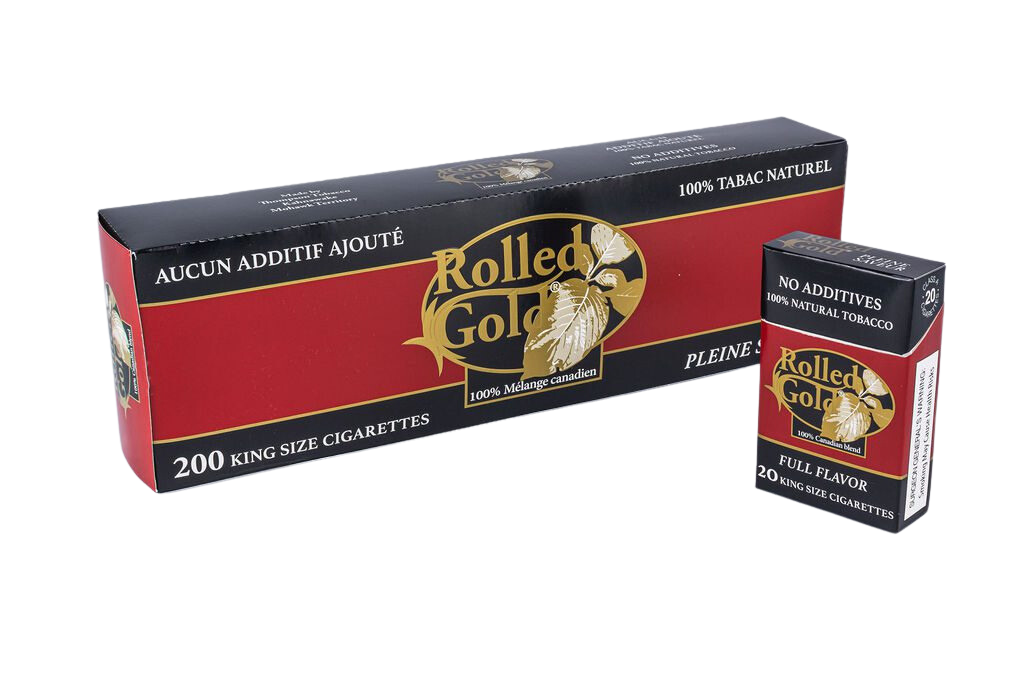
⭐ Excluded: BB light Manitoba, BB full Manitoba, Chanel Blueberry, Chanel ice. See all 29+ native brands at Cigstore.ca.
🚚 Delivery Across Canada – $29 Flat Rate
We ship to every province and territory using Canada Post, Purolator, FedEx, and UPS. Orders over $290 qualify for FREE shipping. Age verification (19+) required upon delivery.
📦 Same-day dispatch for orders before 2 PM EST. Tracking provided within 24 hours.
📚 You Might Also Enjoy These Articles
Why Cigarettes Were Part of Office Culture
Ashtrays on every desk, free cartons in the supply closet.
How Cigarettes Became Part of the Movie Detective’s Look
From Sam Spade to Philip Marlowe.
Cigarettes in Hollywood’s Golden Age
Glamour, rebellion, and the silver screen.
Most Famous Canadian Cigarette Slogans
From “More doctors smoke Camels” to plain packaging.
History of Smoking in Canada
From 1950s magazine ads to plain packaging today.