
How American Prohibition Fueled Cigarette Smuggling into Canada
A Tale of Two Crises: From Rumrunners to Tobacco Smugglers
📜🚬 The connection between American Prohibition (1920-1933) and Canadian cigarette smuggling is not one of direct causality — Prohibition was about alcohol, not tobacco. However, the two eras share a powerful common thread: high taxes and price differentials that created irresistible black markets. The rumrunners of the 1920s established the smuggling routes, techniques, and criminal networks that would be repurposed decades later. In the 1990s, Canada’s high cigarette taxes turned those same routes into a multi-billion dollar contraband tobacco industry, complete with gang wars, automatic weapons, and a government retreat. This article explores the history, the parallels, and the lasting legacy of cross-border smuggling in Canada.
🍾 Prohibition (1920-1933): The Original Blueprint
Canadian alcohol legally produced and exported to “offshore” locations — then smuggled into the US.
Figures like Ben Kerr (the “King of the Rumrunners”) became folk heroes [citation:2][citation:7].
When the United States enacted Prohibition in 1920, banning the manufacture, sale, and transportation of intoxicating liquors, Canada did not follow suit. This created a massive price differential — and a golden opportunity for smugglers.
- 🥃 The “offshore” loophole: Canadian distilleries continued producing alcohol legally, exporting it to “offshore” locations — where American bootleggers would pick it up.
- 🚤 Ben Kerr and the rumrunners: Figures like Ben Kerr, known as the “King of the Rumrunners,” became legendary for their daring exploits evading the US Coast Guard [citation:2][citation:7].
- 🗺️ The established routes: Smugglers developed intricate networks along the St. Lawrence River, the Great Lakes, and the British Columbia-Washington border — routes that would prove invaluable decades later.
📖 The key lesson: Prohibition proved that when a legal price differential is large enough, smuggling becomes a mainstream economic activity — and organized crime follows the money.
📊 The First Cigarette Smuggling Crisis (1950s)
Decades before the 1990s crisis, Canada experienced its first major cigarette smuggling wave — triggered by the same mechanism: tax-induced price differentials.
- 📈 The 1951 tax hike: In April 1951, the Canadian government raised the federal tax on a pack of cigarettes to 25.2 cents. The total retail price rose to 42 cents per pack (46 cents in Quebec) [citation:4].
- 💵 US price advantage: American cigarettes could be purchased in Maryland (which had no state tax) for as little as $1.59 per carton from distributors [citation:4].
- 💰 Black market profits: The same carton sold for $3 to $3.50 on the Canadian black market — a 120% profit margin [citation:4].
- 🛑 RCMP seizures: A single RCMP patrol seized 970,000 cigarettes (worth $14,550 on the black market) from a farm near Coaticook, Quebec, in December 1951 [citation:4].
📖 Parliamentary debate (1952): MP James Macdonnell pressed the government for details on smuggling losses. The Weekend Picture Magazine called the situation a “smuggling picture” involving “big operators” who had “become rich in prohibition days” [citation:4].
💥 The 1990s Explosion: How Taxes Created a Black Market Nightmare
• 40% of Ontario and Quebec cigarettes were smuggled
• 35% of Atlantic Canada’s tobacco market was contraband
• 15% of Western provinces
• Loss of $2+ billion CAD in tax revenue in one year
Between 1984 and 1993, Canada’s federal tobacco tax rose from 42 cents to $1.93 per pack. Provincial governments added more. By 1993, the average Canadian pack cost $5.65 CAD (compared to roughly $2.00 in the US) [citation:1][citation:8].
- 📊 Price differential impact: The price gap between Canadian and US cigarettes reached approximately $35 per carton [citation:8].
- 📈 Smuggling explosion: Between 1990 and 1993, the number of Canadian cigarette packs legally exported to the US rose from 50 million to over 500 million annually — most of which were smuggled right back [citation:1].
- 🏙️ Cornwall under siege: The border town of Cornwall, Ontario, experienced a “reign of terror” as rival gangs fought for control of the cigarette black market. Residents were driven off the streets as organized crime groups, prostitutes, and drug lords filled the void [citation:1].
⚠️ Violence escalates: “The Mafia was here, the Asians, outlaw motorcycle gangs, the Mohawk warrior society, all fighting for each other’s shipments coming across the river,” recalled Ron Martelle, former mayor of Cornwall. The crackle of gunfire was accompanied by car chases and wailing sirens [citation:1].
🏭 The Smoking Gun: Tobacco Industry Complicity
Perhaps the most scandalous aspect of the 1990s smuggling crisis was the alleged complicity of major tobacco companies [citation:1][citation:6].
- 📦 The scheme: Canadian tobacco companies exported popular Canadian brands to the US (duty-free), where organized crime rings purchased them and smuggled them back into Canada — evading Canadian taxes entirely [citation:1].
- 💰 The Reynolds case: A US federal grand jury investigated R.J. Reynolds for links to a smuggling ring that pocketed $687 million US over four years. The Canadian government sued R.J. Reynolds in US court, alleging the company arranged to have cigarettes smuggled back through the Akwesasne Reserve [citation:1][citation:6].
- ⚖️ Supreme Court setback: In 2002, the US Supreme Court blocked Canada’s case against R.J. Reynolds, citing a common-law rule that foreign governments cannot use US courts to collect lost revenues [citation:6].
- 📉 The Canadian response: The Canadian government accused tobacco companies of exporting cigarettes “perfectly legally” while knowing “perfectly well that their exports have been re-entering Canada illegally” [citation:1].
📖 Prime Minister Jean Chrétien (1994): “We do not want the tobacco manufacturers to receive any benefit from the difficult decision we have made today. The fact is, Canadian manufacturers have benefited directly from this illegal trade. They have known perfectly well that their tobacco exports to the United States have been re-entering Canada illegally. I believe they have not acted responsibly” [citation:1].
📉 The Retreat: Canada Slashes Tobacco Taxes (February 1994)
Ottawa cut federal excise tax by $5 per carton, effectively lowering prices by 40-50%.
The goal: “take the profit out of smuggling” [citation:1][citation:3].
Under siege from smuggling and public safety concerns, the federal government, led by Prime Minister Jean Chrétien, made a dramatic policy reversal in February 1994.
- 📋 The tax cut: The federal government slashed excise taxes, effectively cutting cigarette prices by 40-50% to make legal cigarettes competitive with contraband [citation:1][citation:3].
- ⚖️ A bitter pill: The government acknowledged the health consequences. The revenue loss was estimated at nearly $1 billion annually, but officials argued the situation had become untenable [citation:1].
- 😟 Health experts’ concerns: Public health officials worried that the tax cut would increase smoking rates, especially among young people — concerns that proved justified [citation:3].
📖 A warning from the Senate: “Excessively high taxation on tobacco has created a Prohibition-like environment in which otherwise law-abiding citizens are either selling or buying smuggled tobacco” [citation:8].
🗺️ The Akwesasne Reserve: Smuggling’s Ground Zero
No single location played a more central role in cigarette smuggling than the Akwesasne Reserve, which straddles the Quebec-Ontario-New York border on the St. Lawrence River. Its unique geography — territory spanning two countries — made it virtually impossible to police effectively [citation:5][citation:6].
- 📊 Scale of operations: The R.J. Reynolds case alleged that the company moved more than $687 million US of cigarettes and alcohol through Akwesasne [citation:6].
- 🏭 Manufacturing on both sides: Illegal cigarette factories operated on both the US and Canadian sides of the reserve, with raw tobacco coming from as far as China, Latin America, Brazil, Argentina, and the US [citation:5].
- 📦 The “birthplace” of contraband: A Quebec government report identified Akwesasne, along with Kahnawake and Six Nations, as the primary sources of contraband cigarettes in Canada [citation:5].
⚠️ The 1993 violence: After the mayor of Cornwall demanded federal help, cigarette pirates shot up the town’s civic center with AK-47s, also blasting the federal building. The mayor and his family were forced into hiding; his son, a local police officer, discovered a price on his head [citation:1].
🔄 The Modern Legacy: Where Are We Now?
The tax cuts of 1994 and subsequent federal-provincial agreements brought the smuggling crisis under control — but they did not eliminate contraband tobacco entirely. Today, the landscape has shifted again.
- 🏭 Homegrown contraband: Illegal cigarettes are now primarily manufactured within Canada on Indigenous reserves, using raw tobacco smuggled from the United States and elsewhere. Prices for contraband cartons range from $5 to $30 — far below legal retail [citation:5].
- 📊 Market share: By 2007, over one-third of cigarettes smoked in Quebec and Ontario were contraband. Over 90% of these illegal cigarettes originated from Indigenous reserves [citation:5].
- 💻 Online sales: Today, contraband tobacco is sold openly online, through social media, and by delivery services — a modern iteration of the bootlegging model [citation:5].
- 🚔 Law enforcement challenges: The RCMP estimates that over 150 organized crime groups are involved in illegal tobacco trafficking in Canada. However, enforcement on Indigenous territory remains sensitive due to jurisdictional complexities and legal challenges [citation:5].
📊 Prohibition-Era Smuggling vs. 1990s Cigarette Smuggling
| Aspect | Prohibition (1920-1933) | 1990s Cigarette Crisis |
|---|---|---|
| Product | Alcohol | Cigarettes |
| Driver | US ban on alcohol production/sale | High Canadian tobacco taxes |
| Price differential | Massive (alcohol cheap in Canada, expensive/illegal in US) | ~$35 per carton difference |
| Criminal involvement | Bootleggers, rumrunners | Mafia, biker gangs, Mohawk Warrior Society |
| Primary route | St. Lawrence River, Great Lakes | Akwesasne (same geography) |
| Government response | End of Prohibition (1933) | Tax cuts (1994) |
📦 Native Cigarettes Today: The Legal Alternative
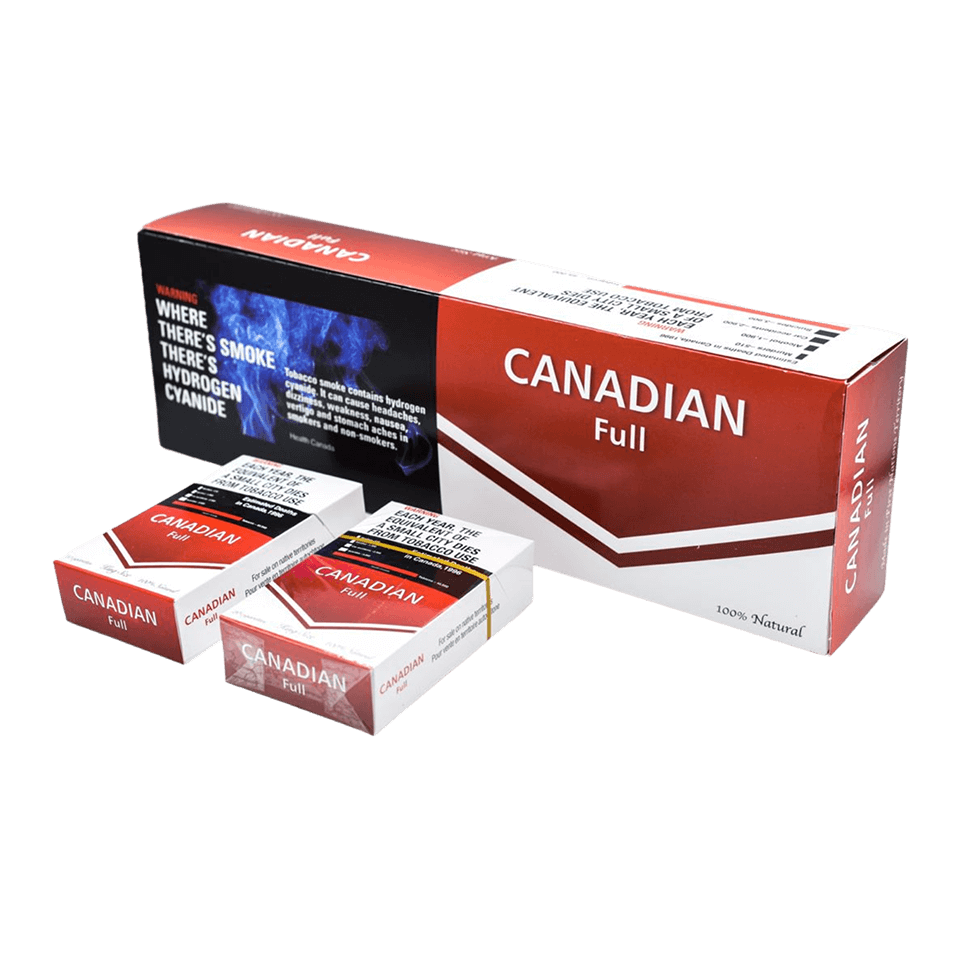
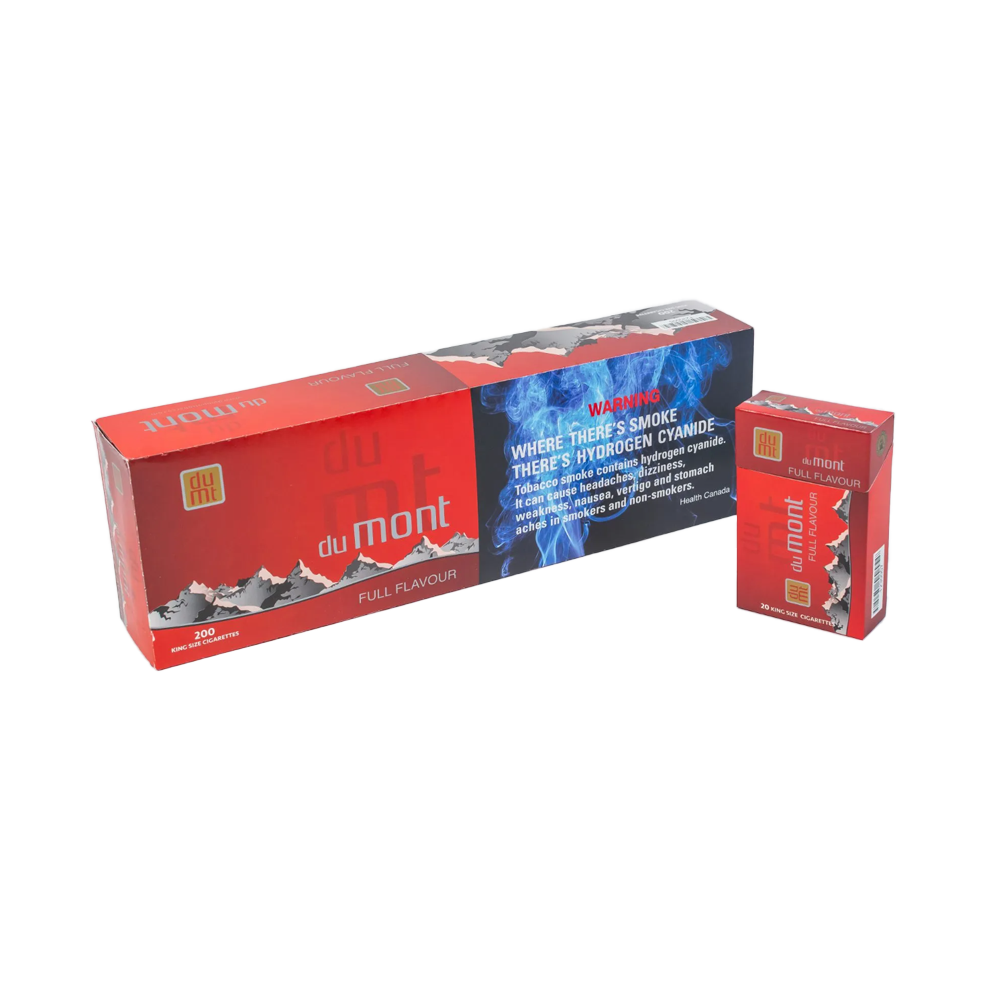
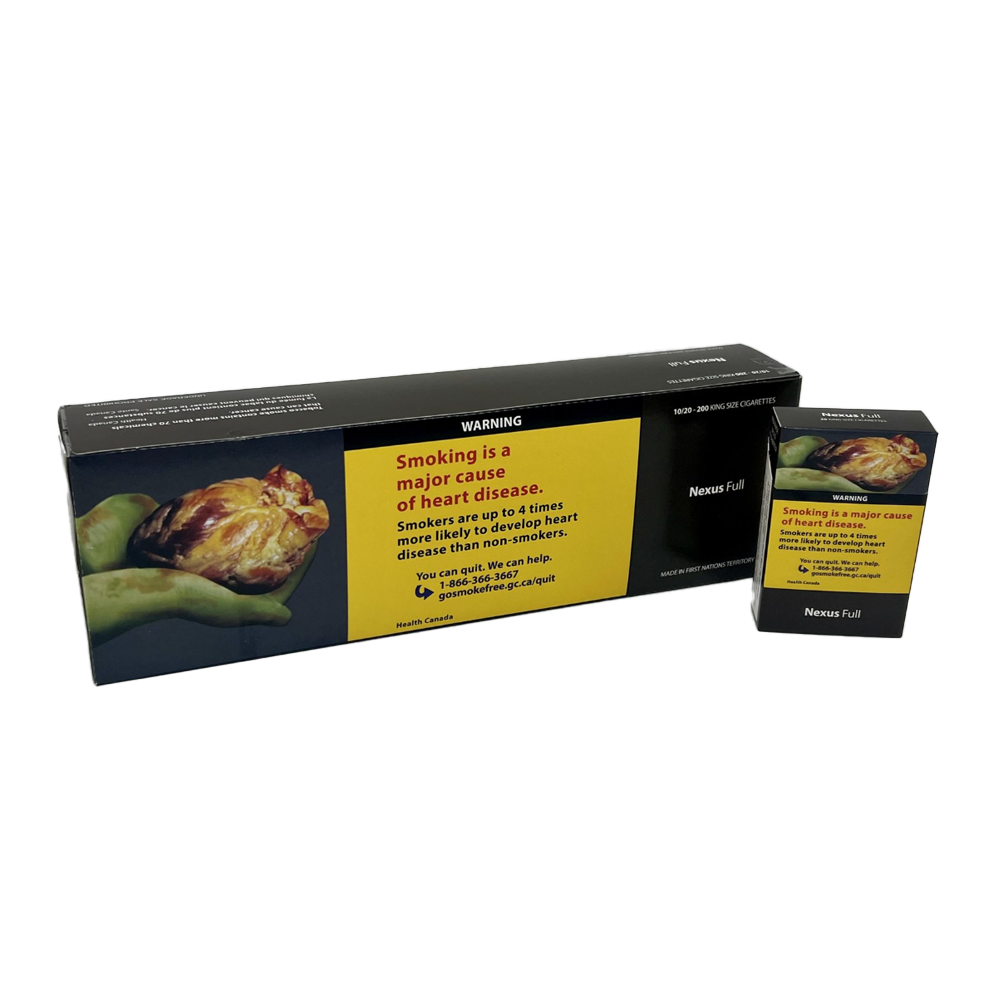
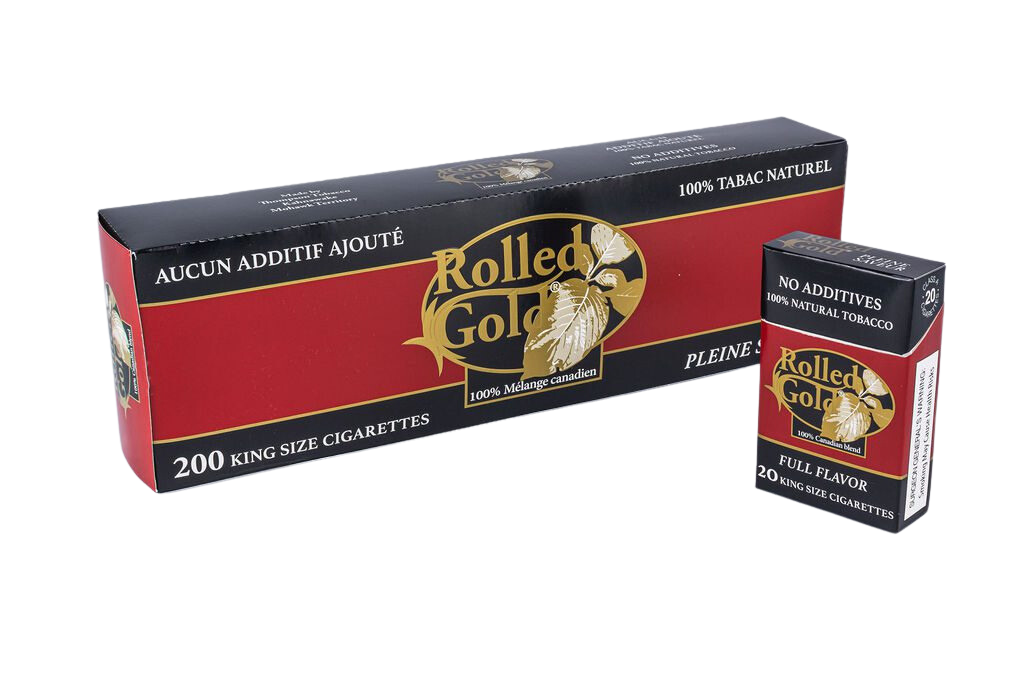
While contraband cigarettes remain a concern, many Canadian smokers have turned to legally available native cigarettes (Playfare, Canadian, DuMont, Nexus, Rolled Gold). These are manufactured on Indigenous reserves and sold without federal/provincial excise taxes — making them affordable at $29-50 per carton, compared to $140-180 for commercial brands [citation:5].
- 💰 Cost savings: A pack-a-day smoker saves $5,000-7,000 per year by switching to native cigarettes.
- 🚫 Not “healthier”: Native cigarettes contain the same nicotine, tar, and carcinogens as commercial brands. The only difference is price and packaging.
- 📦 Online delivery: Cigstore.ca ships to every province and territory with $29 flat shipping (free over $290).
- ⚖️ Legal distinction: Unlike contraband (illegal manufacturing/sales), native cigarettes are legally produced and sold by licensed Indigenous manufacturers.
🔥 Top 5 Native Cigarettes for Canadian Smokers

⭐ Excluded: BB light Manitoba, BB full Manitoba, Chanel Blueberry, Chanel ice. See all 29+ native brands at Cigstore.ca.
🚚 Delivery Across Canada – $29 Flat Rate
We ship to every province and territory using Canada Post, Purolator, FedEx, and UPS. Orders over $290 qualify for FREE shipping. Age verification (19+) required upon delivery.
📦 Same-day dispatch for orders before 2 PM EST. Tracking provided within 24 hours.
📚 You Might Also Enjoy These Articles
The Untold Story of How the 1994 Tax Cut Created Canada’s Native Cigarette Market
The policy reversal that changed everything.
Why Are Cigarettes So Expensive in Canada?
Complete federal & provincial tax breakdown.
The Illicit Tobacco Market in Canada: Size, Impact, and Myths
Understanding modern contraband.
History of Smoking in Canada
From 1950s magazine ads to plain packaging today.
History of Tobacco Advertising Bans in Canada
From billboards and TV commercials to blank walls.