
Why So Many Rock Stars Never Gave Up Cigarettes
The Myth, The Addiction, and The Legacy of Tobacco in Rock Music
🎸🚬 The image is burned into our collective memory: a rock star on stage, guitar slung low, a cigarette dangling from the lips. From Elvis to Bowie, from Keith Richards to Kurt Cobain, the cigarette has been as essential to rock iconography as the Marshall stack and the leather jacket. But why did so many rock stars never give up cigarettes, even as the health risks became undeniable? This article explores the complex reasons: the role of cigarettes as stage props, the culture of rebellion, the nicotine addiction that gripped a generation, the tragic health consequences, and the slow decline of tobacco in the rock world.
🎸 Reason #1: The Birth of the Rock ‘n’ Roll Image
In the 1950s and 60s, rock and roll was rebellion incarnate. It terrified parents, challenged social norms, and gave voice to a generation. And nothing said “rebellion” quite like a cigarette. In an era when smoking was still glamorized in movies and advertising, rock stars adopted the cigarette as a natural prop.
Elvis Presley — The King of Cigars and Cigarettes
Elvis was a passionate cigar smoker. In the mid-1950s, during his Sun Records sessions, he smoked cheap King Edwards cigars. Later, he switched to 10-cent Roi-Tans. His dressing room always had a box of cigars to offer guests backstage [citation:8].
The James Dean Effect
Rock musicians consciously or unconsciously adopted the James Dean archetype — the brooding, cigarette-smoking rebel. As one music fan recalled, “I used to try and keep it in my mouth as long as possible. Just have it in the corner of my mouth without taking it out because Marlon Brando did it in The Wild One” [citation:7].
Bowie: The Cigarette as Stage Prop
David Bowie admitted that he used cigarettes like a prop on stage in the past, lighting them with a match for dramatic effect. At the time of a 1997 interview, he admitted that cigarettes were now simply an addiction, he would no longer even think to use them as props [citation:1].
📖 From a 1997 interview with David Bowie: “In his younger years, David Bowie was often seen smoking. Bowie admitted… that it was a ‘rite of passage’ when he was young and he admitted that he would sing better if he didn’t smoke.” [citation:1]
🔥 Reason #2: Rebellion as a Core Value
After cigarettes became known to be bad for health, smoking was then seen as rebellious. Cigarettes featured in song lyrics often to depict an area of society not necessarily experienced by the listener, but seen as ‘cool’ – the life of a rock star, criminal or gangster [citation:1]. Rock music, in particular, has often contained references that outraged each generation’s parents — and cigarettes were a big part of that.
- 🎵 Oasis, “Cigarettes and Alcohol” (1994): Called “one of the greatest social statements of the past 25 years” by Alan McGee, the lyrics use cigarettes and alcohol as a way of coping with the banality of working-class life in the 1990s. With lines such as “is it worth the aggravation to find yourself a job when there’s nothing worth working for?” the attitude to cigarettes gives a defiant ‘who cares?’ about health [citation:1].
- 🎵 Siouxsie and the Banshees, “Nicotine Stain” (1978): As smoking became known to be bad for health, lyrics began to reflect the addiction: “When smoke gets in my brain/ I can’t resist it” [citation:1].
- 🎵 Passenger, “Twenty Seven” (2004): In this later song, Passenger sings against smoking: “My lungs are turning black…been a Lucky Strike’s fool since I was at school” — reflecting the changing cultural attitudes [citation:1].
📖 From the academic literature: “Pretty much all the people, all the cultural heroes that I had, all smoked. It was just what they did.” [citation:7]
⚡ Reason #3: Addiction and the Touring Lifestyle
Beyond image, there was a practical — and pharmacological — reason rock stars smoked. The lifestyle of a touring musician — late nights, constant travel, high stress — is perfectly suited to nicotine addiction.
Rick Parfitt (Status Quo) — 40 Cigarettes a Day
Status Quo’s Rick Parfitt suffered a quadruple heart bypass in his late 40s, brought on by “women, divorcing women, smoking, alcohol, drugs and almost three decades of climbing on stage.” At his peak, he smoked about 40-50 cigarettes per day. After his surgery, his doctors allowed him 2-3 cigarettes per day — a reduction of about 40 [citation:2].
Eddie Money — The Working Musician
The late rocker was known for his chain-smoking habit. In a 1997 interview, his manager noted that Money was “smoking cigarettes” [citation:3].
- 📊 The scale of addiction: Rick Parfitt’s case is not unique. Many touring musicians smoked multiple packs per day to cope with the stress of the road.
- 🚬 Cigarettes as “fuel”: For performers, the stimulant effect of nicotine provided a temporary boost before going on stage. The crash afterward required another cigarette.
- 🔄 The feedback loop: The rock star lifestyle encouraged smoking (bars, clubs, after-parties), and smoking reinforced the rock star identity. It was a closed loop.
🏷️ Reason #4: Brand Affinity and Subcultural Identity
In subcultures, the brand of cigarette you smoked was a badge of identity. Rock musicians — and their fans — chose brands that aligned with their subcultural values. [citation:7]
- 🚬 Punks and working-class brands: “The punks would like to identify with working class-ness, which meant Number Six and B&H” [citation:7].
- 🎩 New Romantics and Sobranies: The New Romantics — the “Bowie kids” — posed with cocktail cigarettes, Sobranies with gold filters. “You’d probably just have one all night! They were just for posing about rather for taking very many drags” [citation:7].
- 🇫🇷 The “cool kids” and Gauloises: “The uber cool kids would smoke Gitanes and Camel. Cool kids would also smoke Gauloises” [citation:7].
- 🔥 Mod revival and British fags: “The more lumpen mods, I think you’d definitely expect them to smoke a British fag in packets of 20, Piccadilly, Benson’s, maybe Peter Stuyvesant” [citation:7].
📖 From a subcultural study: “So different tribes had different things. That was all part of the scene.” [citation:7]
💔 The Tragic Consequences: When Rock Stars Paid the Price
While not all related to smoking, the list of rock stars who died young is staggering. Many of them were heavy smokers.
The romantic image of the smoking rock star has a dark underside. Many of the most iconic musicians died — or suffered severe health problems — as a direct result of their smoking habits.
- 🎸 Rick Parfitt (Status Quo): Quadruple heart bypass at 48. He lived, but his body was destroyed by decades of chain-smoking [citation:2].
- 🎤 David Bowie: Though he quit smoking in his later years, his decades-long habit likely contributed to the liver cancer that killed him at 69.
- 🎶 Tom Petty: A heavy smoker for much of his life, Petty died of an accidental drug overdose in 2017 — but his health had been compromised by years of smoking.
- 🎸 Frank Zappa: Died of prostate cancer at 52 — but he was also a heavy smoker and believed his habit contributed to his overall poor health.
- 🎤 Leonard Cohen: Smoked for decades; died at 82 after a battle with cancer.
- 🎸 George Harrison: A heavy smoker, Harrison died of lung cancer at 58.
📖 Rick Parfitt’s reflection after heart surgery: “I’d come back from a tour of Japan and Australia, and I was looking really good. I was tanned. I felt great, at 48. I got a pain in my right arm, but was always one of those people who believed that if you ignore something long enough, eventually it will go away.” [citation:2] — He ignored it until he nearly died.
🌿 The Other Smoke: Cannabis and Rock Culture
While this article focuses on tobacco, it’s impossible to discuss smoking and rock music without acknowledging cannabis. Cannabis was, and remains, deeply embedded in rock culture. [citation:4][citation:6]
- 🎸 The Beatles and Bob Dylan: In 1964, the members of The Beatles were persuaded by Bob Dylan to smoke cannabis for the first time, and the effects soon appeared in the more complex music on the album “Rubber Soul” [citation:6].
- 📸 Henry Diltz — The Legendary Photographer: Diltz, who shot over 300 album covers, has been a daily cannabis user since 1966. He remembers that in Laurel Canyon, “pretty much all the rockers” smoked a strain called Ice Bag [citation:4].
- 🎤 David Crosby: The Prince of Pot: Crosby would walk through clubs wearing his Borsalino hat with a whole box of Bambu rolling papers, handing them out to the crowd [citation:4].
- 🎹 Ray Manzarek (The Doors): The keyboardist first smoked cannabis in 1963 and had a profound awakening: “Marijuana makes you aware that you are on a planet…. It’s God’s good green earth” [citation:4].
📖 Henry Diltz on cannabis: “This herb fortifies the immersion of the artistic journey. It stops the jabbering that is going on. Cannabis makes you a better human being.” [citation:4]
📉 The Decline: Why Fewer Rock Stars Smoke Today
The image of the chain-smoking rock star is increasingly a thing of the past. Several factors have contributed to this decline:
- 📊 Changing cultural norms: As smoking became socially unacceptable in the general population, rock stars followed. Young musicians today are much less likely to smoke than their 1970s counterparts.
- 🩺 Health awareness: The tragic deaths of idols like George Harrison (lung cancer) served as warnings to younger musicians.
- 🚭 Smoking bans: Indoor smoking bans mean that rock stars can no longer smoke in clubs, bars, or recording studios. The habit has become inconvenient.
- 💨 Vaping as a replacement: Some musicians have switched to vaping, which is perceived as less harmful and doesn’t produce the same stigma.
- 🎤 David Bowie’s evolution: Bowie admitted that he would sing better if he didn’t smoke. For younger performers, vocal health is a priority [citation:1].
📖 The new generation: While some younger stars — like Lana Del Rey, Halsey, and Post Malone — have been photographed smoking, the frequency is far lower than in previous decades. The “cigarette as stage prop” is now the exception, not the rule.
📦 Native Cigarettes: An Affordable Option for Today’s Musicians
While rock stars have historically smoked premium brands (Marlboro, Camel, Lucky Strike), many Canadian musicians — and regular smokers — have switched to affordable native cigarettes. Native cigarettes (Playfare, Canadian, DuMont, Nexus, Rolled Gold) cost $29-50 per carton, compared to $140-180 for commercial brands — a savings of 70-80%.
- 💰 Cost savings: A pack-a-day smoker saves $5,000-7,000 per year by switching to native cigarettes — real money for touring musicians and working people alike.
- 🚫 Not “healthier”: Native cigarettes contain the same nicotine, tar, and carcinogens as commercial brands. The only difference is price and packaging.
- 📦 Online delivery: Cigstore.ca ships to every province and territory with $29 flat shipping (free over $290).
- 🎸 No glamour, just value: Unlike the advertising-fueled glory days of Marlboro, native cigarettes are sold with no glamour, no celebrity endorsements — just an affordable product for adult smokers.
🔥 Top 5 Native Cigarettes for Canadian Smokers




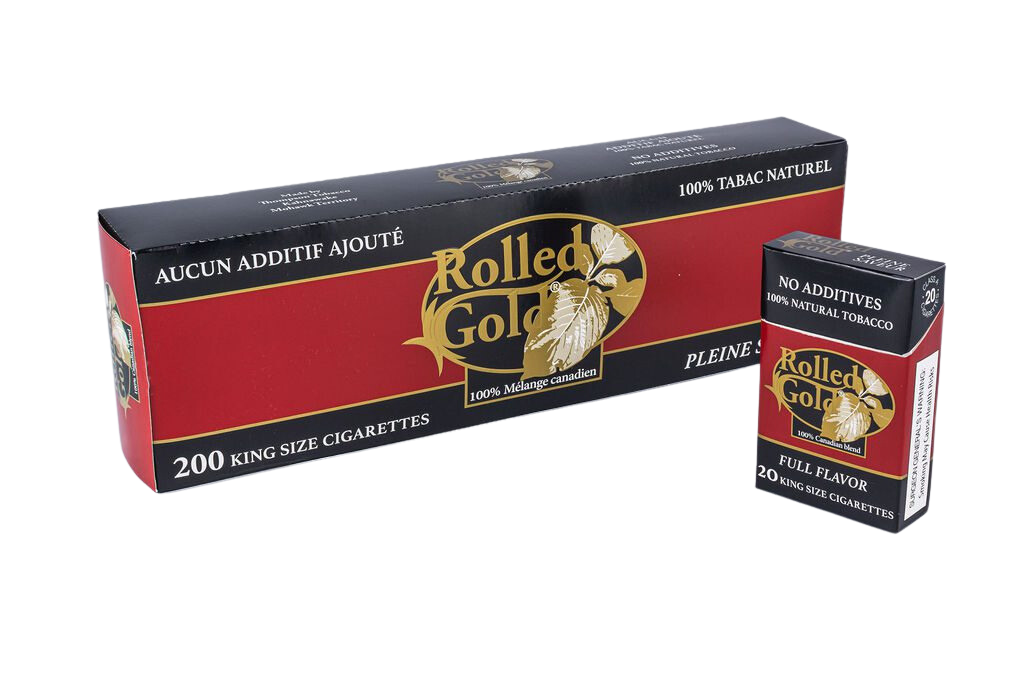
⭐ Excluded: BB light Manitoba, BB full Manitoba, Chanel Blueberry, Chanel ice. See all 29+ native brands at Cigstore.ca.
🚚 Delivery Across Canada – $29 Flat Rate
We ship to every province and territory using Canada Post, Purolator, FedEx, and UPS. Orders over $290 qualify for FREE shipping. Age verification (19+) required upon delivery.
📦 Same-day dispatch for orders before 2 PM EST. Tracking provided within 24 hours.
📚 You Might Also Enjoy These Articles
Smoking in Canadian Movies
From cool to condemned — the on-screen journey of tobacco.
Most Famous Canadian Cigarette Slogans
From “More doctors smoke Camels” to plain packaging.
History of Smoking in Canada
From 1950s magazine ads to plain packaging today.
10 Canadian Celebrities Who Smoke
Stars and their favorite brands.
Most Famous Smoking Characters in Film & TV
From Bogart to Don Draper.