
Why Cigarettes Were Part of 20th Century Office Culture
Ashtrays on Every Desk, Free Cartons in the Supply Closet, and the ‘Mad Men’ Era
📄🚬 Imagine walking into an office today and lighting a cigarette at your desk. You’d be escorted out by security. But for most of the 20th century, that scene was not only normal — it was expected. Ashtrays were as standard as staplers. Boardrooms had built-in cigarette holders. And secretaries were expected to keep their boss’s favorite brand stocked alongside office supplies. Cigarettes were not just tolerated in the workplace — they were woven into the fabric of office culture, from the mailroom to the executive suite. This article explores why smoking was so central to 20th-century office life: the social norms, the psychological needs of workers, the role of tobacco companies, and the eventual decline as science and regulation caught up.
In 1965, over 50% of Canadian adults smoked — including a majority of office workers.
Some executives smoked 3-4 packs per day, with cigarettes treated as office supplies [citation:8].
📈 Reason #1: Almost Everyone Smoked
The most straightforward reason offices were filled with smoke is that smoking was the norm, not the exception. In the 1950s and 1960s, over half of Canadian adults smoked regularly [citation:1]. In some workplaces — especially in advertising, sales, and other white-collar professions — the rate was even higher.
- 📊 Peak consumption: Per capita cigarette consumption in Canada rose steadily through the 1960s and 1970s, even after the 1964 Surgeon General’s report linking smoking to lung cancer [citation:1].
- 🚬 Non-smokers were the odd ones: In many offices, non-smokers were the minority. They were the ones who had to adapt — often by sitting near open windows or accepting the smoke.
- 👥 The “social smoker” phenomenon: Many people who would not have smoked at home still smoked at work because it was the social thing to do — bonding over a cigarette during a break or a meeting [citation:8].
📖 From a 2012 Stack Exchange discussion: “I worked in offices starting in the early 1980s. As hard as it is to believe now, not only did people smoke but you could not even complain about it — someone in an ‘open’ office could smoke right next to you.” [citation:8]
📺 The ‘Mad Men’ Era: Advertising, Excess, and the Three-Martini Lunch
No cultural artifact captures the smoking office better than Mad Men (2007-2015), the AMC series set in a 1960s New York advertising agency. The show’s portrayal of chain-smoking executives, ashtrays overflowing on conference tables, and cigarettes as props in power dynamics was not exaggeration — it was accurate.
- 🚬 Don Draper’s Lucky Strikes: The protagonist’s constant smoking was a character trait and a period detail. The show’s production used herbal cigarettes to avoid nicotine addiction in the actors [citation:4].
- 🥃 The three-martini lunch: Veteran ad executive Jerry Della Femina confirmed that drinking and smoking were underplayed on the show, not overplayed: “Bottles in desk drawers were not the exception but the rule… Everyone smoked at all times in all meetings.” [citation:8]
- 🏢 The Coca-Cola headquarters: A 2012 Toronto Star article noted that the Coca-Cola Canada headquarters building was so emblematic of the Mad Men era that “you can easily picture dapper ’60s ad man Don Draper… looking for an ashtray in which to butt out his cigarette.” [citation:2]
- 📋 Ashtrays as design features: Boardrooms were designed with ashtrays built into conference tables. Waiting areas had standing ashtrays. Even hallways had ashtray stands [citation:2][citation:6].
📖 From Jerry Della Femina (real-life ad exec): “I smoked three to four packs a day. Everybody smoked at all times in all meetings. Once, when I was sitting in a meeting for the Contac account, I had a (lit) cigarette in my hand and another in the ashtray. When I put down the cigarette to do a chalk talk, I tried to light the piece of chalk.” [citation:8]
📦 Cigarettes as Office Supplies: The Secretary’s Stockpile
One of the most striking differences between then and now is that cigarettes were treated as office supplies. Secretaries were expected to keep their bosses’ desks stocked with fresh packs, ordered alongside pens, paper, and staples.
- 📋 Real-life testimony: A woman who worked as an office secretary in the late 1950s and early 1960s reported that her boss smoked two to three packs a day just at the office. She had to empty his ashtray several times a day and bring him fresh cigarettes on demand [citation:8].
- 💼 Company-provided cigarettes: She was expected to keep at least two cartons of cigarettes in her desk drawer for him, ordered just like office supplies. Her boss told her she could order herself cigarettes on the company as well, as long as she smoked the same brand [citation:8].
- 🚬 The “Smoking Secretary”: In many offices, the secretary’s role included maintaining the boss’s cigarette supply, lighting his cigarettes, and emptying ashtrays — duties that seem shocking today.
- 📦 Cigarette vending machines: Many offices had cigarette vending machines in break rooms or hallways, often supplied by tobacco companies at no cost to the employer [citation:5].
📖 From a former secretary (quoted in Stack Exchange): “My grandmother used to be a big city office secretary back in the late 1950s and early 1960s… She said she was expected to keep at least two cartons of cigarettes in her desk drawer for him so he didn’t run out, and that she was told to order his cigarettes just like ordering office supplies for pens, paper, staples etc.” [citation:8]
⚡ The Addiction Factor: Workers Needed Their Nicotine
Beyond social norms, there was a practical (and physiological) reason offices allowed smoking: addicted workers needed access to nicotine to function. Withdrawal symptoms — irritability, difficulty concentrating, anxiety — are incompatible with productive work.
- 📉 Withdrawal and productivity: Employers who banned smoking risked a sharp drop in productivity as workers struggled with cravings. Many managers preferred to tolerate smoke rather than deal with distracted, irritable employees [citation:3][citation:7].
- 🛑 Worker resistance to bans: When employers attempted to restrict smoking, workers pushed back. During World War II, workers in defense industries struck against workplace smoking bans [citation:3][citation:7]. Addiction to nicotine led smokers to resist and challenge policies that stood between them and the cigarettes they craved [citation:7].
- ⚖️ The power dynamic: In the post-war era, strong unions and a tight labor market gave workers leverage. Employers who banned smoking risked losing skilled workers to competitors who allowed it [citation:10].
- 💼 The “smoke break” as a right: By the 1970s, the smoke break was an established workplace ritual. Workers had fought for — and won — the right to step away from their desks for a cigarette [citation:3].
💰 The Tobacco Industry’s Role: Marketing Directly to the Office
Tobacco companies did not passively benefit from office smoking — they actively cultivated it. Marketing strategies specifically targeted white-collar workers and created office-based smoking cultures.
- 📦 Free branded ashtrays: Companies like Player’s, Export ‘A’, and Du Maurier supplied offices with free branded ashtrays, ensuring their logos were seen every time a smoker reached for a place to extinguish [citation:5].
- 📋 Sales training materials: The Liggett & Myers Tobacco Company archives include sales training manuals from the 1950s that explore “the psychology of selling” — including how to get products into offices [citation:5].
- 💼 The “executive” market: Premium brands (Du Maurier, Benson & Hedges) specifically targeted high-income professionals. Office smoking signaled status and sophistication.
- 🚬 Cigarette vending machines in offices: Tobacco companies placed vending machines in office buildings, making it convenient for workers to buy cigarettes without leaving the premises.
- 🎯 The “hope and doubt” strategy: Even as health evidence accumulated, tobacco companies used marketing to create “hope in the form of reassuring marketing, as seen with light and mild cigarette brands, and doubt by means of disinformation campaigns attacking medical research” [citation:1].
👔 Gender and Power: Smoking as a Male Ritual
The mid-century office was a male-dominated space, particularly in management. Smoking was often a performative act of masculinity — a way to signal authority, worldliness, and decisiveness.
- 🔥 The boardroom smoke: Lighting a cigarette during a tense negotiation was a power move. It signaled confidence, control, and the ability to make others wait.
- 🤝 Networking over cigarettes: Offering a cigarette was a way to build rapport with colleagues, clients, and superiors. Sharing a smoke broke down barriers.
- 👩 The “Mad Men” gender divide: While male executives smoked freely at their desks, female secretaries were often expected to fetch cigarettes and empty ashtrays — a reflection of the era’s sexism [citation:8].
- 📉 Changing dynamics: As more women entered professional roles and second-wave feminism challenged workplace sexism, the all-male smoking culture began to erode.
📉 The Beginning of the End: How Office Smoking Disappeared
The demise of the ability to smoke on the job over the past four decades serves as an important indicator of how the power of workers’ influence in labor-management relations has dwindled over the same period [citation:3][citation:10]. While smoking bans are now widely supported (including by many former smokers), the process was not without conflict.
- ⚖️ The “smokers’ rights” movement: In the 1970s and 1980s, some workers organized to defend their right to smoke at work, arguing that bans infringed on personal freedom [citation:3].
- 📉 Shifting power dynamics: The decline of unions and the rise of employer-friendly labor laws made it easier for companies to impose smoking bans without worker resistance [citation:10].
- 🩺 Changing attitudes: As the health effects of secondhand smoke became undeniable, non-smokers gained political power. The right to breathe clean air trumped the right to smoke.
- 🏢 Today: Most Canadian offices are 100% smoke-free. Smokers must leave the building entirely, often walking to designated outdoor areas far from entrances.
📖 From a former office worker (quoted in Stack Exchange): “I just started working in the office in the late 90s, and a big attraction for me was the fact that several other women here had ashtrays on their desk and could smoke at work. But then in 2003, once they banned smoking in the office, I think my office productivity took a nose dive.” [citation:8]
📦 Native Cigarettes: Affordable Smoking for Today’s Workers
While you can no longer smoke at your desk, many Canadians still smoke. Native cigarettes (Playfare, Canadian, DuMont, Nexus, Rolled Gold) have become the affordable choice for price-conscious adult smokers. A carton costs $29-50, compared to $140-180 for commercial brands — a savings of 70-80%.
- 💰 Cost savings: A pack-a-day smoker saves $5,000-7,000 per year by switching to native cigarettes — real money for workers facing rising costs of living.
- 📦 Delivery to your home (not your desk): Cigstore.ca ships to every province and territory with $29 flat shipping (free over $290).
- 🚫 Not “healthier”: Native cigarettes contain the same nicotine, tar, and carcinogens as commercial brands. The only difference is price and packaging.
- 📉 Remember the ashtrays: Today, you must smoke outside during breaks. But you can still buy affordable cigarettes — you just can’t light up at your desk.
🔥 Top 5 Native Cigarettes for Today’s Smokers




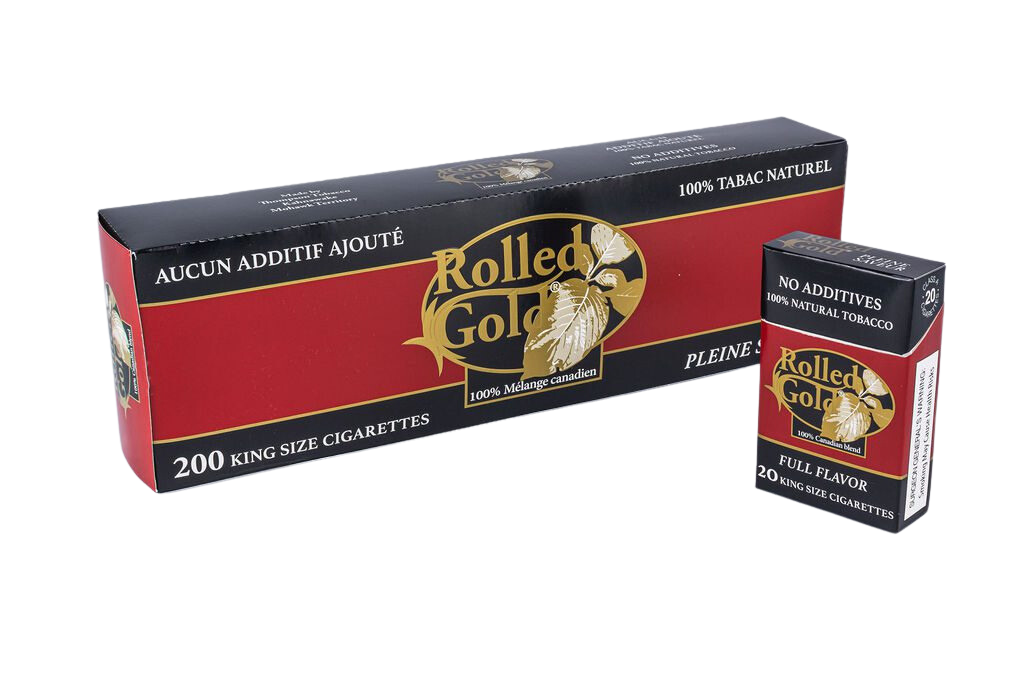
⭐ Excluded: BB light Manitoba, BB full Manitoba, Chanel Blueberry, Chanel ice. See all 29+ native brands at Cigstore.ca.
🚚 Delivery Across Canada – $29 Flat Rate
We ship to every province and territory using Canada Post, Purolator, FedEx, and UPS. Orders over $290 qualify for FREE shipping. Age verification (19+) required upon delivery.
📦 Same-day dispatch for orders before 2 PM EST. Tracking provided within 24 hours.
🏢 Note for office workers: Today, you cannot smoke inside workplaces. But you can order affordable native cigarettes for home or outdoor use. The ashtrays may be gone, but the smoking culture persists — just outdoors.
📚 You Might Also Enjoy These Articles
History of Smoking in Canada
From 1950s magazine ads to plain packaging today.
Why Modern Movie Characters Rarely Smoke
The MPAA rating shift that changed Hollywood.
Most Famous Smoking Characters in Film & TV
From Bogart to Don Draper.
Why Every Bar Had Ashtrays
The essential bar accessory that defined an era.
What the 1960s Cigarette Break Looked Like
Ashtrays everywhere, no limits.