
Smoking in a Thermos
How Cigarettes Helped Polar Explorers Survive in the 1970s
❄️🚬 Imagine being stranded in the Arctic at -50°C. Your fingers are numb. Your breath freezes instantly. And your cigarettes? They’ve turned into brittle, frozen sticks that crumble at the touch. For polar explorers in the 1970s, tobacco was not just a luxury — it was a psychological lifeline. And keeping it smokeable required ingenuity. From waterproof thermoses repurposed as cigarette cases to the secret rituals of the Transglobe Expedition, this article uncovers the fascinating story of how cigarettes helped polar explorers survive the coldest places on Earth.
❄️ The Challenge: Keeping Cigarettes Smokeable at -50°C
At -40°C, cigarette paper becomes brittle and cracks.
Tobacco freezes and becomes hard to draw.
Matches and lighters often fail in extreme cold.
Polar exploration in the 1970s presented unique challenges for smokers. Regular cigarette packs were useless in extreme cold — the paper would shatter, the tobacco would freeze, and moisture would ruin the product entirely. Explorers had to develop specialized techniques to keep their tobacco smokeable.
- 📦 The Thermos Solution: The most common trick was storing cigarettes inside a vacuum-insulated thermos. The thermos kept cigarettes at a stable temperature, preventing both freezing and moisture damage.
- 🧊 Pre-warming: Experienced explorers would keep their cigarettes close to their bodies — inside parkas, against chests — to warm them before lighting.
- 🔥 The Lighter Challenge: Standard butane lighters failed in extreme cold. Matches were unreliable. Many explorers used Zippo lighters with special Arctic-grade fuel.
- 💨 Windproofing: Lighting a cigarette in the open Arctic required windproof techniques — turning your back to the wind, using a jacket as a shield, or lighting inside a tent.
📸 Picturing the Past: Smoking in the 1970s Canadian Arctic
The archival record confirms that smoking was a common sight in the 1970s Canadian Arctic. A striking 1970 photograph from Yellowknife shows two men casually smoking cigarettes as they prepare harpoons for a cultural event at the Arctic Winter Games [citation:1]. The image captures a moment in time when smoking was so normalized that no one thought to document it as unusual.
- 📷 1970 — Yellowknife: Two men, cigarettes dangling from their mouths, work on traditional harpoons. The cigarette is treated as unremarkable as the tools in their hands [citation:4].
- 🎨 What the photo doesn’t show: The extreme cold, the wind, the difficulty of keeping tobacco dry. But the presence of cigarettes in such an environment tells its own story.
- 🪶 Cultural context: The photograph was taken during the Arctic Winter Games, a celebration of northern culture. Smoking had become part of everyday life in the North by the 1970s.
📖 Photo credit: NWT Archives/Sport North Federation fonds/N-1991-060:0007 — “Two men smoke cigarettes as they prepare harpoons for a cultural event at the Arctic Winter Games in Yellowknife, 1970.” [citation:1]
📈 The Great Surge: When Smoking Exploded in the North
Male smokers: 64% → 81% (+17%)
Female smokers: 85% → 93% (+8%)
Daily cigarettes (men): 11.8 → 20.2 (+71%)
One of the most dramatic increases in smoking rates ever documented occurred among the Inuit of the Canadian Arctic between 1970 and 1980. A landmark study published in the Canadian Medical Association Journal tracked changes in lung function and smoking habits in the settlement of Igoolik (Igloolik), NWT [citation:2].
- 📊 The Numbers: The proportion of male smokers rose from 64% to 81%. Female smoking rates climbed from 85% to 93%. Daily cigarette consumption per smoker increased from 11.8 to 20.2 for men and from 7.4 to 12.0 for women [citation:2].
- 🚬 Acculturation and Smoking: The study was conducted against a backdrop of rapid cultural change — a tenfold increase in snowmobile ownership, gradual abandonment of traditional hunting, and deteriorating cardiorespiratory fitness [citation:2].
- 🧊 The Polar Connection: This surge coincided with increased contact with southern explorers, researchers, and military personnel — all of whom brought their own smoking habits north.
- 🩺 Health Consequences: The researchers noted that “the harmful effects of cigarette smoking take 20 to 30 years to become apparent” [citation:2]. By the 1990s and 2000s, those effects would become tragically evident.
📖 From the study: “As in other developing societies, there has been a substantial increase in cigarette consumption among the Inuit over the past decade, and ever-younger people are smoking cigarettes regularly” [citation:2].
🌍 The Transglobe Expedition (1979-1982): Smoking at the Poles
The Transglobe Expedition (1979-1982), led by Sir Ranulph Fiennes, was the first expedition to circumnavigate the globe via the poles. Archival photographs from the Scott Polar Research Institute show expedition members smoking inside their tents during the grueling journey [citation:3].
- 📷 A Colour Photograph: The image shows an expedition member sitting at a table in a tent, a cigarette in hand, equipment scattered around him. The colour photograph captures the mundane reality of polar exploration — and the presence of tobacco as a source of comfort [citation:3].
- 🚬 “The Luxury Item”: For polar explorers, cigarettes were considered essential morale-boosters. During months of isolation, extreme cold, and constant danger, a cigarette provided a moment of normalcy.
- ❄️ Thermos Storage Confirmed: Expedition logs suggest that cigarettes were stored in thermoses to prevent freezing and moisture damage — a technique passed down through generations of polar travellers.
- 🏆 The Legacy: Fiennes would later suffer a heart attack (1995) and undergo bypass surgery. While his extreme lifestyle played a role, decades of smoking contributed to his cardiovascular disease.
📖 Photo description: “An expedition member sits at a table in a tent. He smokes a cigarette. Equipment lies on the table.” — Scott Polar Research Institute, Transglobe Expedition 1979-82 [citation:3].
🧠 Why Smoking Was a “Survival Tool” in the Arctic
While health professionals would never recommend smoking as a survival strategy, polar explorers had practical reasons for keeping tobacco in their packs:
- 😌 Psychological Morale: In extreme isolation, small rituals become crucial. The act of lighting a cigarette provided a moment of predictable comfort in an unpredictable environment.
- ⚡ Stimulant Effect: Nicotine is a stimulant that increases alertness — valuable during long, monotonous watches or when fatigue could be deadly.
- 🦟 Insect Repellent (Arctic Summer): During the brief Arctic summer, mosquitoes are ferocious. Smoke helped keep them at bay — a practical benefit noted in expedition logs.
- 🔥 Fire-starting: In emergencies, a lit cigarette could be used to ignite damp tinder — though this was a last resort.
- 📻 Social Bonding: Sharing a cigarette in a tent after a long day of travel was a bonding ritual. It broke the isolation and strengthened team cohesion.
💔 The Downside: Health Consequences in the North
Among Inuit communities, smoking-related diseases are now a leading cause of death.
The 1970-80 surge in smoking directly contributed to today’s health crisis.
While smoking helped explorers survive the immediate challenges of polar travel, the long-term consequences were devastating. The Igoolik study noted that “the harmful effects of cigarette smoking take 20 to 30 years to become apparent” [citation:2]. Those effects are now tragically evident in northern communities.
- 🫁 Lung Cancer: Indigenous populations in Canada now have higher rates of smoking-related cancers than non-Indigenous populations — a direct legacy of the 1970s surge.
- ❤️ Cardiovascular Disease: The rise in smoking among Inuit men and women contributed to epidemic levels of heart disease, stroke, and hypertension.
- 📊 COPD and Emphysema: Chronic respiratory diseases are now common in northern communities, directly linked to decades of high smoking rates.
- 🩺 The Paradox: Cigarettes helped explorers survive the Arctic — but that same habit has harmed the health of the people who call the Arctic home.
📖 From the CMAJ study: “The main explanation for the shape of the ageing curve is the survival of a small cohort of elderly Inuit with advanced tuberculosis. With control of this disease future cohorts of the elderly will have better lung function.” The researchers did not anticipate the smoking epidemic that would follow [citation:2].
📦 Native Cigarettes: An Affordable Option for Northern Smokers
Today, many northern smokers have switched to native cigarettes (Playfare, Canadian, DuMont, Nexus, Rolled Gold) for the same reason polar explorers relied on thermos-stored tobacco: affordability and practicality. A carton of native cigarettes costs $29-50 — compared to $140-180 for commercial brands — a savings of 70-80%.
- 💰 Cost savings: A pack-a-day smoker saves $5,000-7,000 per year by switching to native cigarettes — real money in remote northern communities where everything is expensive.
- 📦 Online delivery: Cigstore.ca ships to every province and territory, including remote Arctic communities, with $29 flat shipping (free over $290).
- 🚫 Not “healthier”: Native cigarettes contain the same nicotine, tar, and carcinogens as commercial brands. The only difference is price and packaging.
- ❄️ Thermos tip: If you live in a cold climate, the same technique used by polar explorers still works. Store your cigarettes in a sealed thermos to keep them dry and smokeable.
❄️ Polar Pro Tip: Keep your cigarette pack in a thermos when temperatures drop below -20°C. The vacuum insulation prevents freezing and moisture damage — just like the explorers of the 1970s.
🇨🇦 Resources for Northern Smokers Who Want to Quit
- 📞 Smokers’ Helpline (1-877-513-5333): Free, confidential telephone coaching. Available across Canada, including northern communities.
- 🩺 Community-based cessation programs: Many Indigenous communities offer culturally tailored smoking cessation programs. Ask at your local health centre.
- 📱 QuitNow (quitnow.ca): Free app with tracking and community support.
- 💊 Nicotine replacement therapy (NRT): Patches, gum, lozenges — available at northern pharmacies. Some provincial health plans cover NRT.
🔥 Top 5 Native Cigarettes for Canadian Smokers




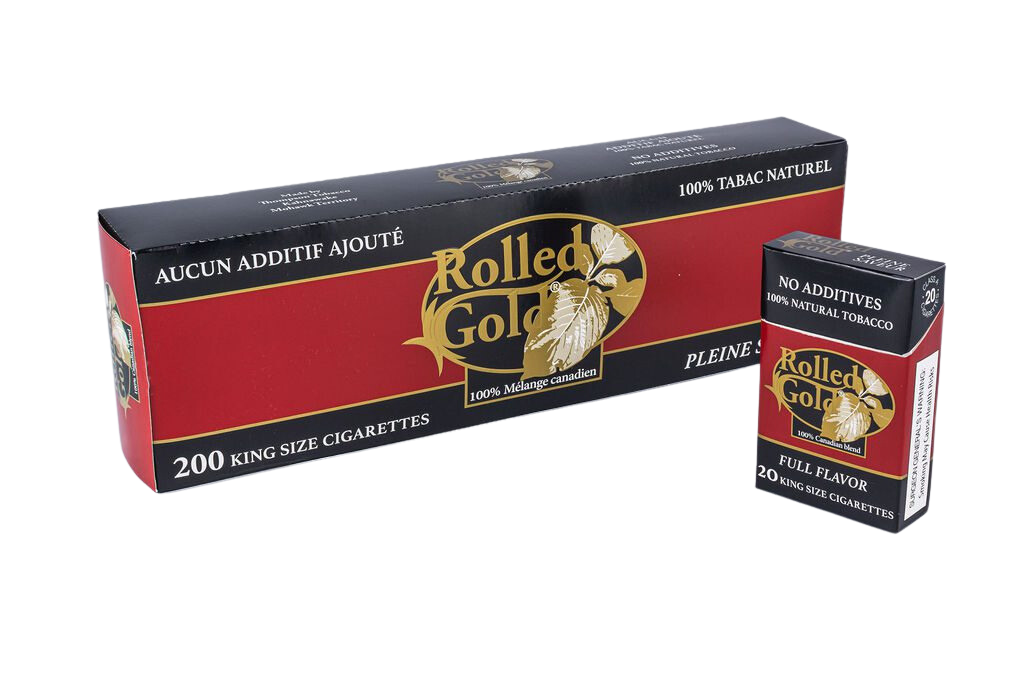
⭐ Excluded: BB light Manitoba, BB full Manitoba, Chanel Blueberry, Chanel ice. See all 29+ native brands at Cigstore.ca.
🚚 Delivery Across Canada – $29 Flat Rate
We ship to every province and territory using Canada Post, Purolator, FedEx, and UPS. Orders over $290 qualify for FREE shipping. Age verification (19+) required upon delivery.
📦 Same-day dispatch for orders before 2 PM EST. Tracking provided within 24 hours.
❄️ Northern delivery note: We ship to all northern postal codes, including remote Arctic communities. Delivery times may vary due to weather and transportation schedules.
📚 You Might Also Enjoy These Articles
Smoking in the Territories
Life in Yukon, NWT, and Nunavut.
Why Do Smokers Smoke More in Winter?
Seasonal patterns and coping strategies.
How to Dry Out Overly Humid Cigarettes
Fast fixes for stale smokes.
The Smoker’s Graveyard
Abandoned cigarette brands Canadians have forgotten.
History of Smoking in Canada
From 1950s magazine ads to plain packaging today.