
When Did Health Warnings First Appear on Cigarette Packs?
The Complete Canadian Timeline: From “Avoid Inhaling” to Warnings on Every Single Cigarette
⚠️📢 It’s hard to imagine today, but for most of the 20th century, cigarette packages in Canada had no health warnings at all. Smokers bought packs with beautiful designs, elegant fonts, and zero indication that the product inside could kill them. This article traces the complete history of health warnings on Canadian cigarettes: from the first timid “Avoid Inhaling” advice in 1972, to mandatory text warnings in 1989, to graphic images of diseased lungs in 2001, to plain packaging in 2019, and finally to warnings printed directly on every single cigarette in 2023 — a world first.
— Canada’s first-ever cigarette health warning (voluntary, often ignored)
In 1972, Canada became one of the first countries to require health warnings on cigarette packages — but the original warnings were voluntary and incredibly weak. The recommended text was so vague and unhelpful that it barely registered with smokers: “Avoid Inhaling — Tobacco Smoke Can Be Harmful” and “Do Not Smoke in Bed — Unattended Cigarettes Cause Fire.”
- 📄 Voluntary compliance: Manufacturers were not legally required to include warnings, and many simply ignored the recommendation.
- 💤 “Do Not Smoke in Bed”: The fire safety warning appeared on some packs, but there was still no mention of cancer, heart disease, or addiction.
- ⚖️ The tobacco industry’s influence: Warnings were kept weak because tobacco companies lobbied aggressively against stronger language. This was the era of “light” and “mild” marketing — full deception.
“Cigarettes are addictive.”
“Smoking causes lung cancer.”
— First mandatory warnings under Canadian federal law [citation:3]
1989 was the real turning point. Canada finally mandated four text-only health warnings that had to appear on every cigarette package. This was the first time Canadian law required warnings at all — and the messages were finally direct and accurate. [citation:3]
- ⚠️ The four original warnings (1989): “Smoking reduces life expectancy,” “Cigarettes are addictive,” “Smoking causes lung cancer,” and “Smoking during pregnancy can harm your baby.”
- 📏 Size requirement: Warnings were relatively small — only about 10-15% of the package surface — and text-only, no images.
- 🇨🇦 Canada leads the way: While modest by today’s standards, Canada was among the first countries to require any type of mandatory health warning on tobacco products.
“Cigarettes cause strokes and heart disease.”
“Tobacco smoke causes fatal lung disease in non-smokers.”
“Cigarettes are addictive.”
— Eight new warnings, covering 35% of the package [citation:3]
In 1994, Canada introduced eight new, more graphic text warnings that covered the top 35% of each main display area on cigarette packs. These warnings were significantly more direct and alarming than the 1989 versions. They also included the first warnings about secondhand smoke — a major public health breakthrough. [citation:3]
- 📊 Size increase: Warnings now occupied 35% of the front and back of each pack — a major step forward.
- 🚬 Secondhand smoke recognized: “Tobacco smoke causes fatal lung disease in non-smokers” — this was the first time packaging acknowledged that smoking harms others.
- 📅 Also in 1994: The federal government first proposed plain packaging to balance a tobacco tax cut — but the industry fought back successfully for 25 years. [citation:4]
📊 The Evolution of Canadian Cigarette Warnings
| Year | Warning Type | Coverage | Key Messages | Legal Status |
|---|---|---|---|---|
| 1972 | Voluntary text only | Minimal | “Avoid Inhaling” / “Do Not Smoke in Bed” | Voluntary — often ignored |
| 1989 | Mandatory text only | ~10-15% of package | “Smoking causes lung cancer” / “Cigarettes are addictive” | First mandatory warnings [citation:3] |
| 1994 | Enhanced text warnings | 35% of front and back | “Cigarettes cause fatal lung disease” / Secondhand smoke warning | Stronger, more direct [citation:3] |
| 2001 (Graphic) | Graphic images + text | 50% of package | Diseased lungs, mouths, hearts — actual photographs | World first — Canada pioneered graphic warnings [citation:6][citation:9] |
| 2011 | Enhanced graphic warnings | 75% of front and back | Even more graphic images + quit line number | Largest warnings in the world at the time [citation:10] |
| 2019 | Plain packaging + graphic warnings | 75% + uniform drab brown color | No brand colors, no logos, standardized fonts | Plain packaging becomes law [citation:7] |
| 2023-2025 | Warnings on individual cigarettes | 100% — every single cigarette | “Poison in every puff” / “Cigarettes cause impotence” | World first — Canada leads again [citation:1][citation:5] |
— Canada becomes the FIRST country in the world to require graphic picture warnings [citation:6][citation:9]
In 2000, Canada passed the law requiring graphic warnings; they appeared on store shelves in 2001. This was a revolutionary moment in global tobacco control. Canada was the first country to require full-color graphic images of smoking-related diseases on cigarette packages — not just text. The images were shocking, graphic, and impossible to ignore. [citation:6][citation:9]
- 📷 The images: Diseased lungs, a mouth with cancer, rotting teeth, a scarred heart, a woman on a breathing machine, and Barb Tarbox — a real Canadian woman who died of lung cancer at age 42 and allowed her dying image to be used as a warning. [citation:9]
- 🌍 Global impact: After Canada’s move, over 130 countries followed with their own graphic warning requirements. [citation:5]
- 📊 Effectiveness: Studies showed that after graphic warnings were introduced, 80% of Canadian smokers reported that the images made them think about quitting. [citation:9]
— Enhanced graphic warnings with even more disturbing images [citation:10]
In 2011, Canada made its warnings even larger and more graphic. Health warnings now covered 75% of the front and back of every cigarette package — the largest warning size in the world at that time. The images were updated to be even more disturbing, and a pan-Canadian quit line number was added to every pack. [citation:10]
- 📏 75% coverage: Only 25% of the package remained for branding — a huge reduction.
- 📞 Quit line: Smokers could call 1-866-366-3667 for free cessation support.
- ⚠️ Toxicity information: Packs also included easy-to-understand toxicity information about chemicals in cigarette smoke. [citation:10]
— The brand’s identity disappears. The warning takes over.
After 25 years of industry resistance, Canada finally implemented plain packaging requirements in 2019. [citation:4] The idea had first been proposed in 1994, but tobacco companies fought it through lobbying, lawsuits, and public relations campaigns. When plain packaging finally took effect, all cigarette packages became uniform drab brown with standardized fonts, no logos, and no color variations. [citation:7]
- 🟤 The “ugliest color”: Drab brown was scientifically chosen as the least attractive color — it does not appeal to youth and minimizes branding appeal.
- 🚫 No more Du Maurier gold, Export A red, or Player’s blue: All brand colors were banned. Every pack looks the same.
- 📦 Implementation: Plain packaging requirements were phased in starting November 2019, with full retail compliance by February 2022. [citation:7]
- ⚖️ Industry resistance: Tobacco companies spent millions fighting plain packaging — including considering a NAFTA challenge — but ultimately failed. [citation:4]
🔥 “Cigarettes cause impotence”
🔥 “Cigarettes cause cancer”
— Printed directly on each cigarette, near the filter. You cannot avoid the warning. [citation:1][citation:5]
In May 2023, Health Canada announced a world-first policy: health warnings would be printed directly on individual cigarettes. The regulations took effect in August 2023, with phased implementation: king-size cigarettes had to comply by July 2024, and regular-size by April 2025. [citation:1] [citation:5] This means that every single cigarette sold in Canada now carries its own health warning — even if the pack is hidden or discarded.
- 📝 The messages (rotating set of 6): “Poison in every puff,” “Cigarettes cause impotence,” “Cigarettes cause cancer,” “Cigarettes cause leukemia,” “Tobacco smoke harms children,” and “Cigarettes damage your organs.” [citation:1][citation:5]
- 👶 Targeting youth: The policy specifically aims to deter young people who might be given a single cigarette by a friend — without seeing the pack, they’ll still see the warning. [citation:6]
- 🌍 Global leadership: Canada is the first country in the world to require warnings on individual cigarettes. Other countries are now considering similar measures.
- ⚙️ Technical challenges: Printing on curved, small surfaces required specialized equipment — but Health Canada worked with manufacturers to implement the change. [citation:1]
💰 Why Are Canadian Cigarettes So Expensive Today?
By 2026, a commercial pack of 25 cigarettes costs $18–25 in most Canadian provinces. Why? Three factors: high federal and provincial taxes, plain packaging compliance costs, and litigation settlements. [citation:8]
- 📊 Taxes: Federal excise tax + provincial tobacco tax = 70-80% of the retail price.
- ⚖️ Quebec settlement: In 2015, a Quebec court ordered tobacco companies to pay $15.5 billion to smokers deceived by “light” and “mild” marketing — costs passed to consumers.
- 📦 Native cigarettes: Indigenous brands (Playfare, Canadian, DuMont) are not subject to federal/provincial excise taxes when sold on reserves — which is why a carton costs $35 instead of $180. [citation:8]
🔥 Top 5 Popular Products for Canadian Smokers Today




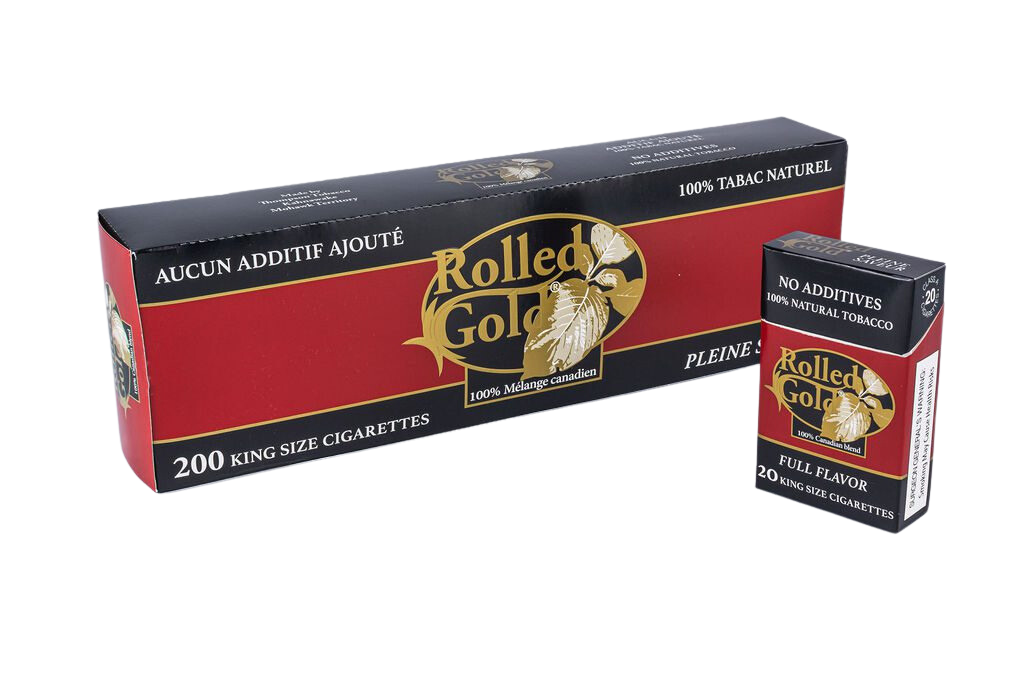
⭐ Excluded: BB light Manitoba, BB full Manitoba, Chanel Blueberry, Chanel ice. See all 29+ native brands at Cigstore.ca.
🚚 Delivery Across Canada – $29 Flat Rate
We ship to every province and territory using Canada Post, Purolator, FedEx, and UPS. Orders over $290 qualify for FREE shipping. Age verification (19+) required upon delivery — we comply with all Canadian laws, including the plain packaging and warning label regulations described above.
📦 Same-day dispatch for orders before 2 PM EST. Tracking provided within 24 hours.
📚 You Might Also Enjoy These Articles
History of Smoking in Canada
From 1950s magazine ads to plain packaging today.
5 Iconic Ads Banned Today
Campaigns that would never survive modern laws.
1994 Tax Cut Story
How native cigarettes became affordable.
Why Cigarettes Are Expensive
Complete federal & provincial tax breakdown.
10 Canadian Celebrities Who Smoke
Stars and their favorite brands.