
When Did Filterless Cigarettes Start Disappearing?
The Rise of the Filter and the Decline of the Plain Cigarette in Canada
🚬📜 Open a pack of cigarettes today, and you will find a filter attached to every smoke. But this was not always the case. For most of the first half of the 20th century, cigarettes were “plain” — unfiltered, with nothing between the smoker’s lips and the burning tobacco. The filter, now ubiquitous, was a mid-century innovation that transformed the industry. This article traces the history of the filterless cigarette in Canada: its dominance in the pre-1960s era, the introduction of filters as a convenience feature, the explosion of filtered cigarette sales in the 1960s and 1970s, and the near-total disappearance of plain cigarettes by the 1980s.
📜 The Plain Cigarette Era: Pre-1950s
Before the 1950s, cigarettes were much simpler than they are today. The “plain” cigarette — unfiltered, with low-permeability paper and high deliveries of tar and nicotine — was the standard [citation:4]. The tobacco blend was the most important ingredient, and taste and flavour were paramount [citation:4].
- 🚬 No filters, no frills: Smokers in the 1920s, 30s, and 40s bought cigarettes that were pure tobacco wrapped in paper. There was nothing between them and the smoke.
- 📊 High consumption: In the 1950s, annual cigarette sales in Canada reached 33 billion. Smoking prevalence peaked at 58% of the population [citation:7].
- ⚖️ 1961 tax change: As late as 1961, the federal government amended the Excise Act to allow for longer cigarettes (including filters) without additional tax. The goal was to permit the manufacture of so-called “king size” cigarettes. Finance Minister Donald Fleming noted that most cigarettes longer than normal in size were longer because of the filter, not because they contained more tobacco [citation:9].
- 🎞️ Vintage brands: Iconic plain cigarettes included Player’s, Export ‘A’ (plain), and Craven ‘A’. Many older smokers remember these brands as the “real” cigarettes — before filters changed the taste.
🔬 The First Filters (1930s): Convenience, Not Health
Ads reassured smokers worried about sore throats and persistent coughs [citation:3][citation:8].
Contrary to popular belief, the first filtered cigarettes were not introduced as a health measure. They were introduced as a convenience feature [citation:4].
- 📋 Preventing tobacco bits: The filter was added to save smokers from having to pick bits of tobacco out of their teeth. It was a cleanliness feature, not a health feature [citation:4].
- 💰 Cost reduction: Filters also reduced the cost of cigarettes because filter material was cheaper than tobacco. By using a filter, manufacturers could sell a “king size” cigarette with the same amount of tobacco as a shorter plain cigarette [citation:4].
- 🧪 “Health marketing” emerges: Although filters were not designed for health, advertisements for these early filtered brands reassured smokers who were worried about sore throats and persistent coughs [citation:3][citation:8]. The seed of “health marketing” was planted in the 1930s, decades before the cancer scare of the 1950s [citation:8].
- 📈 Early adoption: Filter cigarettes caught on quickly in Canada, though plain cigarettes remained dominant for decades [citation:4].
📖 From the Journal of the Canadian Historical Association (2014): “Menthol and filtered cigarettes first appeared in the 1930s, ads for which reassured smokers worried about sore throats and persistent coughs.” [citation:3]
⚠️ The 1950s: The Link to Lung Cancer and the Rise of the “Health Filter”
The 1950s were a turning point for the cigarette industry. Scientists firmly established the link between smoking and lung cancer [citation:7]. The 1962 Royal College of Physicians Report (UK) and the 1964 U.S. Surgeon General’s Report conclusively linked tobacco use to health problems, particularly lung cancer [citation:1].
- 😨 The “cancer scare”: As the health evidence accumulated, smokers became anxious. The industry needed a response [citation:3].
- 🛡️ The filter as a shield: The industry heavily promoted filtered brands as “safer” cigarettes, even though there was no evidence that filters reduced health risks [citation:3][citation:8].
- 📊 Filter sales explode: Smokers flocked to filtered cigarettes as a perceived harm-reduction strategy. By 1971, over 80% of cigarettes sold in Canada were filtered. By the end of the decade, it was close to 100% [citation:4].
- 📉 The decline of the plain cigarette: As filters rose, plain cigarettes began their long, irreversible decline. By the 1980s, plain cigarettes were a niche product, smoked primarily by older, tradition-minded smokers.
📖 The industry’s internal knowledge: While the industry publicly promoted filters as “safer,” internal documents reveal that manufacturers knew filters did not meaningfully reduce health risks. However, the perception of safety was enough to drive sales [citation:5].
📊 The Numbers: How Fast Did Filters Take Over?
| Year | Annual Cigarette Sales (billions) | Filter Share | Smoking Prevalence |
|---|---|---|---|
| 1950s (mid) | 33 | Low (rising) | 58% [citation:7] |
| 1960s (mid) | 51 | Increasing | 50% [citation:7] |
| 1971 | — | Over 80% [citation:4] | — |
| 1970s (end) | 64 | Close to 100% [citation:4] | 45% [citation:7] |
| 1980s (mid) | 66 | Virtually all cigarettes filtered | 34% [citation:7] |
Sources: Physicians for a Smoke-Free Canada [citation:4], International Smoking Statistics [citation:6][citation:7].
🎭 The “Light” and “Mild” Era: Engineering Perception
Once filters became universal, manufacturers introduced new design features to further shape consumer perception — and to circumvent regulations. In the 1960s and 1970s, manufacturers introduced vent holes in filters and increased the porosity of cigarette paper. These features allowed ambient air to dilute mainstream smoke, reducing machine-measured tar and nicotine yields [citation:1].
- 📋 Ventilation holes: One or more rings of small perforations in the filter allowed ambient air to dilute the smoke. This reduced the machine-measured tar and nicotine readings [citation:1][citation:5].
- 🔬 Paper porosity: By increasing the porosity of the paper, more ambient air could mix with the smoke along the tobacco column, further diluting it [citation:1].
- 🏷️ “Light” and “Mild” terms: Manufacturers used terms like “light” and “mild” to describe brands with air-diluted smoke. In 2005, 58% of smokers reported consuming cigarettes that displayed a “light” or “mild” term [citation:1].
- ⚖️ The deception: The ventilation holes and paper porosity reduced machine-measured yields but did not reduce human exposure. Smokers compensated by inhaling deeper, smoking more, or blocking the ventilation holes with their lips or fingers [citation:5].
📖 From the Canada Gazette (2007): “Manufacturers used terms such as ‘light’ and ‘mild’ to describe brands of cigarettes with air-diluted mainstream smoke.” [citation:1]
💀 The Last Holdouts: Plain Cigarettes in the Modern Era
While plain cigarettes have effectively disappeared from the Canadian market, they have not vanished entirely. A few brands — most notably Export ‘A’ Plain — have survived as niche products, beloved by a small group of traditionalists who insist that filters ruin the taste of tobacco.
- 📦 Export ‘A’ Plain: A legendary Canadian brand, known for its strong, unfiltered taste. Smokers of Export ‘A’ Plain are a dedicated subculture, often older men who have smoked the same brand for decades.
- 🌍 International context: In some countries, plain cigarettes remain more common. For example, in parts of Europe and Asia, unfiltered cigarettes are still sold. But Canada, with its aggressive tobacco control policies, has seen a near-complete shift to filtered products.
- 📉 Declining demand: As the generation that grew up on plain cigarettes ages and dies, demand for filterless products continues to shrink. It is unlikely that any major tobacco company will introduce a new plain cigarette brand.
- 🏛️ Plain packaging irony: Today, even filtered cigarettes come in plain brown packages, stripped of branding and colours. The “plain” cigarette has been replaced by “plain packaging” — a different kind of plainness altogether.
📦 Native Cigarettes: Filtered and Affordable
Today’s native cigarettes are almost exclusively filtered. Native cigarettes (Playfare, Canadian, DuMont, Nexus, Rolled Gold) cost $29-50 per carton — compared to $140-180 for commercial brands — a savings of 70-80%.
- 💰 Cost savings: A pack-a-day smoker saves $5,000-7,000 per year by switching to native cigarettes.
- 🚫 Not “healthier”: Native cigarettes contain the same nicotine, tar, and carcinogens as commercial brands. The only difference is price and packaging.
- 📦 Online delivery: Cigstore.ca ships to every province and territory with $29 flat shipping (free over $290).
- 📜 No plain cigarettes: Native manufacturers do not produce filterless cigarettes. The plain cigarette is a relic of a bygone era.
🔥 Top 5 Native Cigarettes for Canadian Smokers
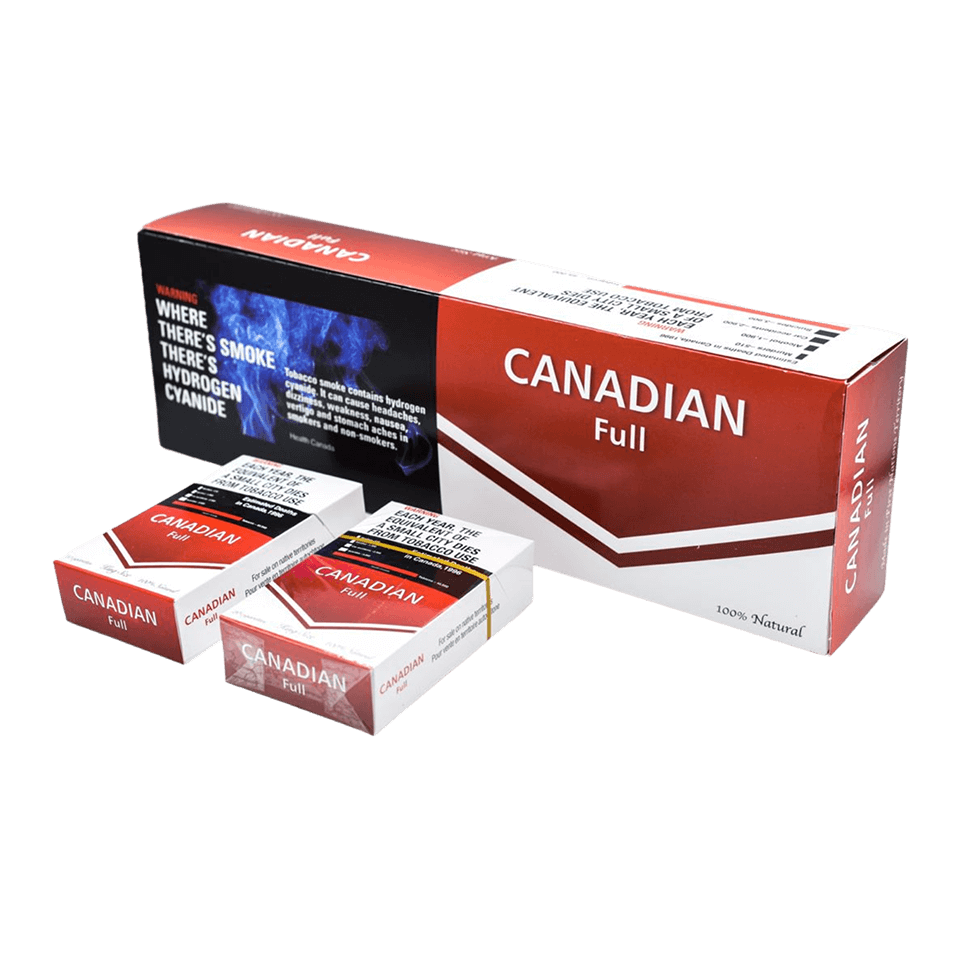


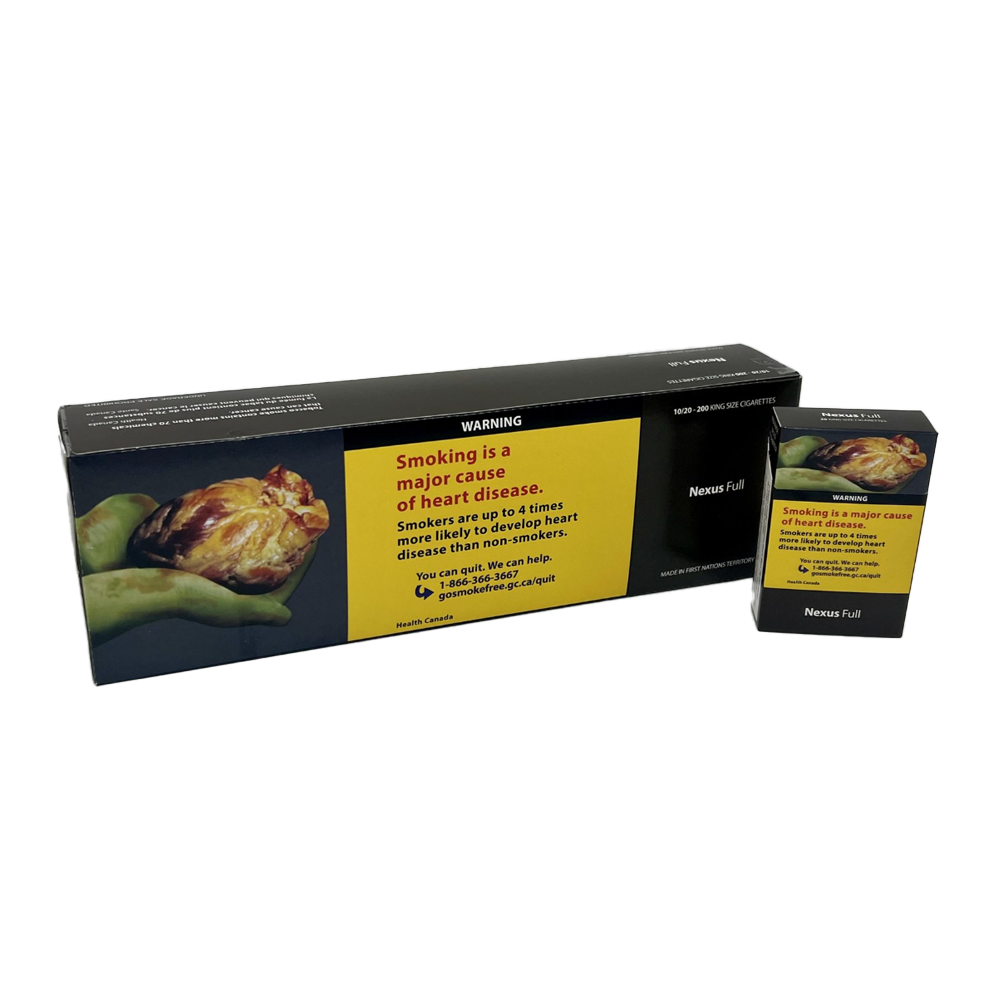
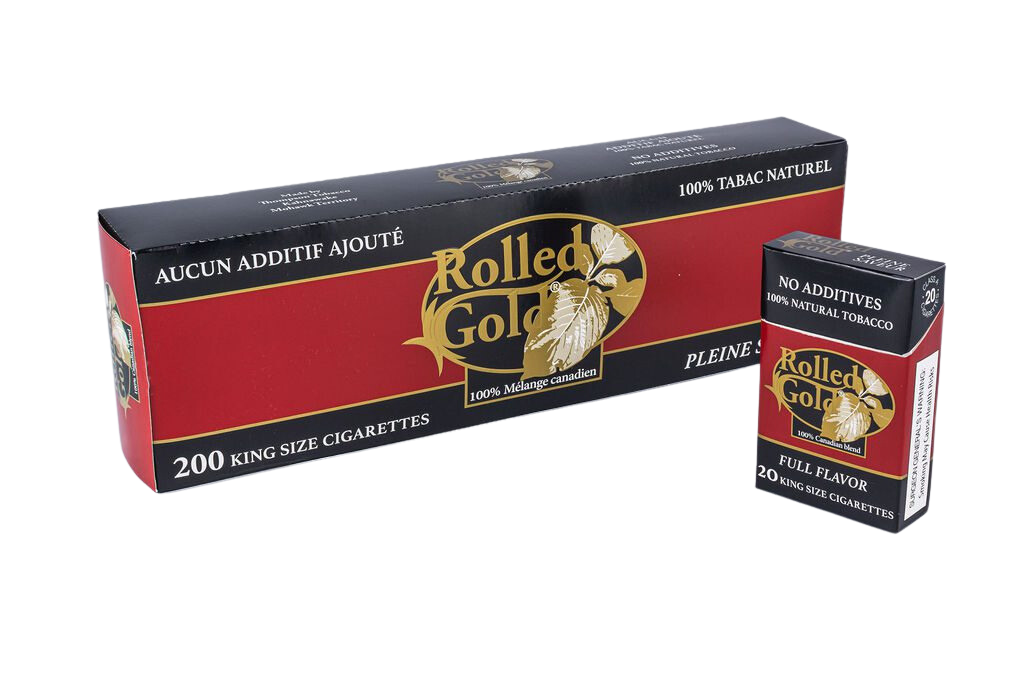
⭐ Excluded: BB light Manitoba, BB full Manitoba, Chanel Blueberry, Chanel ice. See all 29+ native brands at Cigstore.ca.
🚚 Delivery Across Canada – $29 Flat Rate
We ship to every province and territory using Canada Post, Purolator, FedEx, and UPS. Orders over $290 qualify for FREE shipping. Age verification (19+) required upon delivery.
📦 Same-day dispatch for orders before 2 PM EST. Tracking provided within 24 hours.
📚 You Might Also Enjoy These Articles
History of Smoking in Canada
From 1950s magazine ads to plain packaging today.
Why Cigarettes Are Expensive
Complete federal & provincial tax breakdown.
The Mandela Effect: Cigarette Brands That Everyone Remembers Wrong
From Nelson Mandela cigarettes to the Marlboro baby.
Most Famous Canadian Cigarette Slogans
From “More doctors smoke Camels” to plain packaging.
When Did Health Warnings First Appear on Cigarette Packs?
The Canadian timeline from 1972 to today.