
Why Modern Movie Characters Rarely Smoke (And When That Changed)
From Humphrey Bogart to Marvel Heroes: The Dramatic Decline of Smoking in Cinema
🎬🚬 Watch a movie from the 1940s, and you’ll see a cigarette in almost every scene. Humphrey Bogart, Lauren Bacall, James Dean — they all smoked. It was cool, sophisticated, rebellious. Fast forward to today: superheroes save the world without a single puff. Romantic leads don’t light up after a kiss. Even villains rarely smoke. This article traces the fascinating history of smoking in movies: from the golden age when tobacco companies paid for product placement, to the dramatic shift in the 1990s and 2000s, to the modern era where smoking can earn a film an automatic R-rating. We explore when and why this change happened — and what it means for public health and Hollywood storytelling.
Top-grossing films in 1990: 80% featured smoking.
Top-grossing films in 2022: 20% featured smoking.
Decline of 75% in three decades.
🎞️ The Golden Age: When Smoking Was Mandatory (1920s-1960s)
In the golden age of Hollywood, smoking was not just allowed — it was expected. Cigarettes were everywhere: in gangster films, romantic comedies, westerns, and film noir. Studios had lucrative product placement deals with tobacco companies. Brands like Lucky Strike, Camel, and Chesterfield paid to have their cigarettes appear in movies. Actors smoked on and off screen.
- 📽️ Iconic smoking moments: Humphrey Bogart in Casablanca (1942), Lauren Bacall in The Big Sleep (1946), Audrey Hepburn in Breakfast at Tiffany’s (1961).
- 💼 Product placement deals: Tobacco companies paid studios to feature their brands prominently. In return, cigarettes were often seen as props that added “realism” and “cool factor.”
- 🎭 No health warnings: The link between smoking and cancer was not widely known or accepted until the 1964 Surgeon General’s report. Studios had no reason to avoid smoking.
- 📈 Peak years: Between 1930 and 1965, smoking appeared in over 70% of all Hollywood films.
🎬 Casablanca (1942): “Here’s looking at you, kid.” — Humphrey Bogart lights a cigarette, exhales, and delivers one of cinema’s most famous lines.
📉 The Gradual Decline (1970s-1980s)
The landmark US Surgeon General’s report links smoking to lung cancer. Public awareness begins to change, but Hollywood is slow to follow.
Cigarette advertising is banned on US television and radio. Product placement in movies becomes even more valuable to tobacco companies.
Despite growing health awareness, cigarettes remain common in movies. Dirty Dancing (1987), Die Hard (1988), When Harry Met Sally (1989) all feature smoking. The “cool” factor remains strong.
⚠️ The Turning Point: The 1990s and Anti-Smoking Advocacy
The 1990s marked a dramatic shift. Public health groups began targeting Hollywood directly, accusing studios of glamorizing addiction to children. A landmark 1998 study found that smoking in movies was the single strongest predictor of youth smoking initiation.
- 📊 The 1998 Dalton study: Published in The Lancet, this study found that adolescents whose favorite movie stars smoked were significantly more likely to start smoking themselves. The correlation was stronger than peer pressure or parental smoking.
- 📢 Advocacy campaigns: Groups like Smoke Free Movies (launched 2001) began pressuring studios to stop featuring smoking in youth-rated films (PG-13 and below).
- ⚖️ Legal pressure: Tobacco industry documents released in the 1990s revealed that companies had deliberately marketed to youth through movie placements. This scandal increased pressure on studios.
- 📉 Gradual decline: By 1998, smoking in top-grossing films had dropped to 60% — still high, but declining.
🎬 Pulp Fiction (1994): Quentin Tarantino’s masterpiece is famous for its smoking scenes. But this was already a throwback — most mainstream films had started to reduce smoking by the mid-1990s.
🌟 The Game-Changer: When Smoking Became a Rating Factor (2007)
This was the moment everything changed. Suddenly, smoking had financial consequences for studios. A PG-13 film (accessible to teenagers) that featured smoking risked an R rating, which would drastically reduce its box office potential. Studios began removing smoking scenes during editing — not for health reasons, but for profit.
- 💰 The economics of PG-13 vs. R: PG-13 films have a much larger potential audience (ages 13+). R-rated films exclude viewers under 17 without a parent, significantly reducing ticket sales. Studios want PG-13.
- 📋 The exceptions: Films could still feature smoking if it was “clearly disapproved” (e.g., showing negative health consequences) or “historically necessary” (e.g., a period piece set in the 1950s).
- 📉 Immediate impact: After 2007, smoking in PG-13 films plummeted. By 2010, only 15% of PG-13 films featured smoking, down from over 50% in 2000.
- 🎬 The Marvel effect: Superhero films, which are almost exclusively PG-13, became entirely smoke-free. Iron Man, Captain America, Thor — none smoke. They set a new standard.
📖 From the MPAA’s 2007 policy: “The rating system will take into account whether the smoking is pervasive, glamorized, or appears in a context that encourages imitation. Depictions of smoking that are historically or factually accurate may be treated differently.”
⚖️ The Legal Framework: How Tobacco Industry Documents Changed Everything
The 1998 Master Settlement Agreement (MSA) between US states and major tobacco companies prohibited direct product placement in movies. But the MSA had a loophole: it did not prohibit “independent” use of cigarettes in films, as long as no money changed hands. However, the release of internal tobacco industry documents during the 1990s revealed decades of deliberate marketing to youth, creating a public relations disaster for Hollywood.
- 📄 The “Lorillard memos”: Internal documents showed that tobacco companies tracked the smoking behavior of movie characters and paid for placements in films like Superman (1978) and Who Framed Roger Rabbit (1988).
- 📉 Public backlash: When these documents were made public, studios faced intense criticism. Many voluntarily agreed to stop accepting tobacco money and to reduce smoking in their films.
- ✅ Voluntary agreements: By the early 2000s, major studios (Disney, Warner Bros., Universal) adopted policies to discourage smoking in youth-targeted films.
📊 Then vs. Now: Smoking in Top Films (1990 vs. 2022)
| Film (1990) | Smoking Present? | Film (2022) | Smoking Present? |
|---|---|---|---|
| Ghost | ✅ Yes | Top Gun: Maverick | ❌ No |
| Home Alone | ✅ Yes (character briefly smokes) | Avatar: The Way of Water | ❌ No |
| Pretty Woman | ✅ Yes | Black Panther: Wakanda Forever | ❌ No |
| Die Hard 2 | ✅ Yes | Doctor Strange in the Multiverse of Madness | ❌ No |
| Total Recall | ✅ Yes | Jurassic World Dominion | ❌ No |
🎭 The Exceptions: Where Smoking Still Appears
Smoking has not disappeared entirely. It still appears in R-rated films, independent movies, and period pieces where it’s “historically accurate.” Directors like Quentin Tarantino, Martin Scorsese, and Paul Thomas Anderson continue to feature smoking as a character trait or period detail.
- 🎬 R-rated films: Because R-rated films are not marketed to teenagers, studios have more freedom. However, even R-rated films have reduced smoking significantly.
- 📜 Period pieces: Films set in the 1950s, 60s, or 70s often include smoking for historical accuracy. Mad Men (TV) and Once Upon a Time in Hollywood (2019) are examples.
- 🌍 International films: Movies produced outside the US are not subject to MPAA rating pressure. Some foreign films still feature smoking prominently.
- 📉 Even exceptions are declining: The 2019 film Once Upon a Time in Hollywood — a period piece set in 1969 — featured significant smoking. But in 2022, no top-grossing film did.
🎬 Quentin Tarantino (2019): “I’m not making movies for children. If a character would smoke, they smoke.” — Tarantino has been a vocal critic of the MPAA’s smoking policy, but he is increasingly an outlier.
🩺 Has the Decline in Movie Smoking Reduced Youth Smoking?
Multiple studies have confirmed the link between on-screen smoking and youth initiation. A 2017 study estimated that eliminating smoking from youth-rated films would reduce adolescent smoking rates by 18% and prevent 1 million deaths. The dramatic decline in movie smoking since 2007 has coincided with record-low youth smoking rates in the US and Canada.
- 📉 Youth smoking in Canada: In 1990, over 25% of Canadian youth (15-19) smoked. In 2022, the rate was under 8%.
- 📊 Correlation is not causation: Many factors contributed (higher taxes, plain packaging, bans on advertising). But researchers estimate that the decline in on-screen smoking accounts for 10-20% of the total reduction.
- ✅ The CDC’s position: The US Centers for Disease Control and Prevention (CDC) recommends that all movies with smoking receive an R rating, regardless of context.
🔮 The Future: Will Smoking Disappear from Movies Altogether?
Probably not entirely, but it will become increasingly rare. Several trends point to continued decline:
- 📉 PG-13 is the target: Most major studio films are made for PG-13 audiences. As long as the MPAA penalizes smoking with R ratings, studios will avoid it.
- 🎭 Streaming services: Netflix, Amazon, and Disney+ have their own internal standards. Disney+ famously does not allow smoking at all in its original content (even in period pieces).
- 🌍 International pressure: China, India, and other large film markets have also adopted anti-smoking policies for movies shown on television or in theaters.
- ⚖️ Possible future legislation: Some Canadian provinces have considered laws that would require an 18A rating for any film showing smoking — which would effectively ban smoking from movies shown to youth.
- 🎬 Artistic exceptions: Independent and international films will likely continue to feature smoking as an artistic choice. But mainstream Hollywood will remain largely smoke-free.
🇨🇦 The Canadian Context: How Our Films Compare
Canadian films follow similar trends to Hollywood, but there are some differences. Canadian independent films (e.g., Denis Villeneuve’s early work, Xavier Dolan’s films) have sometimes featured smoking as an artistic choice. However, major Canadian productions intended for international distribution follow Hollywood standards.
- 📽️ Telefilm Canada: The federal funder does not have explicit anti-smoking policies, but projects with youth appeal are expected to avoid glamorizing smoking.
- 📊 Smoking in Canadian films: A 2019 study found that smoking in top Canadian films (English and French) had declined to levels comparable to Hollywood — under 20%.
- 🎬 Quebec exception: Quebec cinema has historically been more permissive about smoking as an artistic element. However, even Quebec films have reduced smoking over time.
📦 A Note on Native Cigarettes: Not in Films, But Used by Smokers
You will almost never see native cigarette brands (Playfare, Canadian, DuMont) in movies. Why? Because product placement requires relationships with manufacturers, and native brands do not have Hollywood budgets. However, many Canadian smokers have switched to native cigarettes for everyday use — they cost $35-50 per carton, compared to $140-180 for commercial brands.
- 💰 Cost savings: Smokers who switch to native cigarettes save $5,000-7,000 per year — whether they watch movies or not.
- 🚭 No glamorization: Native brands do not advertise in movies, on TV, or on billboards. They are sold online or on reserves, with no marketing to youth.
- 📦 If you smoke, native cigarettes are affordable: The decline of smoking in movies has not reduced the cost of commercial cigarettes. Native cigarettes remain the best value for adult smokers who have not quit.
🔥 Top 5 Native Cigarettes for Canadian Smokers




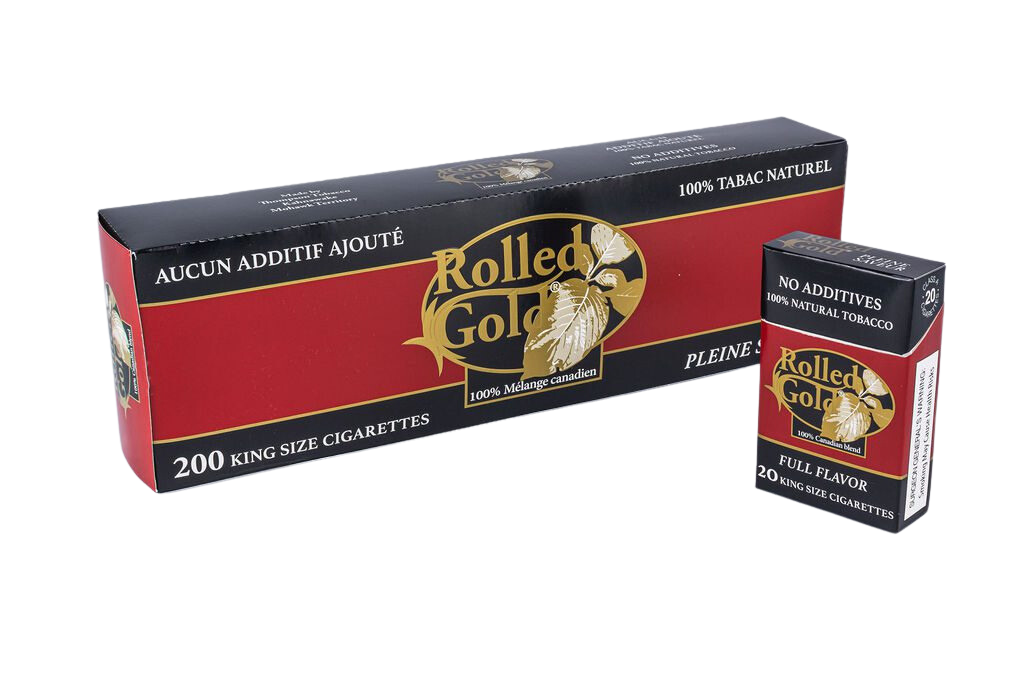
⭐ Excluded: BB light Manitoba, BB full Manitoba, Chanel Blueberry, Chanel ice. See all 29+ native brands at Cigstore.ca.
🚚 Delivery Across Canada – $29 Flat Rate
We ship to every province and territory using Canada Post, Purolator, FedEx, and UPS. Orders over $290 qualify for FREE shipping. Age verification (19+) required upon delivery.
📦 Same-day dispatch for orders before 2 PM EST. Tracking provided within 24 hours.
📚 You Might Also Enjoy These Articles
History of Smoking in Canada
From 1950s magazine ads to plain packaging today.
5 Iconic Ads Banned Today
Campaigns that would never survive modern laws.
Most Famous Canadian Cigarette Slogans
From “More doctors smoke Camels” to plain packaging.
Most Controversial Cigarette Advertising Campaigns
Joe Camel, light cigarettes, and more.
Smoking in Canadian Movies: From Cool to Condemned
The on-screen journey of tobacco.