
Canada’s Most Famous Smokers
From the Cigarette Smoking Man to Joni Mitchell — A Cultural History of Tobacco in Canada
🇨🇦🚬 From the mysterious Cigarette Smoking Man who plotted global conspiracies on The X-Files, to the raspy voice of folk legend Joni Mitchell, to a Prime Minister who famously inhaled, Canada has produced more than its share of iconic smokers. Some are famous for their on-screen characters, others for their real-life habits or tragic consequences. This article profiles the most famous Canadian smokers — including actors, politicians, musicians, athletes, and even an anti-smoking activist whose dying image now warns millions on cigarette packs[citation:7].
William B. Davis
Born: January 13, 1938, Toronto, Ontario
William B. Davis is the Canadian actor who portrayed the iconic “Cigarette Smoking Man” on The X-Files. The character — a mysterious, chain-smoking government operative — became one of the most recognizable villains in television history. Ironically, Davis quit smoking in the 1970s and smoked only herbal cigarettes on set[citation:1].
Before his acting career, Davis was a national champion water skier and a drama professor at Bishop’s University. He later founded the William Davis Centre for Actors Study in Vancouver[citation:1].
Joni Mitchell
Born: November 7, 1943, Fort Macleod, Alberta
Joni Mitchell has been a cigarette smoker since the age of nine. She claims she fell in love with smoking immediately upon taking her first puffs, noting that other children who were smoking broke out in coughing fits while “it felt right to her from the very beginning”[citation:10].
Mitchell’s decades-long smoking habit may explain the unique texture of her voice, which was especially prominent in her later albums. She is a Companion of the Order of Canada and one of the most influential singer-songwriters of the 20th century[citation:10].
Henri Bourassa
Henri Bourassa, the most prominent French-Canadian nationalist of his day, was a noted smoker of tabac canadien (Canadian homegrown tobacco) in clay pipes. After his death, many friends remembered him smoking the strong tobacco and thought this habit memorable enough to record in a collection of reminiscences[citation:2].
When Bourassa sat on stage smoking his short clay pipe as he waited to give a speech at a nationalist rally in 1907, his nationalist oratory had likely already begun with him smoking his pipe of tabac canadien — a fact commented upon by contemporaries[citation:2].
A lifelong smoker who died of lung and brain cancer at 42 — her photograph now appears on Canadian cigarette packs as a health warning[citation:7].
Barb Tarbox is arguably the most famous Canadian smoker — but not for the reasons you might think. She became a prominent anti-smoking activist while dying of smoking-related cancers. Tarbox started smoking at age 11 to fit in with “popular kids.” During the last months of her life, she traveled across Canada teaching young people about the consequences of smoking and emphasizing that she was unable to quit even after she found out she had cancer[citation:6][citation:7].
- 🕊️ Death: May 18, 2003, Edmonton, Alberta (age 42) from lung and brain cancer[citation:7].
- 🏅 Recognition: Posthumously awarded the Meritorious Service Medal on December 5, 2003, for devotion to the anti-smoking cause[citation:6][citation:7].
- 📦 Legacy on cigarette packs: On December 30, 2010, the Government of Canada unveiled tougher anti-smoking images on cigarette packaging — including two images featuring Barb Tarbox during her last days[citation:6][citation:7].
📖 Quote: “The tragedy is that I started smoking at 13. And now I’m dying.” — Barb Tarbox[citation:6]
Justin Trudeau
In 2013, then-Liberal leader Justin Trudeau famously admitted he had smoked marijuana five or six times in his life — including once as a sitting Member of Parliament. When asked if it was a mistake, he replied, “No, it wasn’t a mistake”[citation:3][citation:8].
The admission came during an interview with the Huffington Post, in which Trudeau also revealed that his youngest brother, Michel, was charged with marijuana possession shortly before his 1998 death in an avalanche[citation:8].
Trudeau said he last smoked marijuana about three years before the interview, at his house in Montreal, outside on a patio by the pool: “We had a few good friends over for a dinner party, our kids were at their grandmother’s for the night, and one of our friends lit a joint and passed it around. I had a puff”[citation:8].
Ross Rebagliati
Born July 14, 1971, in Vancouver, British Columbia, Ross Rebagliati became the first-ever Olympic gold medalist in men’s snowboarding at the 1998 Winter Olympics in Nagano[citation:4].
Days after his victory, he tested positive for tetrahydrocannabinol (THC) and was briefly disqualified. The decision was overturned — largely on the basis that marijuana was not on the list of banned substances at the time — and Rebagliati was given back the medal[citation:4].
THC has since been listed as a banned substance by the World Anti-Doping Agency (WADA). Rebagliati has since become an outspoken medical cannabis advocate and founded Legacy Brands, a CBD consumables company[citation:4].
Al Howie
Al Howie was a three-packs-a-day smoker when he arrived in Canada from Scotland in the early 1970s, on the run from Interpol[citation:9].
After settling in Duncan, British Columbia, Howie used running to kick his addiction to cigarettes and drugs. He went on to become one of the greatest long-distance runners in Canadian history — completing races that are the stuff of legends[citation:9].
His story was captured in the 2019 biography In Search of Al Howie by New York author Jared Beasley[citation:9].
🎶 Stan Rogers (1949-1983)
Canadian folk musician Stan Rogers, known for his baritone voice and songs like “Northwest Passage” and “Barrett’s Privateers,” died tragically young at age 33. The cause of death was smoke inhalation — though from a fire, not from smoking. Rogers died in the cabin of an Air Canada flight when fire broke out on board[citation:5].
While his death was not tobacco-related, the irony of a famous Canadian singer dying from smoke inhalation while his most famous songs celebrated the rugged Canadian identity has not been lost on music historians.
🏭 The Men Who Sold the Smoke: William Macdonald
Not all famous Canadian smokers were consumers. Some were industrialists who shaped the tobacco industry itself.
- William Macdonald (1831-1917): The Montreal-based tobacco industrialist who dominated the Canadian industry during the second half of the 19th century. Macdonald refused to use French-Canadian tobacco because of its terroir (soil and climate). Through his massive distribution system, he set standards that made industrially produced American tobacco the dominant publicly accepted taste of tobacco in much of Canada[citation:2].
- The Macdonald Institute: His legacy extends beyond tobacco — he was a major philanthropist whose donations funded Macdonald College (now part of McGill University) and other educational institutions[citation:2].
🗿 Tobacco as a Symbol of French-Canadian Identity
In early 20th-century Quebec, the choice of tobacco was a political statement. Henri Bourassa’s habit of smoking tabac canadien (Canadian homegrown tobacco) in a clay pipe was a deliberate nationalist act. While connoisseurs dismissed the strong-smelling homegrown tobacco as “backward” and “uncivilized,” Bourassa and others used it to construct French-Canadian identity in opposition to Anglo-American industrial tobacco[citation:2].
- 📰 “Une bonne pipe de tabac canadien!” — A 1906 cartoon in L’Album Universel equated the strong smell of homegrown tobacco with a dirty, poorly dressed street person, illustrating the class and ethnic tensions around tobacco choices[citation:2].
- 💼 Industrial vs. Homegrown: The early 20th-century Canadian tobacco market was divided between industrially produced American-style tobacco (associated with progress, modernity, and Anglo-Canadian identity) and French-Canadian homegrown tobacco (associated with tradition, rural life, and nationalist pride)[citation:2].
🔥 Top 5 Native Cigarettes for Canadian Smokers




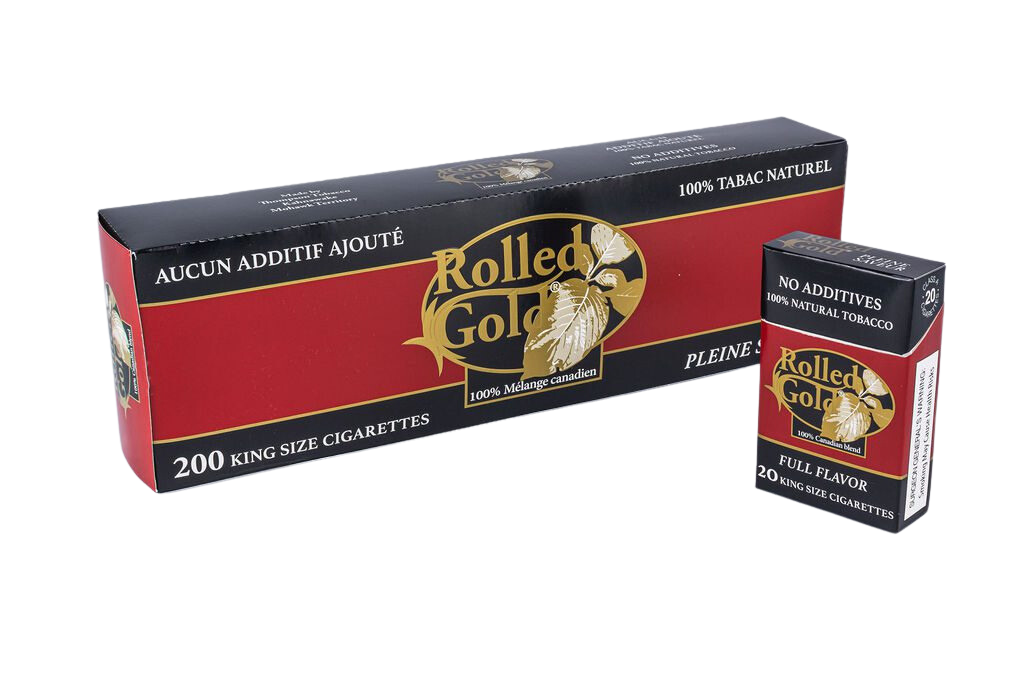
⭐ Excluded: BB light Manitoba, BB full Manitoba, Chanel Blueberry, Chanel ice. See all 29+ native brands at Cigstore.ca.
🚚 Delivery Across Canada – $29 Flat Rate
We ship to every province and territory using Canada Post, Purolator, FedEx, and UPS. Orders over $290 qualify for FREE shipping. Age verification (19+) required upon delivery.
📦 Same-day dispatch for orders before 2 PM EST. Tracking provided within 24 hours.
📚 You Might Also Enjoy These Articles
History of Smoking in Canada
From 1950s magazine ads to plain packaging today.
5 Iconic Ads Banned Today
Campaigns that would never survive modern laws.
Most Famous Canadian Cigarette Slogans
From “More doctors smoke Camels” to plain packaging.
Most Famous Smoking Characters in Film and TV
From Bogart to Don Draper.
10 Canadian Celebrities Who Smoke
Stars and their favorite brands.