
The History of Smoking Rooms in Airports
From Terminal-Wide Haze to Glass Cages — The Rise and Fall of Airport Smoking Lounges in Canada
✈️🚬 Imagine walking into an airport terminal in 1975. The air is thick with blue-grey smoke. Ashtrays overflow at every gate. Passengers light up while waiting for their flights, and nobody bats an eye. For decades, smoking in airports was not just permitted — it was expected. But as science exposed the dangers of secondhand smoke, governments began to act. This article traces the complete history of smoking rooms in Canadian airports: from the first restrictions in 1982, to the 40/60 seating rule of 1987, to the eventual 100% bans that eliminated smoking indoors entirely.
✈️ The Golden Age: Smoking Everywhere (Pre-1980s)
Before the 1980s, the concept of a “designated smoking area” in an airport did not exist. Smoking was permitted throughout terminals, and ashtrays were everywhere. A mid-1960s ceramic ashtray from Canadian Pacific Air Lines, featuring the airline’s stylized geese logo, is now a museum piece — but in its day, it was standard airport equipment [citation:2][citation:6].
- ✈️ Airline freebies: Airlines handed out complimentary cigarettes to passengers, and first-class lounges had ashtrays built into tables [citation:2][citation:6].
- 🚬 No restrictions: Smoking was allowed in ticket areas, baggage claim, washrooms, and waiting lounges. The only occasional restriction was on aircraft themselves, where non-smoking sections began appearing in 1971 [citation:4].
- 📦 Souvenir ashtrays: Collectible ashtrays from Canadian Pacific, Trans-Canada Airlines (later Air Canada), and other carriers remain as artifacts of this era [citation:2].
- 💨 The 1975 debate: In 1975, MP Howard Johnston complained that there was “no partition separating the eighth row from the ninth row” on Air Canada flights, making the smoking/non-smoking division “rather arbitrary” [citation:5].
📖 From the Royal Aviation Museum of Western Canada: “As dated as the item may seem today, first-class lounges on airplanes actually had ash trays on tables.” — Paul Balcaen, exhibits co-ordinator [citation:2].
📜 The First Restrictions: 1982 — Transport Canada Takes Action
The 1982 restrictions were modest by today’s standards but revolutionary for their time. Transport Canada designated non-smoking areas in ticketing areas, baggage claim, and washrooms — but smoking was still permitted in holdrooms (gate waiting areas) and bars.
- 📋 Limited scope: The 1982 rules applied only to federal airports. Provincially operated airports had their own rules, which varied widely.
- 🚬 Bars remained smoking havens: Airport bars were specifically exempted from early restrictions. Smokers could freely light up over drinks [citation:1].
- ⚖️ Enforcement challenges: Early restrictions relied heavily on voluntary compliance. MP Howard Johnston noted in 1975 that flight attendants often avoided confrontation: “I have heard a person in the non-smoking section ask the attendant if he could smoke, and the attendant has said to him that he may do so if no one objects” [citation:5].
- 📊 The result: While a step forward, the 1982 rules did not eliminate smoke-filled terminals. Non-smokers still suffered.
🏛️ The 1987 Directive: The 40/60 Rule and Designated Smoking Areas
Smoking banned in all free circulation areas, ticket locations, baggage claim areas, and washrooms.
Holdrooms and food outlets: 40% smoking, 60% non-smoking [citation:1].
In August 1987, Transport Canada issued a sweeping new directive that fundamentally reshaped the airport smoking landscape. This directive created the first true “designated smoking areas” in Canadian airports. The only places where smoking was freely permitted were bars [citation:1].
- 📋 The 40/60 rule: A minimum of 60% of seating in holdrooms and food/beverage outlets was designated non-smoking. A maximum of 40% could be designated smoking. These smoking areas were placed “well away from service counters and aircraft boarding exits where passengers congregate” [citation:1].
- 🚫 No smoking in washrooms: The directive specifically banned smoking in washrooms — a common refuge for smokers trying to evade earlier restrictions [citation:1].
- 📦 Pictographic signs: To indicate smoking and non-smoking areas, Transport Canada posted pictographic signs in conspicuous places inside all air terminal buildings. Additional signs were posted at entrances in both official languages [citation:1].
- 🚬 Bars exempted: “The only areas where smoking is freely permitted are in the bars” — this exemption remained in place until later restrictions [citation:1].
- ⚖️ Enforcement: Enforcement fell under airport traffic regulations and applicable municipal bylaws [citation:1].
📖 From Transport Canada (January 22, 1988): “During the past four months, Transport Canada has taken several steps towards ensuring the provision of smoke-free air to those employees and passengers using airport buildings… The directive bans smoking in all free circulation areas, ticket locations, baggage claim areas and washrooms.” [citation:1]
🔄 The 1990s: Tightening Rules and the Rise of Ventilated Smoking Rooms
The 1990s brought further restrictions and the emergence of ventilated smoking rooms (VSRs) — enclosed, specially ventilated spaces designed to contain smoke. These were the first true “smoking rooms” as we think of them today [citation:3].
- 📋 Provincial variations: By the 1990s, provinces began implementing their own smoke-free workplace laws. This created a patchwork of rules across Canadian airports [citation:3].
- 🚫 Elimination of smoking in bars: The bar exemption that had existed since the 1980s began to disappear as provincial laws banned smoking in all enclosed public spaces.
- 💨 The VSR compromise: Ventilated smoking rooms were seen as a compromise — they allowed smokers a place to light up while theoretically protecting non-smokers from secondhand smoke. In practice, smoke often leaked out when doors opened.
- 📊 Many airports removed VSRs: By the late 1990s and early 2000s, many Canadian airports chose to eliminate smoking rooms entirely rather than bear the cost of maintaining specialized ventilation systems.
🚫 The 100% Ban: When Smoking Rooms Disappeared Entirely
The final nail in the coffin of airport smoking rooms came from the federal Non-Smokers’ Health Act. Under this legislation, smoking is banned in all federally regulated workplaces — including airports and other transportation terminals. Smoking rooms are not permitted [citation:9][citation:10].
- ⚖️ Federal jurisdiction: Airports fall under federal jurisdiction, meaning provincial laws do not apply. The federal ban is absolute — no smoking rooms allowed [citation:9][citation:10].
- 🚬 Outside security only: In some airports, smoking is still permitted outside the terminal building, beyond security checkpoints. But once you pass through security, there is no legal place to smoke.
- 💨 The last holdouts: Some major international airports (e.g., Vancouver International Airport) removed their last indoor smoking rooms in the early 2010s. Today, Canadian airports are 100% smoke-free indoors.
- ✈️ International comparison: Unlike Canada, some international airports (e.g., Tokyo Narita, Dubai International) still maintain ventilated smoking rooms. Canadian travellers flying abroad may encounter smoking rooms — but not on the Canadian side of security.
📖 Important for travellers: If you are flying internationally, you may find smoking rooms in airports outside Canada. But within Canada — and on Canadian soil — indoor smoking is prohibited everywhere in airports, including in areas after security [citation:9].
📅 Complete Timeline: Smoking in Canadian Airports
🍺 The Bar Exemption: Why Airport Bars Were the Last to Change
One of the most interesting aspects of the history of airport smoking is the long-standing exemption for bars. As late as 1987, Transport Canada explicitly noted that “the only areas where smoking is freely permitted are in the bars” [citation:1].
- 📋 Why bars were exempted: The tobacco industry and hospitality sector argued that smoking bans would devastate bar revenues. This argument delayed action for decades.
- 🚬 The bar-as-sanctuary: For years, airport bars were havens of blue smoke — the last refuge for travellers desperate for a cigarette before a long flight.
- 📉 Provincial action: The bar exemption was eliminated province by province, beginning with Prince Edward Island in 2002 and continuing through the 2000s [citation:7].
- ⚖️ Federal alignment: Once provincial laws banned smoking in bars, the federal exemption became moot. By the 2010s, airport bars were as smoke-free as the rest of the terminal.
✈️ Airports Today: Where Can Smokers Light Up?
Indoor smoking is completely banned in all Canadian airports.
No ventilated smoking rooms. No bar exemptions. No exceptions [citation:9][citation:10].
Today, if you want to smoke in a Canadian airport, you must exit the terminal building entirely and go to designated outdoor smoking areas. These are typically located outside departures and arrivals levels, often at a distance from entrances.
- 🚬 Before security: Smokers can exit the terminal, smoke in designated outdoor areas, and re-enter through security (allowing time for screening).
- 🚫 After security: There is no legal place to smoke after passing through security. Smokers must be prepared to go without for the duration of their journey.
- ✈️ Connecting flights: Travellers on connecting flights cannot leave the secure area to smoke. They must wait until their destination.
- 💡 Pro tip: Many smokers use nicotine replacement therapy (patches, gum) or e-cigarettes (where permitted) to manage cravings during travel. E-cigarettes are subject to the same restrictions as tobacco cigarettes in Canadian airports.
📖 International note: Some international airports (e.g., Tokyo Narita, Dubai, Munich) maintain ventilated smoking rooms post-security. Canadian travellers may encounter these abroad — but never on Canadian soil.
📦 Native Cigarettes: Affordable Smoking Before Your Flight
While you cannot smoke inside Canadian airports, many smokers stock up on affordable native cigarettes before their trip. Native cigarettes (Playfare, Canadian, DuMont, Nexus, Rolled Gold) cost $29-50 per carton — compared to $140-180 for commercial brands. A pack-a-day smoker saves $5,000-7,000 per year by switching.
- 💰 Cost savings: If you are travelling, stock up before your trip. Cigstore.ca ships to your home or office — not to airports.
- 🚫 Not “healthier”: Native cigarettes contain the same nicotine, tar, and carcinogens as commercial brands. The only difference is price and packaging.
- 📦 Plan ahead: Order native cigarettes before your flight and have them waiting for you when you return. No airport markup — just affordable prices.
- ✈️ Travel tip: Remember that you cannot smoke in airports. If you need help managing cravings during travel, consider nicotine patches or gum.
🔥 Top 5 Native Cigarettes for Canadian Smokers
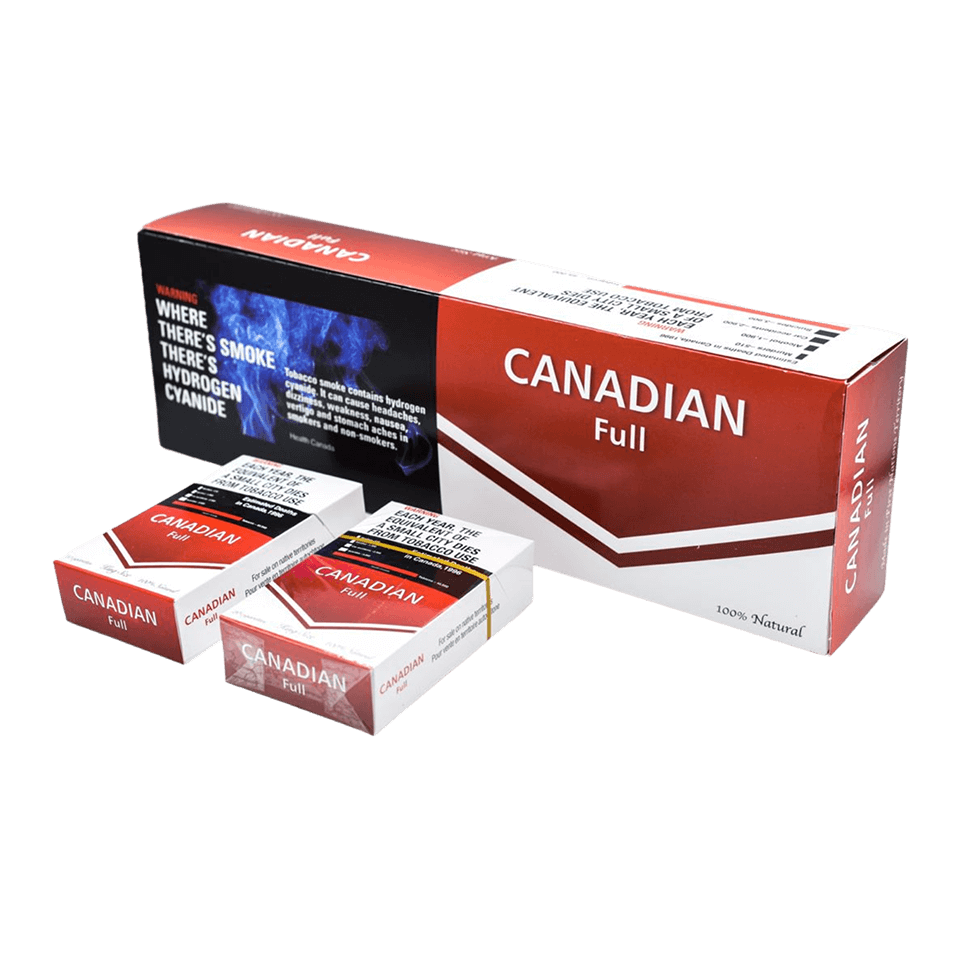

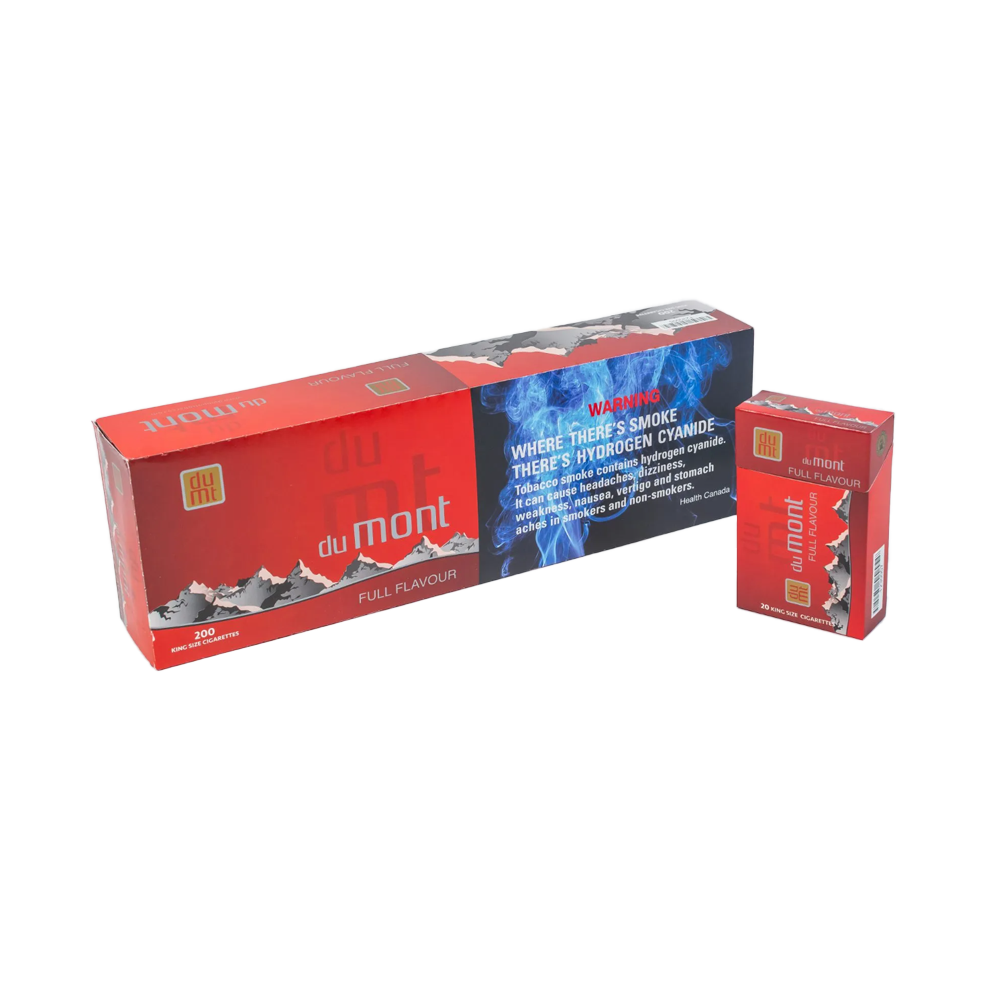

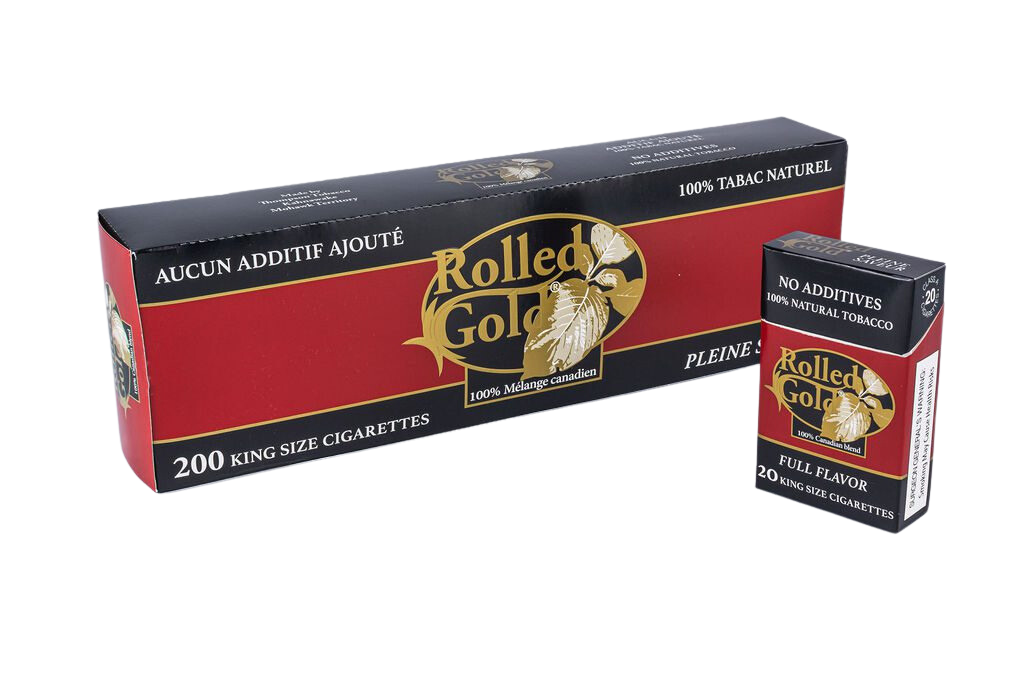
⭐ Excluded: BB light Manitoba, BB full Manitoba, Chanel Blueberry, Chanel ice. See all 29+ native brands at Cigstore.ca.
🚚 Delivery Across Canada – $29 Flat Rate
We ship to every province and territory using Canada Post, Purolator, FedEx, and UPS. Orders over $290 qualify for FREE shipping. Age verification (19+) required upon delivery.
📦 Same-day dispatch for orders before 2 PM EST. Tracking provided within 24 hours.
✈️ Travel note: We cannot ship to airports. Order native cigarettes to your home before your trip. Remember: you cannot smoke in Canadian airports. Plan accordingly.
📚 You Might Also Enjoy These Articles
When Was Smoking Allowed on Airplanes?
The turbulent history of in-flight tobacco.
Best & Worst Canadian Airports for Smokers
Updated 2026 edition.
How to Fly with Cigarettes
CATSA hacks they don’t want you to know.
History of Smoking in Canada
From 1950s magazine ads to plain packaging today.
Why Cigarettes Are Expensive
Complete federal & provincial tax breakdown.