
How Cigarettes Became Part of the Movie Detective’s Look
From Sam Spade to Philip Marlowe: The Birth of a Cinematic Archetype
🕵️♂️🚬 Film noir private eyes are rarely pictured without a cigarette in their hand or mouth. Film noir, a uniquely cinematic genre, uses low-key lighting to create stark contrasts of light and dark — and cigarette smoke is the perfect visual complement to this shadowy aesthetic . From Humphrey Bogart’s Sam Spade to Robert Mitchum’s Philip Marlowe, the detective’s cigarette was not just a prop but an essential storytelling tool. This article explores how cigarettes became the defining accessory of the movie detective: the influence of film noir’s visual style, the real-life habits of the actors who played them, the symbolic meanings of the smoke, and the eventual decline of this iconic trope.
🎬 The Birth of Film Noir: Smoking as Visual Language
Film noir — a term coined by French critics after World War II — was a product of German Expressionism, American detective fiction, and the cynicism of the post-war era. The genre is famous for its visual style: low-key lighting, stark shadows, rain-slicked streets, and — crucially — curling wisps of cigarette smoke .
- 📸 The noir aesthetic: “Light filters through window blinds, falls on a face in close-up, and catches the smoke rising from a forgotten cigarette in a noir film.” The smoke adds texture, depth, and a sense of moral ambiguity.
- 📜 The detective as archetype: The noir detective is cynical, world-weary, and operates in a universe of moral grey areas. “The cigarette is more than just a piece of the costume. It symbolizes many of the key traits of the detective” .
- 🌫️ Smoke as mood: In a genre built on shadows, cigarette smoke provided a dynamic, moving element that could fill empty space and create atmosphere. The smoke itself became a character.
- 📖 The eyes of the detective: The cigarette’s glow illuminates the detective’s face in close-ups, revealing his thoughts when dialogue fails. It also obscures his eyes, adding mystery.
📖 From film noir scholar J.P. Telotte: “A uniquely cinematic genre, film noir is known for its low-key lighting that produces stark contrasts of light and dark and its looming, often intrusive shadows — and a cigarette and its smoke are a perfect complement to this visual style” .
📜 From Page to Screen: The Hard-Boiled Detective Tradition
The cinematic detective’s cigarette habit has its roots in the hard-boiled detective fiction of the 1920s and 1930s — the stories of Dashiell Hammett (The Maltese Falcon, The Thin Man) and Raymond Chandler (The Big Sleep, Farewell, My Lovely). In these stories, detectives like Sam Spade and Philip Marlowe were almost always smoking.
The Maltese Falcon (1941) — Humphrey Bogart as Sam Spade
Bogart’s Spade is rarely without a cigarette. The film established the visual vocabulary of the smoking detective: the fedora, the trench coat, the cigarette. Bogart’s off-screen habits mirrored his on-screen persona — he was a heavy smoker in real life, consuming several packs a day.
The Big Sleep (1946) — Humphrey Bogart as Philip Marlowe
Bogart’s Marlowe lights up constantly. In one memorable scene, Marlowe lights a cigarette while questioning a suspect — the smoke punctuates his interrogation.
The Big Lebowski (1998) — Jeff Bridges as The Dude
Though a parody of the genre, The Dude is rarely without a joint (the “jazz cigarette”) — a 1990s update of the classic detective’s smoke. The cigarette becomes a symbol of his laid-back philosophy.
🌫️ The Symbolism: What the Cigarette Says About the Detective
– Power / Dominance
– Cynicism / World-Weariness
– Alienation / Isolation
– Moral Ambiguity
“The cigarette has always been part of the detective’s costume and personality — seen as an extension of his own self.” But what exactly does the cigarette symbolize?
- ⚡ Power and Dominance: When a detective lights a cigarette in front of a suspect, it’s a power play. The suspect waits while the detective takes his time. The smoke is a barrier between them.
- 😔 Cynicism and World-Weariness: The detective has seen it all. The cigarette is his comfort, his companion. The smoke reflects his weariness — it dissipates into nothing, like his hopes for justice.
- 🚪 Alienation and Isolation: The detective is a loner. He operates outside the system. The cigarette smoke creates a physical barrier between him and the “normal” world.
- ⚖️ Moral Ambiguity: The noir detective is not a white knight — he’s compromised. The smoke obscures his face, hiding his true motives. The cigarette is the visual equivalent of moral grey area.
- 🧠 Thinking and Concentration: “The cigarette is always a part of the detective’s character, as a dynamic activity that goes hand in hand with his contemplative and intuitive reasoning.” Lighting a cigarette signals: “I’m thinking.”
📖 From a film studies analysis: “The cigarette is more than just a piece of the costume. It symbolizes many of the key traits of the detective: his power, his cynicism, his alienation, his moral ambiguity, and his contemplative nature” .
🎭 The Actors Behind the Smoke: Real-Life Chain-Smokers
The actors who played the iconic detectives were often heavy smokers in real life. Their on-screen habits were not just acting — they were extensions of their actual addictions.
- 🚬 Humphrey Bogart: A legendary chain-smoker, Bogart consumed several packs of cigarettes per day. He died of esophageal cancer at 57.
- 🚬 Robert Mitchum: Rarely seen without a cigarette. He lived to 79 despite his heavy habit, but his health was compromised in later years.
- 🚬 Alan Ladd: The star of The Blue Dahlia (1946) was a heavy smoker who died at 50.
- 🚬 Dick Powell: Transitioned from musicals to noir (Murder, My Sweet, 1944). A heavy smoker, he died of cancer at 58.
- 📋 Method smoking: These actors didn’t need to “act” like smokers — they were smokers. The authenticity came naturally, which made the performances even more convincing.
📉 The Decline: When Detectives Stopped Smoking
By the 1990s and 2000s, the detective’s cigarette had largely disappeared from screens. Several factors contributed to this decline:
- 📊 MPAA Rating Pressure (2007): The Motion Picture Association of America announced that smoking would be considered a factor in movie ratings. Films with “glamorized” smoking could receive an R rating, cutting them off from the lucrative PG-13 youth market. Studios began removing smoking scenes during editing.
- 📢 Anti-Smoking Advocacy: Groups like Smoke Free Movies pressured studios to stop glamorizing smoking. The 1998 Dalton study found that adolescents whose favorite movie stars smoked were significantly more likely to start smoking themselves.
- ⚖️ Legal Settlements: The 1998 Master Settlement Agreement prohibited tobacco companies from paying for product placement — ending the financial incentive for studios to feature cigarettes.
- 📉 Changing Cultural Norms: As real-world smoking rates plummeted, the “cool smoker” archetype lost its power. Young detectives in new films simply don’t smoke.
- 🔄 Parody and Deconstruction: Shows like The Big Lebowski (1998) parodied the detective’s cigarette habit, and Brick (2005) updated the noir aesthetic without the smoke.
📖 The exception: Some modern neo-noir detectives still smoke, but they are increasingly rare. The cigarette has gone from standard issue to character quirk.
🎞️ The Enduring Legacy: Why We Still Associate Detectives with Cigarettes
Even though contemporary detectives rarely smoke, the association between cigarettes and private eyes remains strong in the public imagination. Why?
- 📺 Classic films on television: Generations have grown up watching Bogart, Mitchum, and Powell on late-night TV. The images are burned into our cultural memory.
- 🎨 Visual shorthand: In advertising, cartoons, and graphic design, a fedora + trench coat + cigarette = detective. The cigarette is the easiest way to signal “private eye.”
- 📰 Parodies and homages: When modern films parody noir (e.g., Who Framed Roger Rabbit, 1988), they exaggerate the cigarette habit. These homages reinforce the association.
- 🌍 Cross-cultural recognition: The detective-with-cigarette is an internationally recognized trope. A Japanese manga, a French comic, a Brazilian telenovela — all use the same visual shorthand.
- 🎭 The “noir nostalgia”: There is a nostalgic appeal to the classic detective. Modern audiences may not want to smoke, but they enjoy watching characters who do — in a safely distant, fictional context.
📦 Native Cigarettes: Affordable Smoking for Today’s Adults
While the noir detective smoked Lucky Strikes and Camels, many Canadian smokers today have switched to affordable native cigarettes. Native cigarettes (Playfare, Canadian, DuMont, Nexus, Rolled Gold) cost $29-50 per carton — compared to $140-180 for commercial brands — a savings of 70-80%.
- 💰 Cost savings: A pack-a-day smoker saves $5,000-7,000 per year by switching to native cigarettes — real money for gumshoes on a budget.
- 🚫 Not “healthier”: Native cigarettes contain the same nicotine, tar, and carcinogens as commercial brands. The only difference is price and packaging.
- 📦 Online delivery: Cigstore.ca ships to every province and territory with $29 flat shipping (free over $290).
- 🎬 No product placement: Unlike Bogart’s Lucky Strikes, you will never see native cigarettes in a movie. They are sold only online and on reserves — no advertising, no glamour.
📖 The bottom line: If you want to emulate the noir detective’s cigarette habit, native cigarettes are the most affordable way to do it. But remember: Sam Spade was a fictional character. In real life, smoking kills.
🔥 Top 5 Native Cigarettes for Canadian Smokers




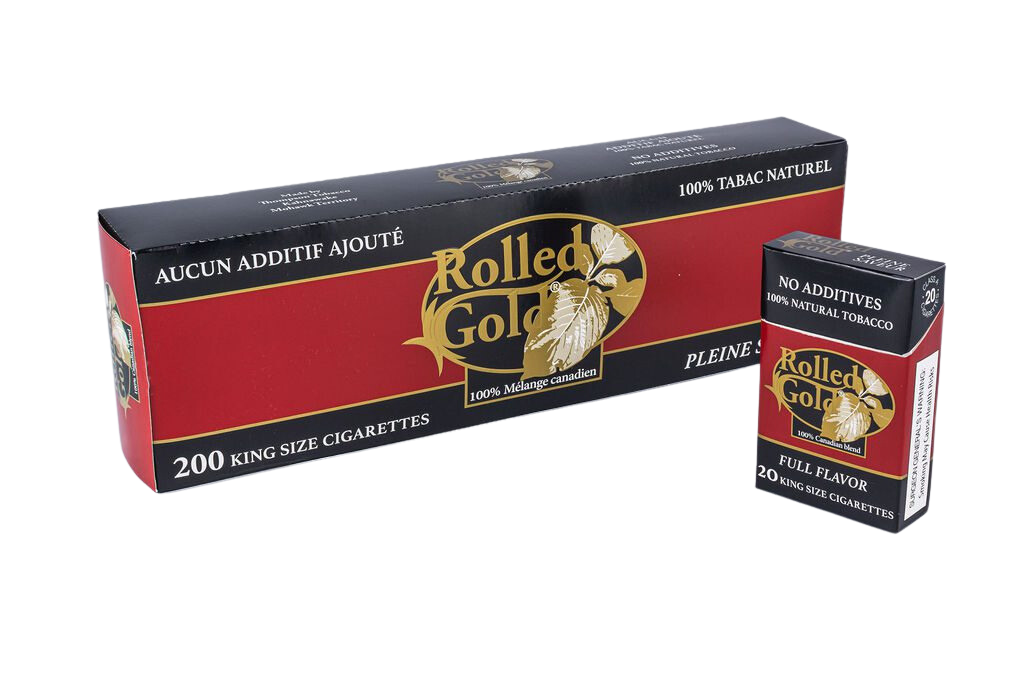
⭐ Excluded: BB light Manitoba, BB full Manitoba, Chanel Blueberry, Chanel ice. See all 29+ native brands at Cigstore.ca.
🚚 Delivery Across Canada – $29 Flat Rate
We ship to every province and territory using Canada Post, Purolator, FedEx, and UPS. Orders over $290 qualify for FREE shipping. Age verification (19+) required upon delivery.
📦 Same-day dispatch for orders before 2 PM EST. Tracking provided within 24 hours.
📚 You Might Also Enjoy These Articles
Cigarettes in Hollywood’s Golden Age
Glamour, rebellion, and the silver screen.
The Most Famous Cigarette Scenes in Film History
From Casablanca to Pulp Fiction.
Why Modern Movie Characters Rarely Smoke
The MPAA rating shift that changed Hollywood.
Smoking in Canadian Movies
From cool to condemned — the on-screen journey of tobacco.
The Most Famous Smoking Characters in Film & TV
From Bogart to Don Draper.