
When Did Cigarettes Become Sold Almost Everywhere?
From Tobacconists to Corner Stores: The Rise of Ubiquity
🏪🚬 Today, it’s hard to imagine a convenience store, gas station, or supermarket without a wall of cigarettes behind the counter. But this was not always the case. For much of the 19th century, cigarettes were a niche product sold primarily by tobacconists and pharmacies. The transformation of cigarettes from a specialty item into a ubiquitous commodity happened over several decades, driven by industrialization, mass marketing, and changing consumer habits. This article traces the history of cigarette retail in Canada: from the early days of cigar stores and tobacco shops, to the explosion of variety stores in the 1920s-1960s, to the post-war peak when cigarettes were sold virtually everywhere.
📜 The Early Days: Tobacconists and Pharmacies (Pre-1900)
Before the rise of mass-produced cigarettes, tobacco was sold in specialized shops. Tobacconists and cigar stores were the primary retailers, often doubling as pharmacies or barber shops. In Toronto, archival records show that “smoke shops, cigar stores, and food markets” — the precursors to modern convenience stores — began appearing in the 1910s, and many doubled as pharmacies and tobacconists .
- 📦 1857: The Tuckett Tobacco Company: George Elias Tuckett founded his first tobacco business in Hamilton, Ontario, in 1857. At first, his wife would sell the cigars he made at the market a few blocks away .
- 🚬 Limited availability: In the 19th century, cigarettes were a relatively new invention. Factory-made cigarettes began appearing in Canada in the 1860s, but they were not yet a mass-market product .
- ⚖️ 1904: American Tobacco Trust’s invasion: By 1904, the American Tobacco Company had “invaded the provinces to such an extent” that it controlled 84% of the Canadian cigarette trade . Parliament passed emergency anti-trust legislation to curb the monopoly .
📖 From a 1904 newspaper report: “The tobacco trust has invaded the provinces to such an extent that within a few months it would have a close monopoly on the trade in case it were not curbed.” .
🏪 The Variety Store Revolution: 1920s-1960s
Cigarette sales boomed alongside the rise of corner stores, variety stores, and drugstores.
By the 1950s, cigarettes were a primary source of revenue for small retailers.
The modern variety store — the precursor to today’s convenience store — began to appear in archival records in the 1910s. But it was the period from the 1920s through the 1960s that saw the explosion of cigarette availability on nearly every street corner.
- 🏪 Corner store culture: Historic photographs of Toronto variety stores from the 1920s, 1930s, 1940s, and 1950s show prominent cigarette advertising — including signage from Players, Export ‘A’, and Du Maurier . “Everything just seems so, well, pleasant in these photographs,” notes one retrospective, with cigarette logos appearing “free of the corporate baggage that one associates with these logos today” .
- 🔧 Mom-and-pop operations: The typical variety store was a small, family-run operation. By 1987, a Progressive Conservative MP noted that “some 70 per cent of [corner store] income is from confections and cigarettes” . For many small retailers, cigarettes were a lifeline.
- 📈 Retail innovation: As historian Daniel Robinson writes in Cigarette Nation, the tobacco industry invested heavily in “marketing and retailing innovation” to make cigarettes a staple of everyday life .
📖 From a 2012 blogTO retrospective: “The modern day variety store starts to appear in archival records in the 1910s. Alternately referred to as smoke shops, cigar stores, and food markets (only later are they called convenience stores), at this point many also double up as pharmacies and tobacconists.” .
🖲️ The Rise of Cigarette Vending Machines (1930s-1960s)
Cigarette vending machines played a crucial role in making cigarettes available everywhere, at any hour. By the 1930s, these machines were ubiquitous in hotels, restaurants, bars, and office buildings.
- 📅 1937: Vending machines in Vancouver: The City of Vancouver Archives has records of cigarette vending machines dating to 1937 — including a “Cigarette vending machine” file . By 1940, the city had another file on the same topic .
- 🏨 24-hour availability: Unlike stores with limited hours, vending machines made cigarettes available at any time of day or night — in hotel lobbies, train stations, airports, and office building hallways.
- 📈 Business for operators: As one MP noted in 1987, “vending machine operators haven’t done badly either” from the cigarette trade .
- 🚫 The decline: Cigarette vending machines were eventually banned in most provinces due to concerns about underage access. But for decades, they were a key pillar of cigarette ubiquity.
📈 The Post-War Peak: 1950s-1970s — The Golden Age of Availability
The post-war period was the golden age of cigarette consumption in Canada. Per capita cigarette sales rose steadily through the 1950s, 60s, and into the 1970s — even after the 1964 Surgeon General’s report linking smoking to lung cancer .
- 📊 Sales data: In 1949, legal cigarette sales were 16.8 billion. By 1965, they had reached 43 billion. By 1981, they peaked at 66.5 billion .
- 📈 Per capita consumption: In 1949, per capita consumption was 2,973 cigarettes per adult. By 1965, it had risen to 4,049. By 1981, it peaked at 3,685 .
- 🏬 Everywhere, all at once: By the 1960s, cigarettes were sold in: variety stores, drugstores, supermarkets, gas stations, restaurants (via vending machines), hotels, office buildings, airports, train stations, and even hospital gift shops.
- 🔄 The paradox: As historian Daniel Robinson notes, “the best years for the Canadian cigarette industry were still to come” after the health risks became known .
📖 From Cigarette Nation (Robinson, 2021): “In the 1950s, the causal link between smoking and lung cancer surfaced in medical journals and mainstream media. Yet the best years for the Canadian cigarette industry were still to come, as per capita cigarette consumption rose steadily in the 1960s and 1970s.” .
💰 The Economic Engine: Why Cigarettes Were Everywhere
The ubiquity of cigarettes was not accidental — it was the result of a powerful economic engine. Tobacco companies invested heavily in retail relationships, ensuring that every corner store carried their brands.
- 🏭 Major employers: The tobacco industry employed over 62,000 Canadians at its peak, and consumer spending provided over $6 billion to the Canadian economy .
- 💰 Tax revenue: Federal and provincial governments collected over $4 billion a year in tobacco taxes by the late 1980s .
- 🏪 Corner store dependence: As one MP noted in 1987, corner stores depended on cigarette sales for “some 70 per cent of their income” — a staggering figure .
- 🔄 The feedback loop: Cigarettes were everywhere because they were profitable to sell. And because they were everywhere, they were easy to buy — reinforcing the habit.
📖 From Hansard (1987): “Have we forgotten the rights of people to prosper, to work, to raise a family and to be proud? These are the rights of a group of people… the corner store, where some 70 per cent of its income is from confections and cigarettes” — MP Bud Bradley .
📦 How Tobacco Companies Made Cigarettes Ubiquitous: Marketing and Retailing Innovation
The tobacco industry didn’t just wait for demand to appear — they actively created it. Through aggressive marketing, product development, and retailing innovation, they made cigarettes a staple of everyday life.
- 📢 Marketing blitz: The industry engaged in “prolific marketing and advertising practices” that “helped make smoking a staple of everyday life” .
- 🚬 Product innovation: The introduction of filtered cigarettes, “light” and “mild” brands, and new packaging formats kept consumers engaged.
- 📊 84% market control: By 1904, the American Tobacco Company had secured “84 per cent of the cigarette trade” in Canada through exclusive contracts with retailers .
- ⚖️ Hope and doubt: As Robinson notes, tobacco firms “worked to furnish Canadian smokers with hope and doubt: hope in the form of reassuring marketing, as seen with light and mild cigarette brands, and doubt by means of disinformation campaigns” .
📖 From the Canadian Historical Association: “Robinson brilliantly reconstructs the collision of profit imperatives, marketing strategies, social factors, and emerging health concerns, all of which produced a highly ambivalent history.” .
📉 The Decline: When Cigarettes Began to Disappear
The ubiquity of cigarettes began to erode in the 1990s and 2000s, as smoking bans, advertising restrictions, and public health campaigns took hold. But for most of the 20th century, cigarettes were as common as bread and milk.
- 🚭 Provincial smoking bans: Starting in the 1990s, provinces began banning smoking in enclosed public spaces, reducing the places where cigarettes could be smoked — though not where they could be sold.
- 📦 Display bans: Many provinces (beginning with Ontario in 2008) banned in-store tobacco displays. Cigarettes were hidden from view.
- 🔄 Vending machine bans: Cigarette vending machines were banned in most provinces due to concerns about underage access.
- 🏪 The slow fade: Today, cigarettes are still sold in many convenience stores and gas stations — but they are hidden behind plain cabinets, and fewer stores carry them than in the golden age.
📖 The result: The era of cigarettes being “sold almost everywhere” — in every corner store, every hotel lobby, every restaurant — has ended. But for those who remember, the 1950s-1980s were the golden age of cigarette ubiquity.
📦 Native Cigarettes: The Modern Ubiquity
While commercial cigarettes have been hidden from view in many provinces, native cigarettes have become widely available online. Native cigarettes (Playfare, Canadian, DuMont, Nexus, Rolled Gold) cost $29-50 per carton — compared to $140-180 for commercial brands — a savings of 70-80%.
- 💰 Cost savings: A pack-a-day smoker saves $5,000-7,000 per year by switching to native cigarettes.
- 🚫 Not “healthier”: Native cigarettes contain the same nicotine, tar, and carcinogens as commercial brands. The only difference is price and packaging.
- 📦 Online delivery: Cigstore.ca ships to every province and territory with $29 flat shipping (free over $290).
- 🏪 No corner store needed: Unlike the golden age of ubiquity, when cigarettes were sold everywhere, native cigarettes are sold online — available to anyone with an internet connection and age verification.
🔥 Top 5 Native Cigarettes for Canadian Smokers




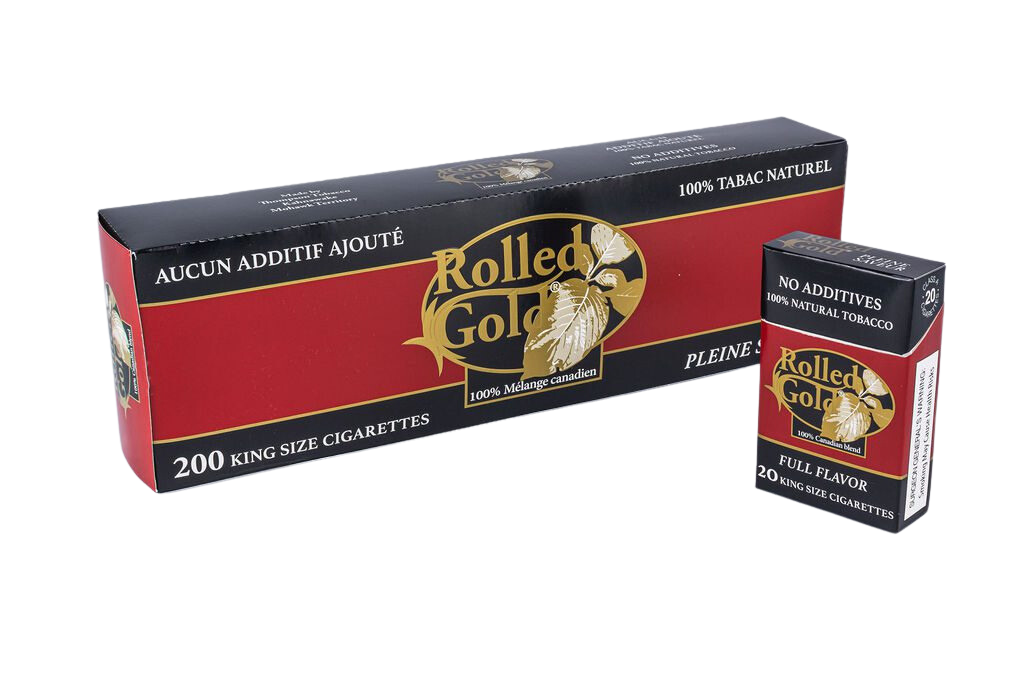
⭐ Excluded: BB light Manitoba, BB full Manitoba, Chanel Blueberry, Chanel ice. See all 29+ native brands at Cigstore.ca.
🚚 Delivery Across Canada – $29 Flat Rate
We ship to every province and territory using Canada Post, Purolator, FedEx, and UPS. Orders over $290 qualify for FREE shipping. Age verification (19+) required upon delivery.
📦 Same-day dispatch for orders before 2 PM EST. Tracking provided within 24 hours.
📚 You Might Also Enjoy These Articles
History of Smoking in Canada
From 1950s magazine ads to plain packaging today.
How Cigarettes Were Advertised in Canadian Magazines
From doctor endorsements to plain packaging.
Why Cigarettes Are Expensive
Complete federal & provincial tax breakdown.
Canadian Crush Cigarettes with Capsules
Tropical, grape, and cherry flavors.
Is It Legal to Buy Native Cigarettes Online?
Lawyer-reviewed legal guide.