
The Mandela Effect
Cigarette Brands That Everyone Remembers Wrong
🧠🚬 The “Mandela Effect” describes a strange phenomenon where large groups of people share the same false memory. Named after the widespread (and incorrect) belief that Nelson Mandela died in prison in the 1980s, these collective misrememberings extend to logos, quotes — and even cigarettes. Did a brand named after the anti-apartheid hero actually exist? Was the Marlboro Man always a cowboy? Did Player’s ‘Light’ cigarettes actually contain less tar? In many cases, what we remember about cigarette brands is not what actually happened. This article explores the most fascinating cases of collective false memory in tobacco history.
Named after the false memory that Nelson Mandela died in prison in the 1980s (he was released in 1990, died 2013).
Collective false memories affect logos, brand names, movie quotes, and product details [citation:8].
🇿🇦 Case #1: ‘Nelson’ Cigarettes — Mandela’s Name Without His Permission
Many smokers might vaguely remember a brand called “Nelson” cigarettes. But few remember the full story. In 1990 — the same year Nelson Mandela was released from prison after 27 years — a French tobacco company called Coralma International launched Nelson cigarettes in Senegal . The ads featured attractive young people enjoying life on a speedboat, with the slogan: “Viva Nelson Pour les Hommes Fiers” (The Cigarettes for Brave People) .
- 😡 What Mandela thought: When Dr. Keith Ball wrote to Mandela asking if he had given permission for his name to be used, Mandela replied: “I am astounded that a brand of cigarettes has been called Nelson, presumably, as you indicate, after me. Had I been approached by the manufacturers of this cigarette I would have certainly withheld my permission” .
- ⚠️ The irony: Just two years earlier, Mandela had issued a powerful message for World No-Tobacco Day (1992), stating: “I am pleased to add my voice to the cause of health through non-smoking… a human life is lost every eleven seconds to tobacco-related disease” .
- 📦 The Mandela Effect twist: Many people assume Mandela’s name was never associated with cigarettes. But it was — without his consent. Some even mistakenly believe Mandela himself endorsed cigarettes. He did not.
📖 Nelson Mandela’s 1992 World No-Tobacco Day message: “Smokers can no longer ignore the frightening facts about tobacco. But many are caught in a trap… On May 31, I appeal to smokers to quit for one day, as a first step to conquering their habit.”
🐄 Case #2: The Marlboro ‘Cowboy’ — From Babies to Badges
Ask any smoker: “What’s the Marlboro logo?” They’ll describe the rugged cowboy, the wide-open plains, the Marlboro Country. But the original Marlboro advertising — for the brand that would become the world’s best-selling cigarette — featured something far less macho: babies [citation:10]. In the 1950s, Marlboro was a women’s cigarette marketed with the slogan “Mild as May.” Print ads showed infants saying lines like: “Gee Mommy, you sure enjoy your Marlboro” and “Before you scold me, Mom, maybe you better light up a Marlboro” [citation:10].
- 🤔 The Mandela Effect: Most people have no memory of the “Marlboro baby” ads. Their brains have replaced them entirely with the cowboy imagery that came later.
- 📈 1954 — The pivot to masculinity: After the 1950s health scares, filtered cigarettes gained popularity — but men refused to smoke “feminine” brands. Leo Burnett’s agency repositioned Marlboro with the cowboy, and sales exploded. Within one year, Marlboro’s market share rose from less than 1% to fourth-best-selling brand [citation:10].
- 🏴☠️ The name’s origin: The brand name “Marlboro” itself is a Mandela Effect for many. It comes not from cowboys or the American West, but from Great Marlborough Street in London, where Philip Morris had its original factory. The ‘ugh’ was dropped to make the name “sexier” [citation:7].
📖 The marketing alchemy: The same brand that once used babies to sell to women became the ultimate symbol of rugged masculinity. Few remember the transition.
🔫 Case #3: Winchester Cigarettes — The Brand That Never Was (In America)
Many Canadians of a certain age remember Winchester cigarettes — the red-and-gold pack, the “Blended Right!” slogan. But here’s the Mandela Effect: Winchester cigarettes were never sold in the United States as a major brand. The Winchester name (famous for rifles) was used by Imperial Tobacco Canada, which registered the trademark in 1931 [citation:1]. The brand was eventually discontinued in 1966 [citation:1].
- 🤔 The misperception: Many Canadians assume Winchester was an American brand that crossed the border — perhaps associated with the iconic rifle manufacturer. In fact, it was a Canadian creation from start to finish.
- 📦 Collector’s item: Today, a Winchester “Blended Right!” porcelain sign from the 1940s is a prized collector’s item, estimated at $900-$1,200 CAD [citation:1].
- 🔫 The “gun brand” association: Some smokers conflate Winchester cigarettes with other “masculine” brands like Marlboro, forgetting that the brand had no real American presence.
🎭 Case #4: Player’s ‘Light’ — When Tar Levels Were a Mirage
If you smoked in the 1980s or 1990s, you might remember switching to “Light” or “Mild” cigarettes believing they were less harmful. But internal industry documents reveal a massive Mandela Effect: the ‘Light’ designation was often meaningless. As one competitor noted, Imperial Tobacco’s launch of Player’s Light in 1976 “revolutionized the category” not by reducing tar, but by changing perception [citation:3].
- 📊 Identical tar, different label: Internal documents show that Player’s Medium and Player’s Light had “practically identical” tar levels (14 vs 13), yet in image surveys, consumers perceived them as “significantly different on strength” (6.4 vs 5.1) [citation:3].
- 😡 The deception: A marketing document candidly admitted that “the use of nomenclature to differentiate brand strength shifted focus away from tar levels and precipitated a swing back to higher tar. The idea of ‘Light’ was a much more comfortable way for the consumer to rationalize their brand choice versus physical attributes they did not want to fully understand” [citation:3].
- 🧠 The false memory: Many smokers remember “Light” cigarettes as a genuine harm-reduction innovation. The reality is that they were a marketing invention — a way to keep people smoking by easing their health concerns without actually reducing risk.
📖 From a 1996 internal industry document: “The idea of ‘Light’ was a much more comfortable way for the consumer to rationalize their brand choice versus physical attributes (lower tar, special filters) they did not want to fully understand.” [citation:3]
🏛️ Case #5: The London Brands — When Geography Deceives
Mayfair, Pall Mall, Bond Street, Marlboro — these names evoke British prestige and old-world elegance. But many of these brands have no real connection to the streets that inspired them. The Mandela Effect here is geographic: smokers assume the brand’s origin is the same as its name.
- 😲 Mayfair (1992): Despite its aristocratic name, Mayfair cigarettes were introduced as “one of the cheapest cigarettes on the market” with the strapline “a good smoke at a fair price.” The name was chosen to “lure in lower income smokers with aspirational values” [citation:7].
- 🏢 Pall Mall (1902): Unlike Mayfair, Pall Mall actually had prestige — Louis Rothman launched the brand from his shop on Pall Mall, supplying the British royal family [citation:7].
- 🇯🇵 Ownership amnesia: Mayfair cigarettes are now made by an Irish company owned by a Japanese one — far from the London streets their name evokes [citation:7].
- 💭 The cognitive disconnect: Smokers often project a brand’s imagined origin onto its quality. A cheap cigarette named after an expensive street creates a false impression of value.
🇷🇺 Case #6: Gorbatchow — The Celebrity Brand You’ve Never Heard Of
Here’s a Mandela Effect for political historians: there was a cigarette named after Mikhail Gorbachev, the last leader of the Soviet Union. In 1990, the Alexander Field Cigarette Company (based in Switzerland) launched “Gorbatchow” cigarettes — using what was said to be the preferred European spelling of his name .
- ❓ Why you don’t remember it: The brand was short-lived. As Steve Hersch, president of the US importer, prophetically said: “We don’t know if this will be a fad cigarette or not” . It was a fad. Gorbatchow cigarettes have since disappeared.
- 🤔 Did Gorbachev object? When asked, Peter Studer (the brand’s creator) said he “hadn’t heard anything to indicate that Gorbachev objected” — adding, “I suspect he has more important things on his mind than worrying about cigarette packages” .
- 🧠 The false memory: Some people vaguely recall a “political cigarette” brand but conflate Gorbatchow with other novelty brands (e.g., presidential campaign cigarettes, Winston’s subtle allusion to Churchill) .
🧠 Why Do We Remember Cigarette Brands Incorrectly?
The Mandela Effect in tobacco marketing is not random — it’s driven by deliberate industry strategies that exploit how human memory works.
- 📢 Image over information: As the tobacco industry’s own research admitted, “logic does not play a major role in marketing cigarettes.” Advertising focuses on visuals and emotions, not facts. This creates strong, but inaccurate, memories [citation:3].
- 🎭 Rebranding and repositioning: Marlboro transformed from a women’s brand to a men’s brand so completely that the original identity vanished from public memory. When a brand changes its image radically, the old image is often forgotten entirely [citation:10].
- 📉 The “Light” illusion: By creating meaningless category labels (“Light,” “Mild,” “Extra Light”), tobacco companies shifted consumer focus away from measurable tar levels and onto subjective “strength perceptions” — a manufactured memory that had no basis in actual product composition [citation:3].
- 🕰️ Time and disappearance: Brands like Winchester (discontinued in 1966) and Gorbatchow (short-lived fad) fade from collective memory. What remains are fragmentary impressions, often conflated with other brands.
📖 From industry consultant Martineau (1957): “The significant meanings are coming from the illustration. The copy logic is strictly after-the-fact.” Images create memory, not information [citation:3].
🌌 Bonus: The ‘Parallel Universe’ Theory
Devotees of the Mandela Effect sometimes argue that these collective false memories are evidence of parallel universes — timelines where Mandela died in prison, where the Berenstain Bears were spelled Berenstein, and where the Marlboro Man was always a cowboy [citation:8].
- 🧪 The simpler explanation: Most researchers attribute the effect to the fallibility of human memory, the power of suggestion, and the way our brains fill in gaps with plausible (but wrong) information [citation:8].
- 🚬 Tobacco-specific factors: The cigarette industry spent billions to manipulate perceptions. If you misremember a brand’s history, that’s not evidence of a parallel universe — it’s evidence that the industry’s marketing worked.
🔥 Top 5 Native Cigarettes for Canadian Smokers
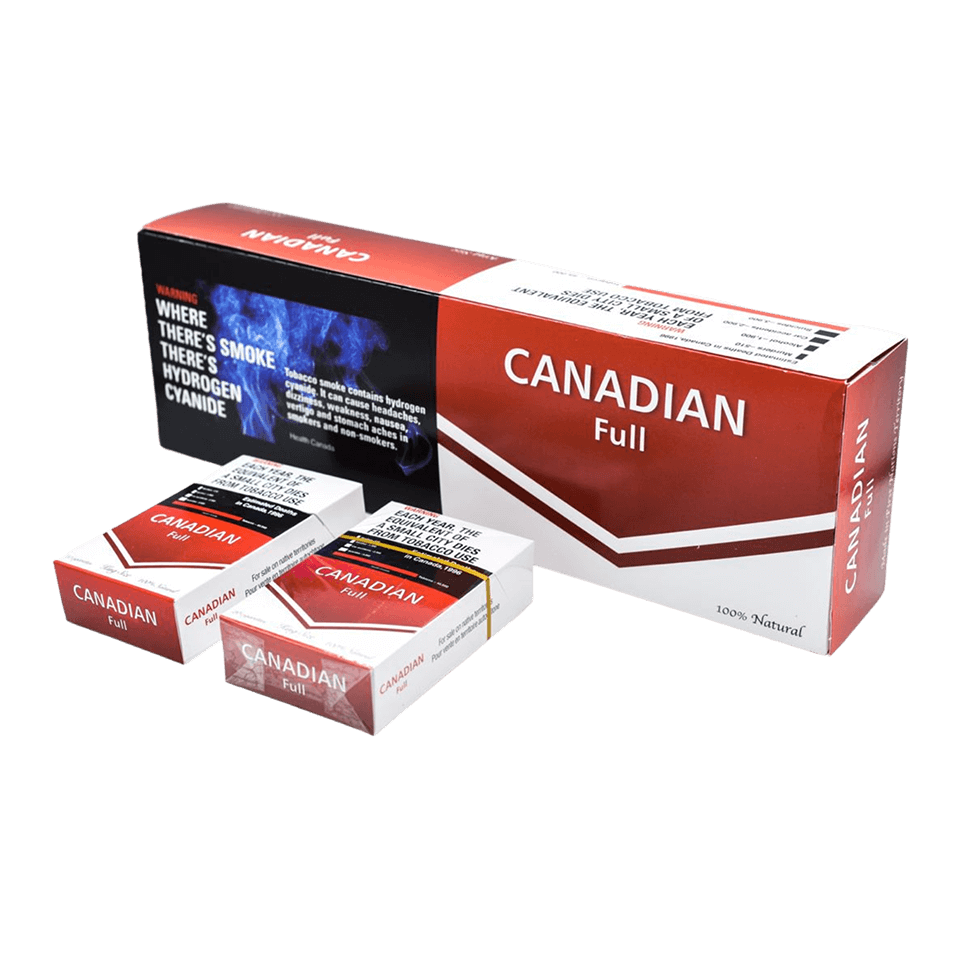
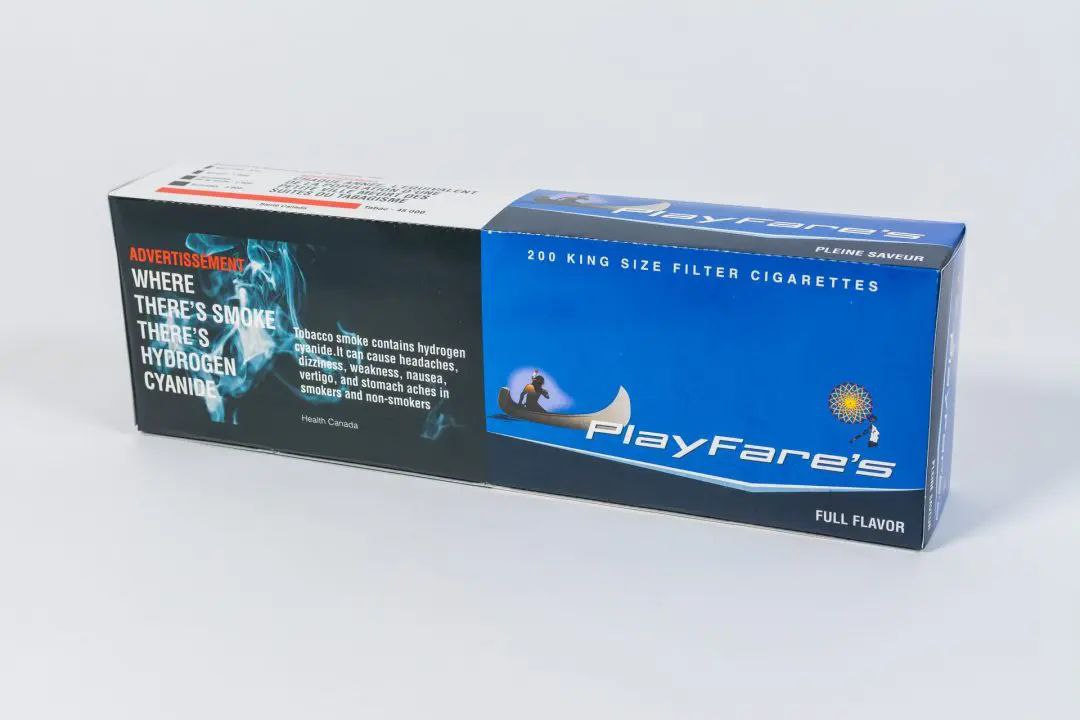
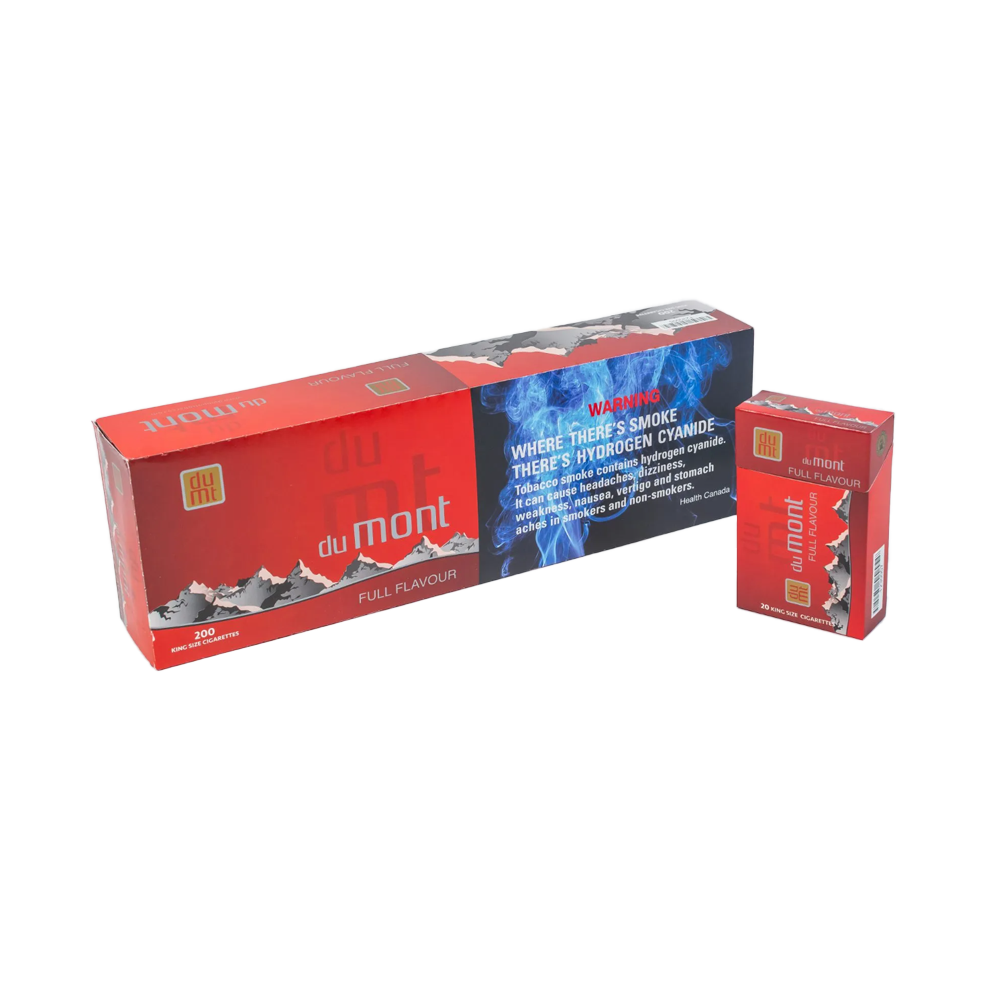
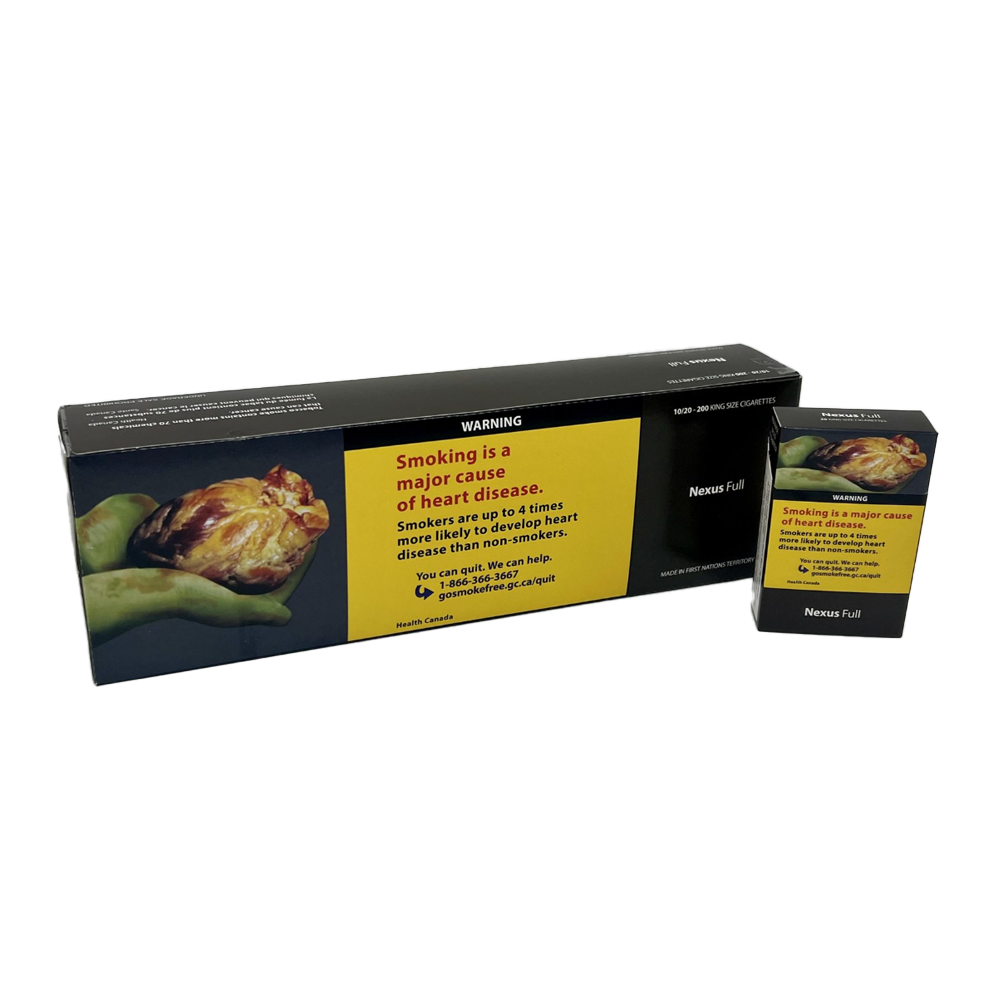
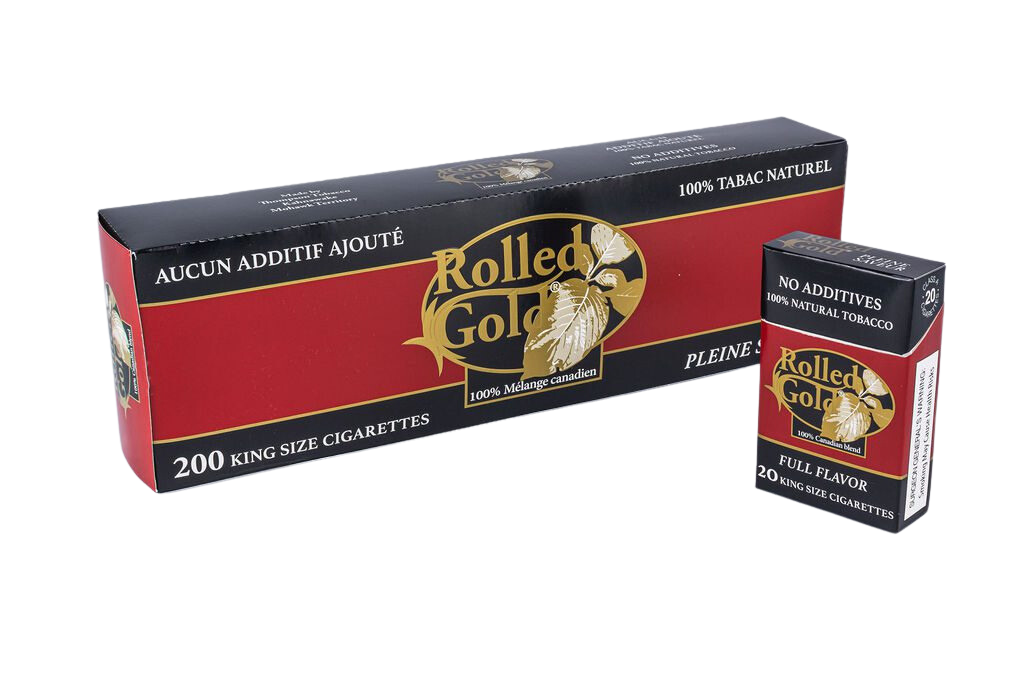
⭐ Excluded: BB light Manitoba, BB full Manitoba, Chanel Blueberry, Chanel ice. See all 29+ native brands at Cigstore.ca.
🚚 Delivery Across Canada – $29 Flat Rate
We ship to every province and territory using Canada Post, Purolator, FedEx, and UPS. Orders over $290 qualify for FREE shipping. Age verification (19+) required upon delivery.
📦 Same-day dispatch for orders before 2 PM EST. Tracking provided within 24 hours.
📚 You Might Also Enjoy These Articles
History of Smoking in Canada
From 1950s magazine ads to plain packaging today.
Most Famous Canadian Cigarette Slogans
From “More doctors smoke Camels” to plain packaging.
Most Controversial Cigarette Advertising Campaigns
Joe Camel, light cigarettes, and more.
How Cigarettes Were Advertised in Canadian Magazines
From doctor endorsements to plain packaging.
Forgotten Canadian Cigarette Brands
Craven ‘A’, Sweet Caporal, Rothmans.