
The Most Unusual Cigarette Advertising Campaigns of the Last Century
From Asbestos Filters to Baby Spokesmodels: A Journey Through Tobacco’s Bizarre Marketing History
📢🚬 Before health warnings, before plain packaging, and before advertising bans, the tobacco industry operated in an unregulated wonderland of creativity — and absurdity. Doctors recommended cigarettes. Babies endorsed them. Clowns, cowboys, and even Ronald Reagan sold them. Some campaigns were brilliant; others were deeply bizarre. This article explores the strangest, most unusual, and most controversial cigarette advertising campaigns of the 20th century — from asbestos filters to cartoon mascots, from political puns to surrealist nonsense.
☠️ The Deadly Filter: Kent’s Asbestos ‘Micronite’ (1952-1956)
The “safest” cigarette ever sold was actually one of the most dangerous.
In the 1950s, as health concerns about smoking grew, cigarette companies searched for a technological solution. Kent cigarettes found the “answer”: asbestos. The Micronite filter, used from 1952 to 1956, contained crocidolite asbestos — one of the most dangerous forms of the carcinogenic mineral [citation:4]. The tagline? “Might be a pretty good move” [citation:4].
- 💀 What they didn’t say: Asbestos fibers, when inhaled, cause mesothelioma — a fatal lung cancer that can take 20-50 years to develop. Kent smokers were inhaling a known carcinogen through the filter supposedly designed to protect them [citation:4].
- 📊 The scale: Millions of Kent cigarettes with asbestos filters were sold during those four years. The long-term health consequences for smokers who switched to Kent for “safety” are incalculable.
- ⚖️ The aftermath: The Micronite filter was quietly discontinued in 1956. Decades later, asbestos litigation would cost tobacco companies billions — but for the smokers who trusted Kent, it was too late [citation:10].
📖 Fun fact from the 1970s: The Kent Micronite filter is not the only bizarre filter claim — advertisements showed men measuring recessed filters with rulers, just to give the claim “scientific veracity” [citation:3].
🩺 “More Doctors Smoke Camels”: The Greatest Medical Deception (1946-1954)
Perhaps the most famous — and most deceptive — campaign in advertising history. Camel cigarettes claimed that “More doctors smoke Camels than any other cigarette.” The ads featured smiling physicians in white coats, lending the authority of medicine to tobacco [citation:1][citation:2][citation:10].
- 🔬 The “study”: The claim was based on a survey of 113,597 doctors — who had been sent free samples of Camels. Unsurprisingly, they reported smoking the brand they received for free [citation:2].
- 📈 The impact: The campaign ran for eight years and was wildly successful. By linking cigarettes to doctors, Camel created a false sense of safety that lasted for generations [citation:2].
- ⚖️ JAMA’s shame: The Journal of the American Medical Association published its first cigarette ad for Chesterfield in 1933 — a practice that continued for 20 years [citation:7].
👶 Babies as Spokesmodels: “Gee Mommy, You Sure Enjoy Your Marlboro”
Before the Marlboro Man, before the cowboy, Marlboro was a women’s cigarette. And its ads featured something deeply unsettling: babies [citation:1][citation:6]. Yes, actual infants appeared in print ads, with captions like “Gee Mommy, you sure enjoy your Marlboro” and “Before you scold me, Mom, maybe you better light up a Marlboro” [citation:1].
- 🤔 The strategy: The baby ads were designed to appeal to mothers — suggesting that smoking was a relaxing, permissible habit even for parents. The campaign also reinforced Marlboro’s original slogan, “Mild as May” [citation:1].
- 🔄 The pivot: When filtered cigarettes became popular, men refused to smoke a “woman’s brand.” Leo Burnett’s agency rebranded Marlboro with the cowboy — and the baby ads were forgotten [citation:1].
- 📜 Player’s baby ad: Player’s cigarettes also used a baby in a vintage advertisement, proving that the “baby as endorser” was a brief industry-wide trend [citation:6].
🥊 “Us Tareyton Smokers Would Rather Fight Than Switch” (1960s)
One of the most memorable — and bizarre — ad campaigns of the 1960s featured people with black eyes, proudly declaring that they’d rather fight than switch to another brand. The tagline: “Us Tareyton smokers would rather fight than switch!” [citation:3].
- 😵 The premise: The ads suggested that Tareyton smokers were so loyal to their charcoal filter cigarettes that they would get into physical altercations to defend their choice. The black eye was a badge of honor [citation:3].
- 📊 Effectiveness: The campaign was wildly successful — and incredibly irritating. A columnist for The News Journal recalls being so “offended by the grammatical incorrectness of the jingle that I immediately started smoking Tareytons” [citation:3].
- 🎭 The irony: Tareyton’s charcoal filter was no safer than any other filter — but the aggressive, macho branding made smokers feel like warriors, not addicts [citation:3].
📖 Grammatical crime: “I was so offended by the grammatical incorrectness of the jingle that I immediately started smoking Tareytons.” — David Grimes, The News Journal [citation:3]
🎄 Ronald Reagan Sells Chesterfield: “The Happiest Christmas for Smokers” (1950s)
Before he became the 40th President of the United States, Ronald Reagan was a Hollywood actor — and a cigarette pitchman. In a 1950s Chesterfield ad, a young Reagan smiles warmly and declares that he’s sending the cigarettes to all his friends for Christmas [citation:2][citation:10].
- 🎬 The copy: “This is the happiest Christmas for smokers there’s ever been — Chesterfields have become so mild and the unpleasant aftertaste is out” [citation:10].
- 📦 The gift: The ad explicitly encouraged readers to give Chesterfields as Christmas presents. Because nothing says “holiday cheer” like a carton of cancer sticks [citation:2].
- ⚠️ The irony: Reagan would later ban smoking on domestic flights (1988) and sign legislation requiring health warnings. But in his younger days, he was tobacco’s most photogenic spokesman [citation:10].
💋 Cigarettes as Aphrodisiacs: “Blow Some My Way” (1970s)
The 1970s brought an explosion of sexually suggestive ads. One brand (Tipalet) claimed that “Blow in her face and she’ll follow you anywhere” [citation:2]. L&M cigarettes suggested they could help you “get a girl” [citation:2]. The subtext was clear: cigarettes were not just a habit — they were a tool for seduction.
- 🌬️ “Blow in her face”: The Tipalet campaign is now legendary for its sheer audacity. The ad showed a man blowing smoke toward a woman, with the headline promising he’d be irresistible [citation:2].
- 🎭 Scantily clad ladies: Blackstone Cigars ran an ad in 1942 featuring women in revealing outfits, with the tagline “Extra pleasure in every size and shape!” [citation:6].
- 📉 The result: These ads look deeply cringeworthy today — and likely were even then. But they reflected the industry’s desperation to associate smoking with sexual prowess.
🗳️ Political Puns: Kool’s 1964 Election Ad
In 1964, Kool cigarettes decided to comment on the US presidential election. An ad depicted the Democratic candidate Lyndon B. Johnson and his Republican opponent Barry Goldwater — with the tagline “Kools have Come a Long Way” [citation:10].
- 🎭 The pun: The ad was a play on the “You’ve come a long way, baby” campaign used for Virginia Slims — but co-opted for a product that had nothing to do with women’s liberation [citation:10].
- ⚠️ The audacity: Using the presidential election to sell menthol cigarettes was a new low — even for the tobacco industry. The ad was a brief, bizarre moment in political advertising history.
🎨 Murad’s Giant Cigarette: Surrealism Before It Was Cool (1919)
Long before Dali, Murad cigarettes produced one of the most surreal ads of the early 20th century. The 1919 ad featured people dancing around a giant cigarette in a whimsical, almost dreamlike scene [citation:1].
- 📖 The description: “This is a great example of the lush illustration used at the time and it shows a kind of surrealistic, whimsical approach with people dancing around a giant cigarette,” said Jim Heimann, author of “20th Century Alcohol & Tobacco Ads” [citation:1].
- 🎭 The disconnect: The ad had nothing to do with cigarettes’ actual effects. It was pure fantasy — a world where smoking was a joyful, communal celebration.
🐪 Joe Camel: The Cartoon That Corrupted a Generation (1988-1997)
Camel’s market share among under-18 smokers rose from 0.5% to 32% during the campaign.
Joe Camel — a sunglasses-wearing, cigarette-smoking cartoon camel — was one of the most successful and controversial advertising campaigns in history [citation:1]. But it had a dark secret: children loved him.
- 👶 The problem: A 1991 study found that 97% of 6-year-olds could identify Joe Camel — the same percentage that recognized the Disney Channel logo. The character was deliberately designed to appeal to youth [citation:7].
- 📊 The results: Camel’s market share among under-18 smokers rose from 0.5% to 32% during the Joe Camel campaign. The character was directly linked to an estimated 2,000-3,000 additional teen smokers per day.
- ⚖️ The downfall: After years of lawsuits and public pressure, R.J. Reynolds retired Joe Camel in 1997. The campaign became a textbook example of irresponsible marketing [citation:1].
📖 Spuds MacKenzie parallel: “Bud Light’s Spuds McKenzie was a hugely successful campaign and it even spawned merchandise that you could get through a contest — an idea probably taken from Joe Camel, of buying into a product indirectly through some kind of cartoon character” [citation:1].
🏅 Olympic Athletes Selling Cancer: The 1930s-1950s
Tobacco companies looked for Olympic athletes to promote their products — with absurd health claims. Lucky Strike claimed that “many prominent athletes smoke Luckies all day long with no harmful effects to wind or physical condition” [citation:7]. Camel used Hank Aaron to sell cigarettes in the 1950s [citation:7].
- ⚡ The claim: In 1929, Lucky Strike ads boasted that athletes could smoke “all day long” without any impact on their physical condition [citation:7].
- 📜 The reality: The claim that Camels relieved fatigue and renewed energy was found deceptive in 1939 [citation:7]. But by then, the damage was done.
- ⚠️ John Wayne’s endorsement: The popular, handsome Hollywood star starred in an ad for Camel Cigarettes in 1950, claiming “not one single case of throat irritation” [citation:6].
🇷🇺 The Strangest of All: Soviet Cigarette Ads (1920s)
Perhaps the most unusual cigarette ads of all time came from the Soviet Union in the 1920s. A collection of Russian posters features slogans like: “To all smokers, the treasured word: in the Klad cigarettes, a cow is hidden” and “Cigarettes not in jest, but in earnest. Tastier than oranges, more fragrant than roses!” [citation:5].
- 🤔 What does “a cow is hidden” mean? No one is entirely sure. The early Soviet ads were known for their surreal, almost nonsensical quality [citation:5].
- 📖 The third slogan: “Fairy tales cannot tell, you cannot describe with a pen, the cigarettes.” The ads were described as “unusual, and even daring” [citation:5].
- 📜 Historical artifact: These ads are now collector’s items — a strange glimpse into a brief moment when Soviet Russia experimented with Western-style advertising before rejecting it.
🎪 The 1970s Hall of Weird: Clowns, Astronauts, and Surreal Collages
The 1970s were a golden age of weird cigarette ads. A deep dive into TIME magazine from 1969-1974 reveals an astonishing parade of bizarre imagery [citation:4].
- 🤡 The creepy clown: One ad featured a menacing clown that is genuinely terrifying. “What’s scarier than cancer? This clown in particular,” notes one researcher who spent “dozens of hours” sifting through thousands of pages of ads [citation:4].
- 👽 Alien abduction ad: A Benson & Hedges ad showed an astronaut seemingly being groped by an alien — with the tagline? No one knows. “What the fuck is happening in this ad?” [citation:4]
- 🐻 Bears, elephants, and animal abuse: One ad implied that an elephant was addicted to nicotine. Another featured a bear. The early 1970s were not kind to animals in advertising [citation:4].
- 🌊 Kool’s waterfall obsession: What Marlboro had with cowboys, KOOL had with rivers and waterfalls. Because when you think of menthol cigarettes, you think of icy mountain streams — not throat cancer [citation:4].
- 📦 The “crooked cigarette” ads: Benson & Hedges ran ads with crooked cigarettes for “inexplicable reasons.” The surrealist imagery was meant to be memorable — and it worked [citation:4].
💀 The Brands That Time Forgot: The 1970s Graveyard
Many of the brands advertised in the 1970s have since vanished. A researcher identified 29 different cigarette brands advertised in TIME between 1969 and 1974 — and most are no longer in circulation [citation:4].
- 📦 Silva, Belair, and Raleigh: Once owned by Brown & Williamson Tobacco, these brands are no longer in circulation [citation:4].
- 📦 Adam: Owned by Liggett and Myers Tobacco Company; “little is known about its fate” [citation:4].
- 📦 Iceberg and Lucky Ten: Mystery brands that have largely disappeared from historical records [citation:4].
- 📉 The survivors: Most of the brands that survived (22 out of 29) are now owned by just two companies: Philip Morris and R.J. Reynolds [citation:4].
🔥 Top 5 Native Cigarettes for Canadian Smokers




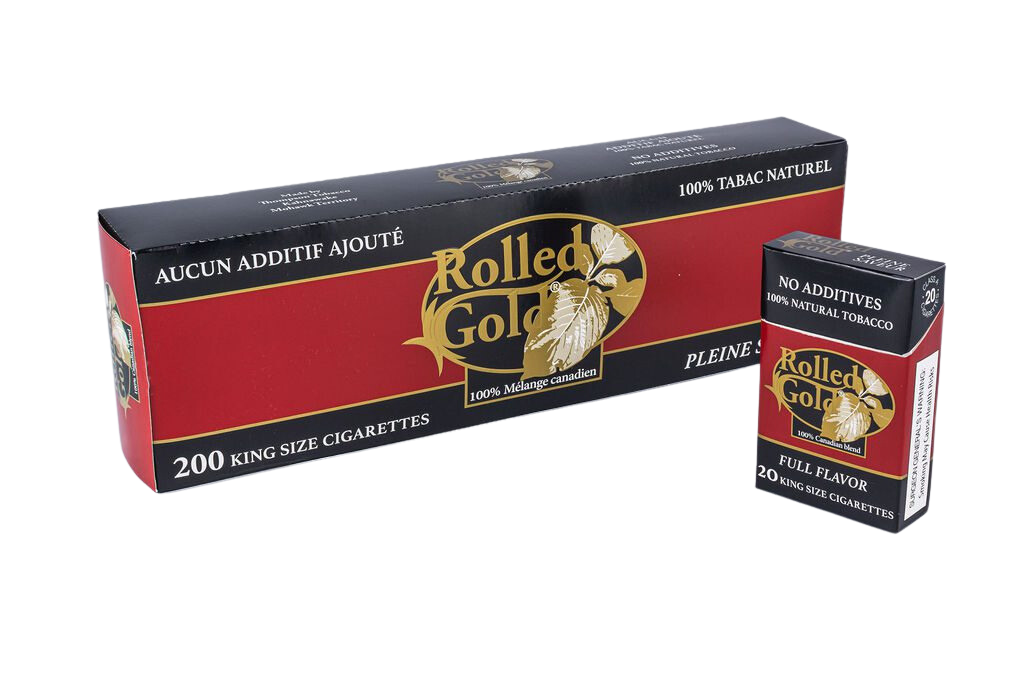
⭐ Excluded: BB light Manitoba, BB full Manitoba, Chanel Blueberry, Chanel ice. See all 29+ native brands at Cigstore.ca.
🚚 Delivery Across Canada – $29 Flat Rate
We ship to every province and territory using Canada Post, Purolator, FedEx, and UPS. Orders over $290 qualify for FREE shipping. Age verification (19+) required upon delivery.
📦 Same-day dispatch for orders before 2 PM EST. Tracking provided within 24 hours.
📚 You Might Also Enjoy These Articles
The Mandela Effect: Cigarette Brands That Everyone Remembers Wrong
From Nelson Mandela cigarettes to the Marlboro baby.
Most Famous Canadian Cigarette Slogans
From “More doctors smoke Camels” to plain packaging.
Most Controversial Cigarette Advertising Campaigns
Joe Camel, light cigarettes, and more.
How Cigarettes Were Advertised in Canadian Magazines
From doctor endorsements to plain packaging.
History of Smoking in Canada
From 1950s magazine ads to plain packaging today.