
Why You Can’t Smoke at Gas Stations — Even Outside
The Explosive Science and Statistics Behind the “No Smoking” Signs
⚠️ URGENT SAFETY WARNING: Ignoring “No Smoking” signs at gas stations has caused documented explosions, severe burns, and fatalities. Gasoline vapors are invisible, explosive, and heavier than air — they can travel to your location even if you are standing away from the pumps. The information in this article is supported by fire safety regulations and physics research. Do not test these principles yourself.
⛽🚬 It’s a rule so universal that we rarely question it: you cannot smoke at a gas station. But have you ever wondered why the ban applies even when you’re standing outside, away from the pumps? The answer isn’t about liquid gasoline—it’s about something far more dangerous: invisible, explosive gasoline vapors. This article explains the physics of vapor clouds, the shockingly low amount of energy required to ignite them, and the documented fire statistics that prove why even a single spark can be catastrophic.
🌫️ The Invisible Threat: Gasoline Vapor Clouds
Gasoline doesn’t burn. Its vapors do. And those vapors are invisible, odorless at low concentrations, and heavier than air.
When you pump gasoline, you create an invisible plume of vapor. Using Optical Gas Imaging (FLIR) technology, researchers have visualized what the human eye cannot see: gasoline vapors escaping from the fuel nozzle and pooling near the ground [citation:10]. These vapors are:
- ⬇️ Heavier than air: Gasoline vapors sink and travel along the ground, potentially reaching areas far from the pump .
- 🌬️ Wind-dispersed: Even a light breeze can carry flammable vapors dozens of feet from the fueling point [citation:6].
- 💥 Explosive at low concentrations: Gasoline vapor ignites when it makes up just 1.4% to 7.6% of the air volume .
This means that standing “far enough away” isn’t a reliable safety measure. If you can smell gasoline, you are likely standing in a flammable vapor cloud.
📖 From a 2023 FLIR study: “Gasoline vapor is highly flammable and ready to combust at a moment’s notice. Though many gas stations implement measures to reduce the amount of vapors allowed to escape when you’re pumping gas, the amount in the air is never zero” [citation:10].
⚡ The Shocking Truth: How Little Energy It Takes to Ignite
Most people assume that lighting a cigarette at a gas station is dangerous because the flame might touch liquid gasoline. That assumption is wrong—and dangerously misleading. The actual threat is the spark you create when you light up.
- 🔥 Minimal ignition energy: Gasoline vapor requires only 0.2 millijoules of energy to ignite .
- 📏 To put that in perspective: This is roughly the energy released when a single pinhead falls one centimeter onto a hard surface .
- 🔋 A lighter’s spark produces significantly more energy than this threshold.
- ⚡ Even static electricity from your clothing or from re-entering your car can produce a spark large enough to ignite gasoline vapor [citation:5].
⚡ Ignition Energy Comparison (in millijoules):
Gasoline vapor: 0.2 mJ | Static spark: 0.5-10 mJ | Lighter spark: 30-50 mJ
↓ ↓ ↓
ALL exceed the ignition threshold
📖 University chemistry experiment: A standard chemistry demonstration uses an ethanol-fueled vapor explosion to show why smoking is banned at gas stations. When ethanol fumes in a sealed bottle are exposed to a spark, the cork is blown out with explosive force. “Gasoline fumes are highly flammable and when the spark is created… it blows!” [citation:1].
🔥 The Open Flame Misconception: Why the Cigarette Itself Is Also Dangerous
While the lighter is the primary ignition source, a lit cigarette also presents a hazard—contrary to internet myths that claim otherwise.
- 🚬 Cigarettes produce a smoldering ember that can reach temperatures of 600-900°C.
- 💧 The “quenching myth”: Some claim that a cigarette can be safely extinguished in liquid gasoline. While theoretically possible in a pure liquid, the vapor layer just above the liquid surface is highly explosive and will ignite instantly [citation:5].
- ⚠️ Real-world cases: Fire department records include documented incidents where careless disposal of smoking materials near fueling areas ignited gasoline vapors [citation:8].
⚠️ Important note: Even if the cigarette itself doesn’t ignite the vapor, the act of lighting the cigarette creates an open flame that absolutely will.
📱 The Static Electricity Danger: Getting In and Out of Your Car
Static electricity from re-entering your vehicle while refueling is a leading cause of gas station fires.
One of the most common—and surprising—ignition sources at gas stations is static electricity. Sliding across a car seat generates a static charge that can discharge as a spark when you touch the metal fuel nozzle [citation:5].
- 🚗 The primary rule: Do not re-enter your vehicle while refueling. If you must, always touch a metal surface away from the fuel nozzle to discharge static electricity before touching the pump.
- 📱 Cell phone myth: Contrary to popular belief, cell phones themselves rarely cause fires. However, they can distract you, leading to static buildup or leaving the nozzle unattended.
- ⚠️ Real risk: Fire departments have documented cases where static discharge from a driver re-entering their car ignited fuel vapors during refueling [citation:5].
🌬️ Why “I’m Far Enough Away” is a Dangerous Assumption
Because gasoline vapors are heavier than air, they behave like a liquid—flowing downhill, pooling in low spots, and traveling along the ground [citation:6].
- 🌪️ Travel distance: Under the right conditions, a vapor cloud can travel dozens of meters from the source.
- 🏢 Enclosed spaces: Vapors accumulate in garages and enclosed structures, making indoor smoking bans critically important.
- 📏 Regulatory standards: California safety regulations require “NO SMOKING WITHIN 25 FEET” signs at fueling areas [citation:9]. This distance accounts for vapor travel.
📖 The 25-foot rule: The State of California explicitly requires that smoking be prohibited “within 25 feet” of the gasoline storage or fueling area [citation:9].
📊 The Statistics: How Often Do Gas Station Fires Happen?
⚠️ Note on under-reporting: Many smaller gas station fires are contained quickly by suppression systems and may not appear in national statistics. The absence of daily headlines does not indicate absence of risk.
🧪 The Physics Experiment: Proof You Can Perform (Safely, With Supervision)
Why do gas station “No Smoking” signs exist? The California State University chemistry department has a demonstration that proves the danger:
- Step 1: 10 mL of ethanol is placed in a plastic bottle with two nails driven through the sides.
- Step 2: The bottle is sealed tightly with a cork stopper.
- Step 3: The bottle is shaken vigorously to create a vapor-air mixture.
- Step 4: A spark is generated on the protruding nails.
- Result: The ethanol vapors ignite instantly, blowing the cork out of the bottle with explosive force [citation:1].
⚠️ IMPORTANT: This demonstration must only be performed by qualified professionals with proper safety equipment. Do not attempt this at home.
📐 The Science of Limits: Why the Vapor-to-Air Ratio Matters
Gasoline vapor is only explosive within a specific concentration range. Outside that range, it either won’t burn (too lean) or won’t have enough oxygen to combust (too rich).
- ⬇️ Lower Flammable Limit (LFL): 1.4% gasoline vapor in air. Below this, the mixture is too lean to burn.
- ⬆️ Upper Flammable Limit (UFL): 7.6% gasoline vapor in air. Above this, the mixture is too rich and won’t ignite .
- 🎯 Why this matters for smoking: The typical vapor cloud at a gas station falls within this explosive range.
📖 Real-world calculation: A 2020 gas leak explosion study found that vapor clouds can extend significant distances. Within 30 meters of a large vapor cloud ignition, researchers calculated 100% probability of first-degree burns and over 90% probability of death from fireball exposure [citation:2].
🛢️ LPG and Propane: Even More Dangerous
While this article focuses on gasoline, many gas stations also sell Liquefied Petroleum Gas (LPG, propane). LPG vapors are even more dangerous than gasoline vapors because they are:
- 🌬️ Heavier than air (like gasoline vapor)
- 💣 Highly pressurized (released as a rapidly expanding gas cloud)
- 🔥 Prone to “vapor cloud explosions” (VCE) — catastrophic events where an entire cloud detonates [citation:2].
South Korean safety research has specifically studied the damage potential of VCE at LPG filling stations, modeling fireball injuries and death probabilities [citation:2].
📦 Native Cigarettes: No Different at the Pump
It should go without saying, but no cigarette—commercial or native—is safe to light at a gas station. Native cigarettes (Playfare, Canadian, DuMont, Nexus, Rolled Gold) produce the same sparks, the same open flame, and the same risk of vapor ignition as any other brand [citation:5].
- 💰 Cost savings: Native cigarettes cost $29-50 per carton — compared to $140-180 for commercial brands — a savings of 70-80%.
- ⛽ Safety note: Save your cigarettes for when you are well away from fuel pumps — at least 25 feet (8 meters) per safety regulations [citation:9].
- 📦 Online delivery: Cigstore.ca ships to every province and territory with $29 flat shipping (free over $290).
- 🚭 The only safe place to smoke is far from any fuel source.
🔥 Top 5 Native Cigarettes for Canadian Smokers




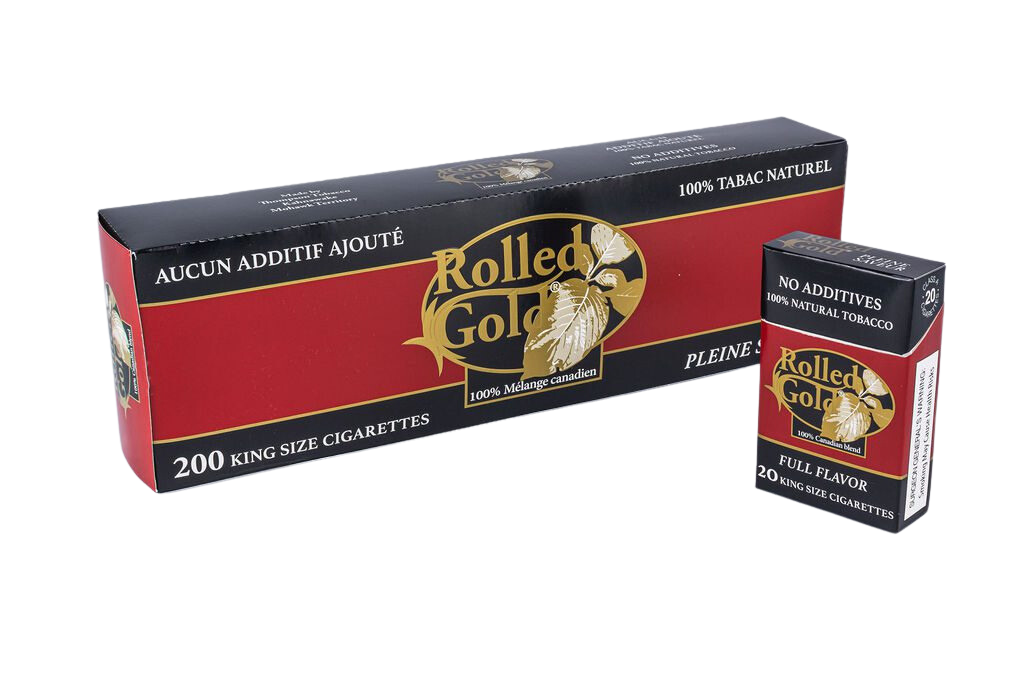
⭐ Excluded: BB light Manitoba, BB full Manitoba, Chanel Blueberry, Chanel ice. See all 29+ native brands at Cigstore.ca.
🚚 Delivery Across Canada – $29 Flat Rate
We ship to every province and territory using Canada Post, Purolator, FedEx, and UPS. Orders over $290 qualify for FREE shipping. Age verification (19+) required upon delivery.
📦 Same-day dispatch for orders before 2 PM EST. Tracking provided within 24 hours.
📚 You Might Also Enjoy These Articles
The Most Unusual Cigarette Ads of the Last Century
From asbestos filters to cartoon babies.
The Mandela Effect: Cigarette Brands That Everyone Remembers Wrong
From Nelson Mandela cigarettes to the Marlboro baby.
Why Cowboys Smoked More Than Anyone Else
The real history and the Marlboro myth.
The Most Famous Cigarette Slogans of the Last Century
From ‘Mild as May’ to ‘It’s Toasted’.
Why Were Cigarettes Advertised as a Weight Loss Aid in the 1950s?
Lucky Strike’s famous campaign.