
Why Smokers Often Interrupt Their Conversation Partner
How Nicotine Affects Impulsivity, Patience, and Social Dynamics
🗣️🚬 Have you ever noticed that some smokers tend to cut you off mid-sentence? They finish your thoughts, jump in before you’re done, or seem unusually impatient waiting for you to get to the point. This is not just rudeness — it’s biochemistry. Nicotine, withdrawal, and the brain’s reward system all conspire to make smokers more impulsive, less patient, and more likely to interrupt. This article explores the surprising connection between smoking and conversation dynamics, the role of dopamine in social timing, and how quitting can actually make you a better listener.
🗣️ The Observation: Smokers and Conversation Dynamics
Smokers score significantly higher on impulsivity scales than non-smokers.
Nicotine withdrawal increases irritability and decreases frustration tolerance.
Smokers are more likely to interrupt in high-stress conversations.
While no study has directly measured “cigarette-induced interrupting,” a substantial body of research connects smoking to impulsivity, impatience, and reduced frustration tolerance — all of which manifest as conversational interrupting.
- 📊 Impulsivity and smoking: Smokers consistently score higher on impulsivity scales than non-smokers, even after controlling for other factors. Impulsive individuals seek immediate rewards — including the reward of speaking rather than listening.
- ⏱️ Time perception distortion: As discussed in our article on time perception, nicotine withdrawal slows down subjective time. When you’re craving a cigarette, a pause in conversation feels much longer than it actually is — leading to premature interruption.
- 😤 Irritability: Nicotine withdrawal causes irritability and decreased frustration tolerance. A non-smoker might patiently wait for someone to finish a thought; a smoker in withdrawal may feel physically unable to wait.
📖 Anecdotal evidence from forums: A non-smoker married to a smoker observed: “My husband (a smoker) jumps in before I’m done talking, finishes my sentences, and gets visibly impatient when I take a pause. His non-smoking brother is completely different — calm, patient, lets me finish.”
🧠 The Neurochemistry: How Nicotine Affects Impulsivity
Nicotine is not just a stimulant — it’s a modulator of impulse control. The relationship between nicotine and impulsivity is bidirectional: impulsive people are more likely to start smoking, and smoking increases impulsivity over time.
- ⚡ Dopamine and reward sensitivity: Nicotine floods the brain with dopamine, the “reward neurotransmitter.” Chronic exposure to nicotine makes the brain more sensitive to immediate rewards and less sensitive to delayed rewards. In conversation, “speaking now” is an immediate reward; “listening patiently” is a delayed reward. Smokers’ brains are wired to choose the immediate reward.
- 🧬 Prefrontal cortex function: The prefrontal cortex (PFC) is responsible for impulse control, planning, and social behaviour. Nicotine affects PFC function, and long-term smoking is associated with reduced grey matter in impulse-control regions.
- 📊 The delay discounting phenomenon: Smokers show steeper delay discounting — they prefer smaller, immediate rewards over larger, delayed rewards. In conversation, the immediate reward of speaking outweighs the delayed benefit of listening and responding thoughtfully.
⏳ Withdrawal Symptoms: The Hidden Driver of Interrupting
• Irritability
• Impatience
• Anxiety
• Difficulty concentrating
• Increased frustration
All of these directly contribute to conversational interrupting.
A smoker’s brain is in a constant state of mild withdrawal between cigarettes. The first few hours after waking are the worst, but even 30-60 minutes without a cigarette can trigger measurable withdrawal symptoms. These symptoms directly affect social behaviour.
- 😤 Irritability makes listening harder: When you’re irritable, you’re less willing to extend patience to others. A minor pause in conversation that would be unremarkable to a non-smoker becomes an annoyance to a smoker in withdrawal.
- ⏱️ Impatience speeds up turn-taking: The smoker wants the conversation to “hurry up” — not because the content is boring, but because their brain is seeking relief from withdrawal. Interrupting is a subconscious attempt to accelerate social interaction toward the next cigarette break.
- 🌀 Difficulty concentrating makes following along hard: Withdrawal impairs working memory and attention. If you’re struggling to follow what someone is saying, you’re more likely to jump in with a clarifying question or an assumption about where they’re going — which the other person perceives as an interruption.
📖 Key insight: Many smokers don’t realize they’re interrupting. From their perspective, they’re just “engaged” or “enthusiastic.” The awareness of the behaviour often comes only after quitting, when former smokers report: “I had no idea how much I interrupted until I stopped smoking.”
🚬 The Cigarette Break as a “Conversation Reset”
For smokers, the cigarette break serves as a “reset button” for social interaction. After a cigarette, withdrawal symptoms subside, and the smoker becomes more patient, more attentive, and less likely to interrupt — temporarily.
- 🔄 The cycle: Smoke → relief → patient conversation → withdrawal builds → impatience and interrupting → smoke again → relief.
- 🎯 Recognizing the pattern: Non-smokers married to smokers often report that the best conversations happen immediately after a cigarette break. As time passes without a smoke, the smoker becomes progressively more irritable and interruptive.
- 📊 Real-world impact: In workplace meetings, smokers may be more likely to interrupt colleagues in the hour before their scheduled smoke break. This can affect professional relationships and perceptions of competence.
📖 A former smoker’s reflection: “After I quit, I noticed that my husband (still smoking) interrupts me constantly. I asked him about it, and he honestly didn’t realize he was doing it. His brain was just so driven by the next nicotine hit that he couldn’t wait for me to finish a sentence.”
🧠 Long-Term Smoking and Social Skills: What Changes?
While acute withdrawal causes immediate interruption behaviour, long-term smoking may permanently alter social cognition and impulse control.
- 📉 Reduced grey matter: Long-term smoking is associated with reduced cortical thickness in regions responsible for impulse control and social cognition. These structural changes may make former smokers more impulsive even after quitting, though the effect diminishes over time.
- 🔄 Habitual interruption: Decades of interrupting due to nicotine withdrawal can become a hardwired conversational habit. Even after quitting, some former smokers must actively unlearn the interruption pattern.
- 📊 The good news: Studies show that within 6-12 months of quitting, former smokers’ impulsivity scores return to levels comparable to never-smokers. The brain is remarkably plastic.
💔 The Social Cost of Smoking-Related Impulsivity
Frequent interrupters are perceived as less competent, less likeable, and less trustworthy.
Chronic interrupting can damage personal relationships, professional reputations, and even career advancement.
Interrupting is not just annoying — it has real social consequences. Research in social psychology shows that people who interrupt frequently are perceived as dominant, rude, and inconsiderate, even when the interruption is well-intentioned.
- 💼 Professional impact: In meetings, employees who interrupt are viewed as less competent by their colleagues and supervisors, regardless of the quality of their ideas.
- ❤️ Relationship damage: In personal relationships, chronic interrupting makes partners feel unheard and disrespected. It’s a common complaint in couples counselling, often linked to broader communication breakdowns.
- 🙂 Self-awareness gap: Many smokers are unaware of their interrupting habit. They may see themselves as “enthusiastic” or “engaged,” not recognizing how their behaviour affects others.
📖 A non-smoker’s perspective: “I’ve noticed that my smoking friends seem to rush conversations. They’ll jump in before I’m done, finish my sentences, or change the subject abruptly. My non-smoking friends let me finish my thoughts. It’s a striking difference.”
✅ The Good News: Quitting Smoking Improves Your Listening Skills
If you’re a smoker who interrupts, quitting can transform your conversational style. Former smokers consistently report becoming better listeners after they stop smoking.
- 📅 Within weeks of quitting: Irritability and impatience decrease dramatically. The constant low-grade withdrawal that drove interrupting behaviour disappears.
- 📅 Within months: Former smokers report feeling “calmer” in conversations. They can listen without feeling the urge to jump in.
- 📅 Within a year: Impulsivity scores return to near never-smoker levels. The brain rewires itself.
- 🔄 The need to unlearn habits: While quitting removes the chemical driver of interrupting, the behavioural habit may persist. Former smokers may need to actively practise active listening to fully break the pattern.
📖 A former smoker’s testimony: “I had no idea how much I interrupted until I quit. My wife told me I was a completely different person. I actually let her finish her sentences now. I’m embarrassed that I didn’t notice it before.”
📦 Native Cigarettes: Same Impulsivity, Same Interrupting
Native cigarettes (Playfare, Canadian, DuMont, Nexus, Rolled Gold) cost $29-50 per carton — compared to $140-180 for commercial brands — a savings of 70-80%. However, they contain the same nicotine and produce the same withdrawal-driven impulsivity. Switching to native cigarettes will save you money, but it will not make you a better listener.
- 💰 Cost savings: A pack-a-day smoker saves $5,000-7,000 per year by switching to native cigarettes.
- 🚫 No change in impulsivity: Native cigarettes contain identical nicotine levels. Withdrawal will still make you impatient and interruptive.
- 📦 Online delivery: Cigstore.ca ships to every province and territory with $29 flat shipping (free over $290).
- 🔄 The real solution: If you want to become a better listener, the only solution is to quit smoking — not just switch brands.
📋 Tips for Smokers Who Want to Interrupt Less
- 🧠 Recognize the pattern: Notice when you feel the urge to interrupt. Is it shortly before your usual smoke break? That’s withdrawal talking.
- 🌿 Use a nicotine lozenge before important conversations: If you need to have a serious discussion, use a nicotine lozenge or gum 15 minutes beforehand. This prevents withdrawal from driving interruptive behaviour.
- 🖐️ Practice active listening: Repeat back what the other person said before responding. This forces you to wait until they’re finished.
- ⏱️ Count to three: Before responding, silently count to three. This small pause gives the speaker time to finish and helps break the interruption habit.
- 🗣️ Ask for feedback: Ask a trusted friend or family member: “Do I interrupt you?” Many smokers are surprised by the answer.
- 🚭 Consider quitting: The most effective solution is to quit smoking entirely. Free resources are available: Smokers’ Helpline (1-877-513-5333).
🇨🇦 Resources for Smokers Who Want to Quit
- 📞 Smokers’ Helpline (1-877-513-5333): Free, confidential telephone coaching.
- 💊 Nicotine replacement therapy (NRT): Patches, gum, lozenges — available at pharmacies. Some provincial health plans cover NRT.
- 📱 QuitNow (quitnow.ca): Free app with tracking and community support.
- 🩺 Your doctor: Medications like varenicline (Champix/Chantix) and bupropion (Zyban/Wellbutrin) can help reduce cravings and impulsivity.
🔥 Top 5 Native Cigarettes for Canadian Smokers
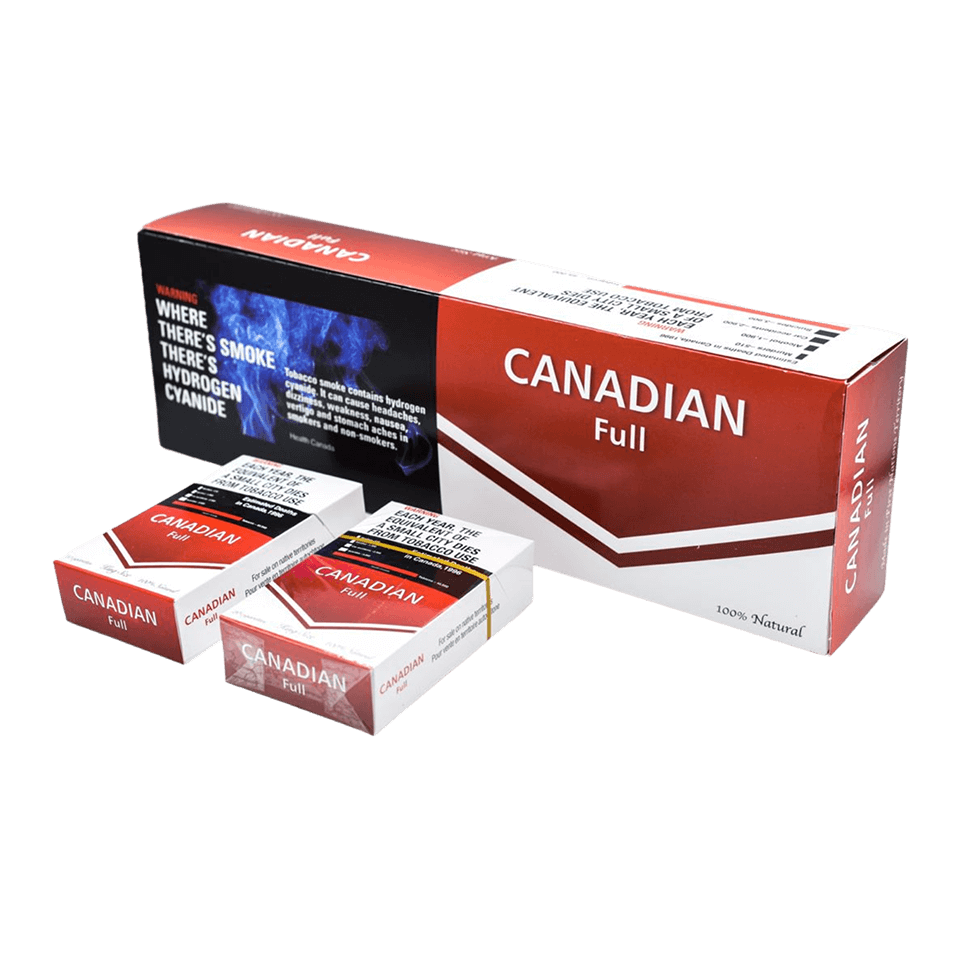



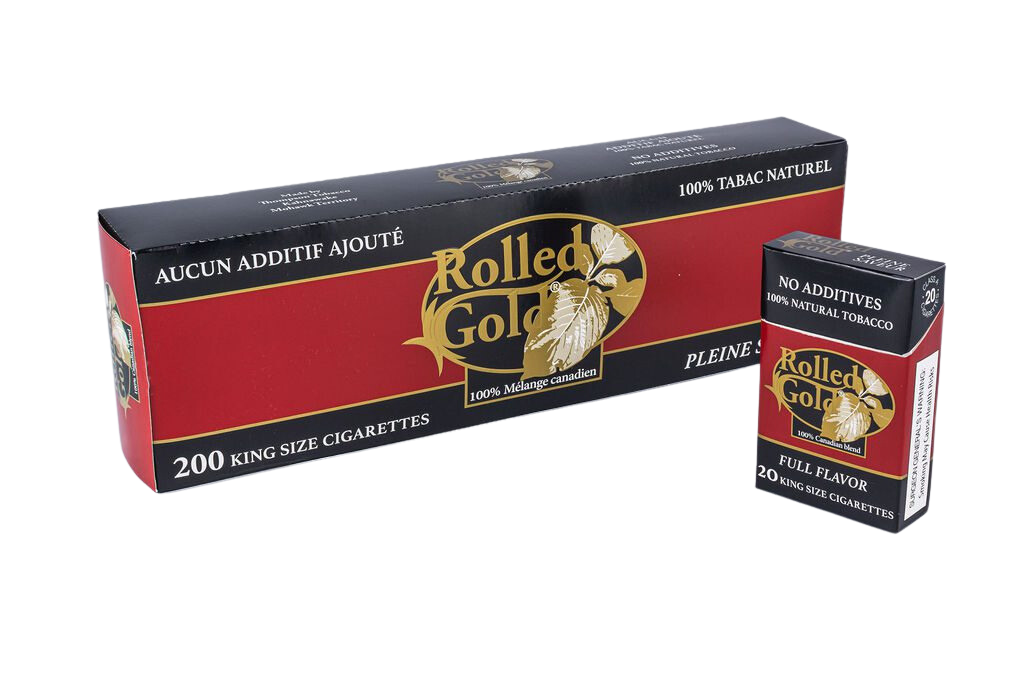
⭐ Excluded: BB light Manitoba, BB full Manitoba, Chanel Blueberry, Chanel ice. See all 29+ native brands at Cigstore.ca.
🚚 Delivery Across Canada – $29 Flat Rate
We ship to every province and territory using Canada Post, Purolator, FedEx, and UPS. Orders over $290 qualify for FREE shipping. Age verification (19+) required upon delivery.
📦 Same-day dispatch for orders before 2 PM EST. Tracking provided within 24 hours.
📚 You Might Also Enjoy These Articles
Smoking and Stress: The Neuroscience
Why nicotine feels calming (and why it’s a trap).
The “One More Loop”
Why it’s so hard to stop after the first cigarette.
Why Do Smokers Smoke More in Winter?
Seasonal patterns and coping strategies.
Smoking and Appetite
Why you don’t feel hungry after a cigarette.
How Smoking Changes the Perception of Time
Nicotine, dopamine, and the brain’s internal clock.