
Why Heroes in Indian Cinema Smoke More Than in Hollywood
Culture, Masculinity, Star Power, and the Evolution of a Trope
🎬🚬 Watch a Bollywood blockbuster from the 1990s or 2000s, and you’ll see the hero lighting up with dramatic flair — a cigarette dangling from his lips as he delivers a punchline, flips through the air, or woos the heroine. In contrast, modern Hollywood superheroes rarely smoke. Why do Indian films depict smoking so much more frequently than their Western counterparts? The answer lies in a complex web of cultural symbolism, regulatory history, the unique star system, and the enduring association of cigarettes with masculinity, rebellion, and power. This article explores why Indian cinema — from Bollywood to Tollywood — has historically featured heroes who smoke, while Hollywood has largely moved away from the trope.
📊 The Numbers: Bollywood vs. Hollywood
• 70% of Bollywood films contain tobacco imagery
• Bollywood delivers nearly 14 billion tobacco images to Indian audiences each year — 15 times that delivered by Hollywood to UK audiences
• Tobacco portrayed in 76% of Bollywood films, with cigarettes making up 72% of portrayals
• Hollywood’s PG-13 films: smoking has declined by over 75% since the 1990s
The scale of tobacco imagery in Indian cinema is staggering. An analysis of 298 Bollywood films found that 70% contained at least one on-screen appearance of tobacco [citation:4]. Bollywood delivers approximately 14 billion tobacco images to Indian audiences annually — 15 times more than Hollywood delivers to UK audiences [citation:6]. This is not a small difference; it’s an order of magnitude.
- 📈 Good guys smoking more: The percentage of “good characters” shown smoking in Bollywood rose from 22% in 1991 to 53% in 2002 [citation:8]. The hero now smokes, not just the villain.
- 🎬 Industry size: Bollywood produces nearly 1,000 films annually, selling over 3 billion cinema tickets [citation:8]. The reach is immense.
- 🌍 Hollywood’s decline: In contrast, Hollywood smoking has been drastically reduced due to MPAA rating pressure (2007), anti-smoking advocacy, and the Master Settlement Agreement (1998) banning product placement.
🔄 The Hero-Villain Shift: From Bad Guys to Leading Men
In classic Indian cinema (1950s-1970s), smoking was primarily the vice of villains. The hero was the “poor-but-proud” type, rescuing damsels and fighting evil — but never smoking on screen [citation:8]. Even villains smoked with class — cigars in three-piece suits.
- 🎭 1970s — The Angry Young Man: Amitabh Bachchan’s iconic “angry young man” persona in films like Deewar (1975) and Sholay (1975) popularized the smoking hero. The cigarette became a “rubric of power for the lower-middle-class Indian” [citation:7].
- 🔥 1980s — Rajinikanth’s style: The Tamil superstar elevated smoking to an art form — flipping cigarettes in the air, lighting them with revolvers, and using them as weapons [citation:7].
- 💫 1990s-2000s — The SRK effect: Shah Rukh Khan, a chain smoker in real life, played anti-heroes who smoked in films like Baazigar (1993) and Darr (1993). Research shows Khan had the highest number of smoking incidents in Bollywood films between 1991-2002 [citation:8].
📖 Key finding: A WHO study found that the occurrence of “good guys” in films smoking or using tobacco went up from 27% in 1991 to 53% in 2002 [citation:8]. The hero had co-opted the villain’s cigarette.
🎭 The Cigarette as a Symbol of Power and Masculinity
In Indian cinema, the cigarette is rarely just a cigarette. It is a prop of power, a marker of masculinity, and a symbol of westernization and modernity.
- 💪 Masculinity and dominance: Director Sandeep Reddy Vanga’s films (like Animal) explicitly link smoking to masculinity and heroism. Critics note that “for some directors, smoking is equal to masculinity and heroism” [citation:5].
- 🌍 Westernization: Dev Anand, one of the first Bollywood stars to embrace the cigarette, was notably more “western” than his contemporaries. The cigarette signified a modern, sophisticated identity [citation:7].
- 🔫 Power dynamics: In Satyajit Ray’s Nayak (1966), the hero’s cigarette establishes dominance in conversation. In Mahapurush (1965), the type of smoking device (cigar, cigarette, beedi) signals social hierarchy [citation:7].
- 🎨 Style over substance: Telugu cinema increasingly portrays smoking as a “mark of heroism,” with actors using cigarettes as fashion accessories [citation:5].
⚖️ Regulatory Contrast: Hollywood vs. Indian Cinema
MPAA announced smoking would be a factor in movie ratings — glamorized smoking could earn an R rating, cutting off the PG-13 youth market.
Result: Smoking in top-grossing films dropped from 80% to under 20% .
The difference in smoking prevalence is largely driven by regulation. Hollywood was forced to change; Indian cinema has faced weaker enforcement and industry resistance.
- 🇺🇸 Master Settlement Agreement (1998): Prohibited tobacco companies from paying for product placement in US films — ending the financial incentive for studios to feature cigarettes.
- 🇺🇸 MPAA rating pressure (2007): Smoking could earn an R rating, disastrous for blockbusters targeting teenagers.
- 🇮🇳 India’s COTPA (2003, amended 2005, 2023): The Cigarettes and Other Tobacco Products Act prohibits tobacco advertising and mandates anti-tobacco disclaimers in films and TV shows [citation:4][citation:9].
- ⚠️ Weak enforcement: Despite regulations, corruption and lack of political will have undermined enforcement. As one industry insider noted, “The authorities aren’t organized enough… I’ll just pay a bribe” [citation:8].
- 🔄 Loopholes: Even after the ban, smoking was “sung and danced about” — songs and lyrics implied tobacco use without explicitly showing it [citation:8].
📖 Industry resistance: When India attempted a complete ban on smoking depictions in 2005, filmmakers fiercely opposed it, arguing that it infringed on artistic freedom. The ban was effectively rolled back [citation:8].
⭐ The Star System: Heroes as Idols
In India, film stars are not just actors — they are demi-gods. Fans emulate their every habit, including smoking. This creates a powerful incentive for tobacco companies to associate their brands with top stars — and for stars to maintain their “cool” image.
- 👑 Shah Rukh Khan: A chain smoker in real life and on screen. Fans admit to smoking SRK’s brand because “I am smoking SRK’s (Shahrukh Khan’s) cigarette brand” [citation:8].
- 🔥 Rajinikanth: The superstar’s stylized smoking is a major part of his on-screen persona. He has since switched to chewing gum [citation:7].
- 💀 Sanjay Dutt: Another star whose on-screen smoking is legendary; he has also been open about his real-life struggles with addiction.
- 📉 The off-screen effect: Stars who smoke off-screen reinforce what audiences see on-screen. This “double exposure” normalizes smoking and makes quitting harder for fans [citation:8].
👩 The Gendered Cigarette: Women Who Smoke Are “Bad”
There is a striking gender divide in Indian cinema’s depiction of smoking. When men smoke, it’s heroic or stylish. When women smoke, they are almost always villains, prostitutes, or “loose” characters.
- 🎭 The vamp: In films like Deewar (1975), the “slut” at the bar blows smoke into the hero’s face — marking her as morally corrupt [citation:7].
- 🚬 The prostitute: In Mausam (1975), Chameli (2003), and Chandni Bar (2001), women who smoke are prostitutes or dancers — characters whose morality is already compromised [citation:7].
- 💼 The socialite: In Masoom (1983), the socialite who smokes is separated from her husband — her smoking signals marital breakdown [citation:7].
- 🔄 No “heroine” smokes: In mainstream Indian cinema, the leading lady — the romantic interest — almost never smokes. The cigarette is reserved for the “bad” woman.
📖 The contrast: This is notably different from Hollywood, where female leads like Audrey Hepburn (Breakfast at Tiffany’s) and Lauren Bacall smoked as symbols of sophistication and independence.
💰 The Tobacco Industry’s Long Shadow
Despite legal bans, tobacco companies have found ways to place products in Indian films — through paid endorsements, free supplies, or simply by capitalizing on stars who smoke in real life.
The tobacco industry has a long history of using Bollywood as an advertising platform. Before the 2005 ban, brands openly paid for product placement. After the ban, they adapted.
- 🎬 Surrogate marketing: Tobacco companies promote non-tobacco products (like mouth fresheners or clothing) with identical branding, bypassing advertising bans [citation:4].
- 🌟 Star power: When a major star smokes on screen — even without a visible brand — the association with “cool” benefits the entire tobacco industry.
- 📊 The scale: India has nearly 250 million tobacco users [citation:8]. The film industry’s influence on this massive market is substantial.
- ⚠️ Youth impact: A study of New Delhi adolescents (ages 12-16) found that children who had seen more smoking portrayals in Bollywood films were more likely to have tried smoking themselves [citation:1].
📜 Recent Changes: India’s 2023 Rules and OTT Regulation
In 2023, India expanded its tobacco regulations to cover streaming platforms (Netflix, Amazon Prime, Disney+ Hotstar), requiring health warnings for any tobacco depiction [citation:4][citation:9].
- 📋 COTPA Rules, 2023: OTT platforms must play 30-second anti-tobacco spots at the start and midpoint of any programme showing tobacco use. Static health warnings must appear during such scenes [citation:9].
- ⚖️ The vaping grey area: The Prohibition of Electronic Cigarettes Act (PECA) bans sale and advertising of e-cigarettes but does not criminalize their use. This has led to controversies, such as the Ba***ds of Bollywood row involving Ranbir Kapoor vaping on screen [citation:9].
- 📉 Effect on Bollywood: Since the 2012 Film Rules, tobacco imagery in Bollywood has declined — but remains much higher than in Hollywood [citation:4].
- 🌍 India as a model: India is the first country to regulate tobacco on streaming platforms, potentially setting a global precedent [citation:4].
📦 A Note on Native Cigarettes in Canada
While Indian cinema glamorizes smoking, the health risks remain the same whether you’re watching a Bollywood blockbuster in Mumbai or a Hollywood film in Toronto. For Canadian smokers who want to save money, native cigarettes (Playfare, Canadian, DuMont, Nexus, Rolled Gold) cost $29-50 per carton — compared to $140-180 for commercial brands — a savings of 70-80%.
- 💰 Cost savings: A pack-a-day smoker saves $5,000-7,000 per year by switching to native cigarettes.
- 🚫 Not “healthier”: Native cigarettes contain the same nicotine, tar, and carcinogens as commercial brands. The only difference is price and packaging.
- 📦 Online delivery: Cigstore.ca ships to every province and territory with $29 flat shipping (free over $290).
- 🎬 Remember: No matter how cool it looks on screen, smoking is still deadly. If you smoke, native cigarettes are the most affordable option. But the only safe choice is to quit.
🔥 Top 5 Native Cigarettes for Canadian Smokers




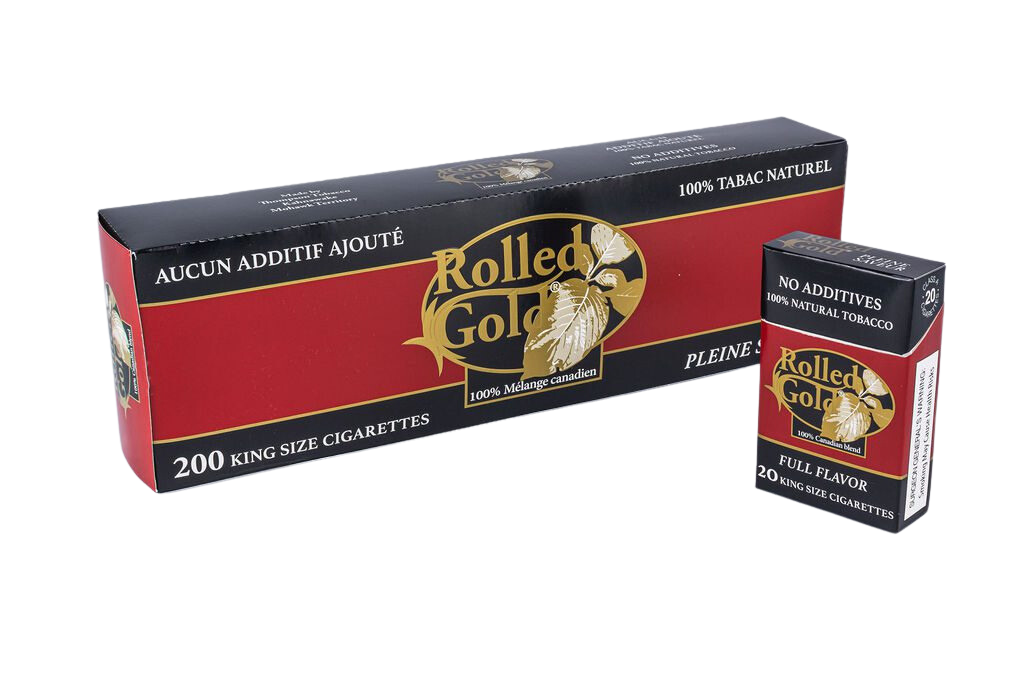
⭐ Excluded: BB light Manitoba, BB full Manitoba, Chanel Blueberry, Chanel ice. See all 29+ native brands at Cigstore.ca.
🚚 Delivery Across Canada – $29 Flat Rate
We ship to every province and territory using Canada Post, Purolator, FedEx, and UPS. Orders over $290 qualify for FREE shipping. Age verification (19+) required upon delivery.
📦 Same-day dispatch for orders before 2 PM EST. Tracking provided within 24 hours.
📚 You Might Also Enjoy These Articles
Why Modern Movie Characters Rarely Smoke
The MPAA rating shift that changed Hollywood.
The Most Famous Smoking Characters in Film & TV
From Bogart to Don Draper.
Cigarettes in Hollywood’s Golden Age
Glamour, rebellion, and the silver screen.
Smoking in Canadian Movies
From cool to condemned — the on-screen journey of tobacco.
How Cigarettes Became Part of the Movie Detective’s Look
From Sam Spade to Philip Marlowe.