
Cigarettes in 1920s Advertising
How Tobacco Companies First Began Using Psychology to Sell — Freud, Fear, and the Birth of Modern PR
📢🚬 In the 1920s, cigarettes had an image problem. They were seen as dirty, foul-smelling, and socially unacceptable — especially for women [citation:2]. But within a decade, tobacco companies turned smoking into a symbol of sophistication, rebellion, and freedom. This transformation was not an accident. It was the result of a calculated marketing revolution that borrowed heavily from the new science of psychology. Led by Edward Bernays — the nephew of Sigmund Freud and the father of public relations — tobacco companies began targeting consumers’ unconscious desires: the need for acceptance, the fear of being left behind, and the longing for liberation. This article explores how the 1920s tobacco industry first began using psychology to sell cigarettes, breaking taboos and creating a mass market that would endure for generations.
⚠️ The Problem: Cigarettes Were Unacceptable
• Cigarettes were seen as “unacceptable, dirty, foul-smelling, pollution-causing nuisances” [citation:2].
• 14 states had banned cigarettes for adults by 1909 [citation:2].
• In 1920s America, “it was considered taboo for women to smoke in public” [citation:8].
At the turn of the century, cigarettes were in trouble. Public health advocates, temperance movements, and hygiene crusaders all condemned them [citation:2][citation:9]. A New York Times report in 1907 noted that business owners were refusing to hire smokers, and by 1909, fourteen states had banned cigarettes for adults [citation:2].
- 🚬 The “dirty” perception: Cigarettes were associated with loose morals, immigrants, and urban vice [citation:9].
- 👩 Women’s taboo: A woman smoking in public was seen as scandalous. As one 1919 article noted, smoking in public by women “had ceased to shock for ten years past,” but the taboo persisted in many circles [citation:9].
- 🧹 The hygiene movement: Growing American interest in hygiene meant cigarettes were seen as unclean and unhealthy [citation:2].
- 🔄 The opportunity: Tobacco companies knew they were missing a massive potential market — women — but didn’t know how to reach them without alienating their existing customers.
🧠 Enter Edward Bernays: The Nephew of Freud
• Nephew of Sigmund Freud [citation:4][citation:8]
• “Father of public relations” [citation:8]
• Pioneered using psychology to manipulate consumer behavior
• His motto: “The public relations counsel must not only supply news, he must create news” [citation:6]
Edward Bernays was not a typical advertising man. He was the nephew of Sigmund Freud, and he believed that the unconscious mind — not rational thought — drove consumer behavior [citation:4][citation:8]. By applying his uncle’s theories about hidden desires, Bernays transformed advertising from mere information into psychological manipulation [citation:4].
- 🧬 Freudian theory: Bernays believed that people are motivated by unconscious desires, not logic. If you could tap into those desires, you could sell anything [citation:8].
- 🎯 Crowd psychology: He combined Freud’s ideas with Gustave Le Bon’s research on crowd psychology to understand how to influence groups [citation:8].
- 📋 The PR revolution: Bernays didn’t just advertise — he created “pseudo-events” — staged occurrences designed to generate news coverage and shape public opinion [citation:6].
- 💡 His belief: “The public relations counsel must not only supply news, he must create news” [citation:6].
📖 From the University of Kent: “Bernays synthesized elements of Freud’s work with Gustave Le Bon’s researches into crowd psychology, and Wilfred Trotter’s theories of herd instinct.” [citation:4]
🔥 The Campaign That Changed Everything: “Torches of Freedom” (1929)
• 1929: Debutantes marched down 5th Avenue smoking Lucky Strikes [citation:8].
• Framed as a “protest against women’s inequality” [citation:4].
• The slogan: cigarettes as “torches of freedom” [citation:8].
• The taboo on women smoking in public was broken [citation:8].
In 1929, George Washington Hill, president of the American Tobacco Company, hired Bernays to solve a problem: how to get women to smoke in public [citation:8]. Bernays consulted psychoanalyst Abraham Brill, who told him that cigarettes represented a “phallic symbol of male power and domination” — and that for feminists, they could symbolize freedom [citation:4][citation:8].
- 🗽 The strategy: Link cigarettes to the women’s liberation movement. If smoking was an act of rebellion against male oppression, women would want to do it [citation:4][citation:8].
- 📸 The stunt: Bernays arranged for a group of ten debutantes to march down Fifth Avenue during the Easter Day Parade. At a given signal, they lit their cigarettes and told pre-arranged reporters they were lighting “torches of freedom” [citation:4].
- 📰 The coverage: The New York Times printed: “Group of Girls Puff at Cigarettes as a Gesture of ‘Freedom'” [citation:8].
- 📈 The result: By 1929, the taboo on women smoking in public was broken. Female smoking rates skyrocketed — from 6% in 1924 to 16% in 1929, and 36% by 1944 [citation:6].
📖 The irony: As historian Michael Kliegl notes, the “Torches of Freedom” stunt was actually a failure in its own time — it attracted little attention. But the story of the campaign has “taken on the life that it has” because it is “too good a story to not be true” [citation:4].
💚 The Green Campaign: Making Fashion Follow the Cigarette Pack
• Problem: Women wouldn’t buy Lucky Strikes because the green pack clashed with their clothes [citation:10].
• Bernays’s solution: “Change the color of fashion — to green” [citation:10].
• The “Green Ball” at the Waldorf Astoria [citation:10].
• Result: Green became the fashionable color of the season [citation:8].
Bernays’s most audacious campaign began with a survey finding that women refused to buy Lucky Strikes because the green packaging clashed with their outfits [citation:10]. Hill refused to change the packaging, so Bernays proposed something even more ambitious: change the color of fashion [citation:10].
- 🎨 The research: Bernays researched the psychology of color and found that green was associated with “hope, victory, and plenty” [citation:10].
- 💃 The influencers: He recruited New York debutantes (the same group from the Torches of Freedom campaign) to champion green [citation:10].
- 🎭 The Green Ball: A formal dance at the Waldorf Astoria where all attendees were required to wear green. Proceeds went to a charity (Women’s Infirmary), giving the event social credibility [citation:10].
- 📈 The result: Green became the fashionable color of the 1934 season, and Lucky Strike kept its packaging and its female clientele [citation:8][citation:10].
📖 From the Sage Encyclopedia of Public Relations: “Bernays developed an early form of social marketing to entice Mrs. Vanderlip to play hostess. The proceeds from the Green Ball would go to the Women’s Infirmary.” [citation:10]
⭐ Celebrity Endorsements and Social Aspiration
By the late 1920s and 1930s, tobacco companies had discovered another powerful psychological tool: celebrity endorsement [citation:6]. If a glamorous socialite smoked a brand, the average woman would want to emulate her.
- 👩 Mrs. Gail Borden: A Camels ad in Good Housekeeping (1940) featured the chic round-the-world traveller, with whom the average woman could identify [citation:6].
- 🎬 Movie stars: China’s first “Movie Queen,” Hu Die, featured prominently in cigarette card series during the 1920s and 1930s [citation:1].
- 👗 The “French maid” trope: Advertisers used the image of the “French maid” as the standard of social respectability, a fantasy of luxurious personal attention [citation:6].
- 📈 The formula: Take a glamorous woman, pair her with a cigarette, and sell the aspiration — not the product [citation:6].
📈 The Results: A Generation Hooked
1924: 6% | 1929: 16% | 1935: 18% | 1944: 36% [citation:6]
Lucky Strike earnings rose from $12 million in 1926 to $40 million in 1930 [citation:6].
Bernays’s psychological campaigns worked spectacularly. By tapping into women’s desires for liberation, fashion, and social acceptance, the tobacco industry transformed smoking from a taboo vice into a symbol of modernity and independence [citation:6].
- 📈 Market growth: Lucky Strike’s annual earnings rose from $12 million in 1926 to $40 million in 1930 [citation:6].
- 👩 Female market expansion: In 1924, only 6% of American women smoked; by 1944, it was 36% [citation:6].
- 🔄 Shifting social norms: By the end of the 1920s, the fourteen states that had banned tobacco had either eliminated the bans or eased restrictions [citation:2].
- 🧠 The legacy: The 1920s marketing strategies — linking smoking to identity, aspiration, and liberation — became the template for tobacco advertising for the next half-century.
📖 From a tobacco industry study: “The market into which Lucky Strike tapped reflected the radical shift in standards of female beauty which occurred in the twenties, exemplified by the stick figure Flapper Girls.” [citation:6]
📦 Native Cigarettes: The Affordable Alternative
While the 1920s marketing revolution made cigarettes a mass-market product, today’s smokers have more affordable options. Native cigarettes (Playfare, Canadian, DuMont, Nexus, Rolled Gold) cost $29-50 per carton — compared to $140-180 for commercial brands — a savings of 70-80%.
- 💰 Cost savings: A pack-a-day smoker saves $5,000-7,000 per year by switching to native cigarettes.
- 🚫 Not “healthier”: Native cigarettes contain the same nicotine, tar, and carcinogens as commercial brands. The only difference is price and packaging.
- 📦 Online delivery: Cigstore.ca ships to every province and territory with $29 flat shipping (free over $290).
🇨🇦 Resources for Smokers
- 📞 Smokers’ Helpline (1-877-513-5333): Free, confidential coaching.
- 💊 Nicotine replacement therapy (NRT): Patches, gum, lozenges — safe and effective.
- 📱 QuitNow (quitnow.ca): Free app with tracking and community support.
- 🩺 Your doctor: Medications like varenicline (Champix/Chantix) and bupropion (Zyban/Wellbutrin) can help.
🔥 Top 5 Native Cigarettes for Canadian Smokers



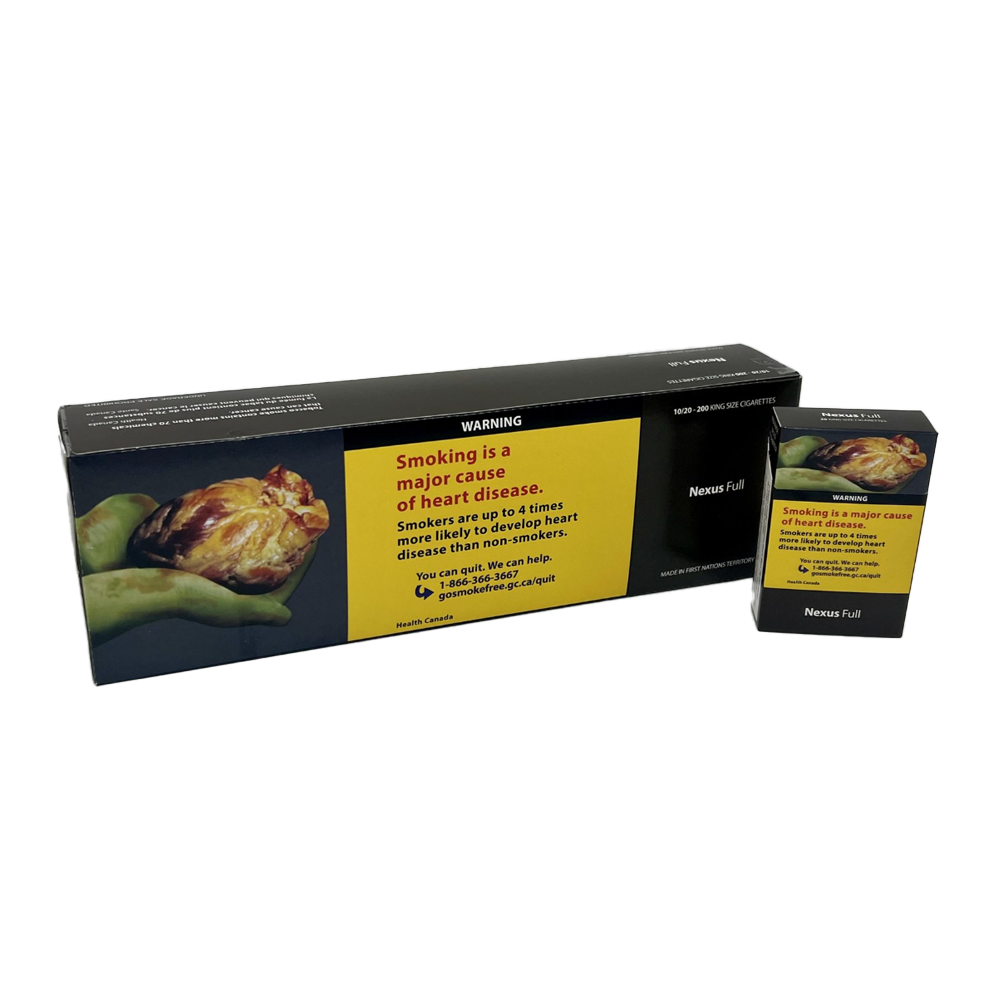
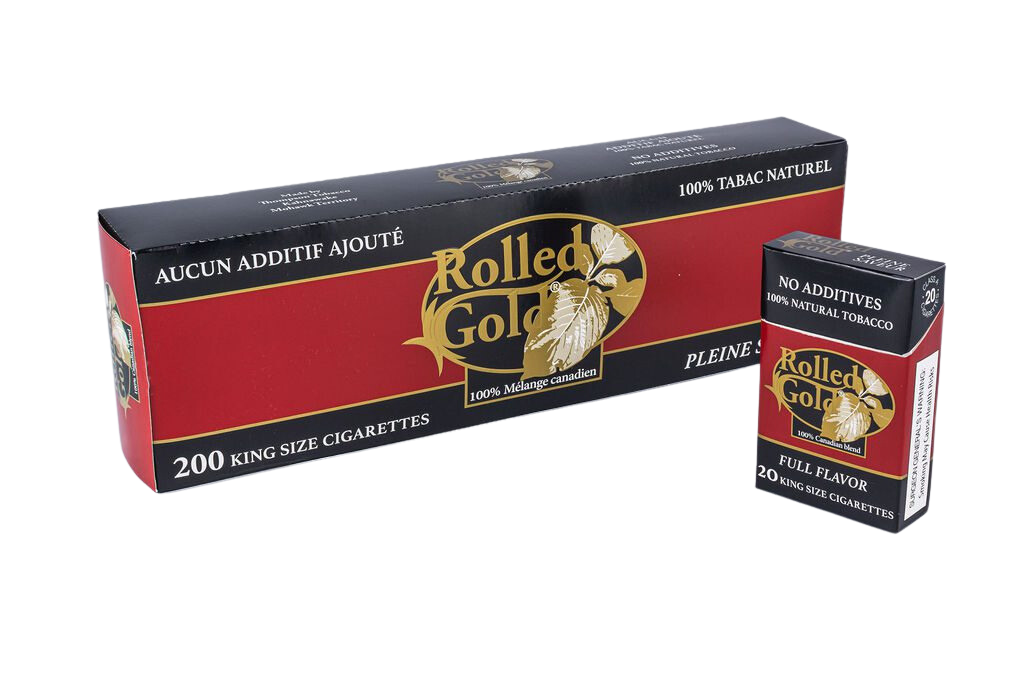
⭐ Excluded: BB light Manitoba, BB full Manitoba, Chanel Blueberry, Chanel ice. See all 29+ native brands at Cigstore.ca.
🚚 Delivery Across Canada – $29 Flat Rate
We ship to every province and territory using Canada Post, Purolator, FedEx, and UPS. Orders over $290 qualify for FREE shipping. Age verification (19+) required upon delivery.
📦 Same-day dispatch for orders before 2 PM EST. Tracking provided within 24 hours.
📚 You Might Also Enjoy These Articles
First Menthol and Filter Cigarettes
How marketing in the 1930s exploited health fears.
‘Hopelessness and Doubt’
The tobacco industry’s marketing strategy.
Why Light Cigarettes Became Popular in the 1970s
The marketing of a mirage.
Most Controversial Cigarette Advertising Campaigns
Joe Camel, light cigarettes, and more.
Why Did Doctors Once Recommend Cigarettes?
The deceptive medical endorsements.