
The “Light” Cigarette Phenomenon
How Marketing Deceived Consumers for Decades – A Historical Investigation
📰 For over 40 years, “light” and “mild” cigarettes were marketed as a safer alternative to regular smokes. This was a lie. From the 1970s until the 2010s, the tobacco industry exploited a loophole in testing methods and consumer psychology to sell the illusion of safety. This investigation uncovers the history of this deception, the industry’s internal knowledge, and the eventual regulatory crackdown.
In 1976, Canadian tobacco companies introduced “light” and “mild” cigarette brands, heavily advertising them as a way for health-conscious smokers to get “full taste and satisfaction” with lower tar. By 1984, these brands captured 40% of the Canadian market.
- 🎯 Target: Smokers concerned about health risks but unable to quit.
- 📈 Market Penetration: Within a decade, “lights” became a dominant force, now accounting for over half of all cigarettes sold in Canada.
- 🧠 Industry Strategy: Bob Bexon, CEO of Imperial Tobacco, stated: “It is useful to consider lights more as a third alternative to quitting and cutting down.”
The key to the “light” cigarette lie was the FTC Test Method, a machine-smoking standard that measured tar and nicotine. The industry designed cigarettes to cheat this test.
- 💨 Filter Vents: Tiny holes in the filter diluted the smoke with air during a machine test, resulting in low readings.
- 🖐️ Human Compensation: Human smokers, unlike machines, crave nicotine. They compensated by taking longer, deeper, or more frequent puffs, or by covering the filter vents with their lips or fingers to get a stronger hit.
- 📊 The Result: A study found extreme vent blocking in 47% of discarded “light” cigarette butts, completely negating any potential reduction in tar or nicotine exposure.
📊 The “Light” Deception: Then vs. Reality
| Aspect | What Consumers Thought | The Reality |
|---|---|---|
| Safety | “Light” cigarettes are safer or less harmful. | No clear health benefit. Compensation negates any potential reduction in exposure. |
| Tar & Nicotine Levels | Lower machine-measured yields meant less inhalation. | Yields are misleading; smokers receive much more tar and nicotine than the machine. |
| Consumer Behavior | Smoking “lights” is a step toward quitting. | Lights were marketed as a “third alternative” to quitting, keeping smokers in the market. |
| Product Composition | “Light” cigarettes are fundamentally different. | By the 1970s, some “light” brands contained more tar and nicotine than full-flavor cigarettes. |
| Government Oversight | Ad claims are approved by a government agency. | Many smokers believed this, but it was false. The FTC method was industry-friendly and widely considered inadequate. |
The truth eventually caught up with the industry. Major health organizations and governments took action:
- 🌍 International Action: Brazil, the European Union, and the World Health Organization (WHO) recommended banning “light” and “mild” descriptors.
- 🇺🇸 US Ban (2010): The FDA was granted authority over tobacco and banned the words “light,” “mild,” and “low-tar.” Brands like Marlboro Lights became Marlboro Gold.
- 🇨🇦 Canadian Action: Canada’s Promotion of Tobacco Products and Accessories Regulations (Prohibited Terms) made it illegal to use “light” or “mild” in advertising.
- 📦 Plain Packaging (2020): All tobacco products in Canada must be in standardized plain packaging, removing the colors and branding that differentiated “light” cigarettes.
📍 Shipping Across Canada – All Provinces & Territories
We deliver to every province and territory with $29 flat shipping (free over $290) via Canada Post, Purolator, FedEx, or UPS. Age verification (19+) is required upon delivery.
🔥 Top 5 Popular Products for Canadian Smokers
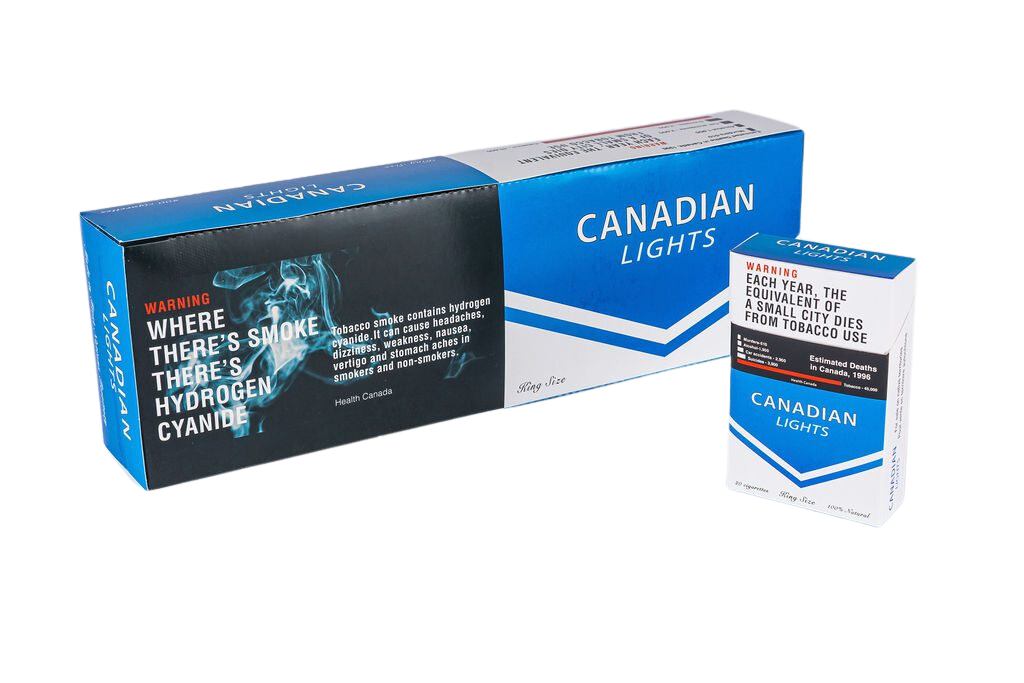
📚 You Might Also Find These Articles Interesting
History of Smoking in Canada
From 1950s ads to plain packaging – a longer timeline.
5 Iconic Ads Banned Today
Campaigns that would never survive modern laws.
1994 Tax Cut Story
How native cigarettes became affordable.
Why Cigarettes Are Expensive
Complete tax breakdown.
Forgotten Canadian Brands
Craven ‘A’, Sweet Caporal, Rothmans.
💨 No gimmicks. Just honest smokes.
Switch to native cigarettes and save up to $7,000/year. We ship anywhere in Canada with $29 flat shipping – free over $290. Age 19+ verification required.
🛒 See Today’s Best Prices →